Welcome to WordPress. This is your first post. Edit or delete it, then start writing!
Categories
Welcome to WordPress. This is your first post. Edit or delete it, then start writing!
You can create an account here on the Holy Ascension Website instead of connecting through gmail/facebook/etc. Once you’ve created one, or logged into the one you have, you should be able to comment on any threads (you might have to reload the page you’re commenting on after you login).
Use this link to create yourself a new account if you don’t have one.
Use this to login if you have an account.
Use this one to reset your password.
If you are logged in, you can use this to change your settings.
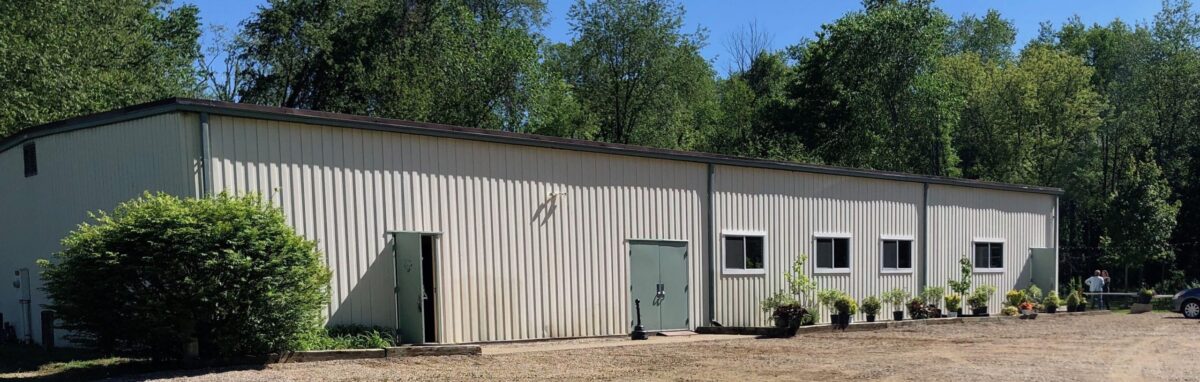
Would anyone like to spread some mulch at the church hall today? or tomorrow?
From Anastasia:
Hi friends! We will be setting up a more serious schedule of volunteer days at the hall which will hopefully help Father to get a lot of stuff done before the hall is rented on Lazarus Saturday (April 8) and used for Paschal celebrations (April 16). I know that Spring Breaks are also coming up, and I’d love to encourage any teachers or students to consider spending a day working at the hall if remaining in town (contact Father to give him a heads-up).
We will have two major Saturday work days:
March 25: Holy Annunciation Liturgy at the church, followed by fish fry and work day at the hall. Marissa will have a sign-up sheet for potluck items.
April 1: One week before use; will involve a lot of clean-up.
Throughout Lent we will also be doing smaller scale work days on Fridays. Brigid has offered to head up some childcare and kid activities at the church, so that parents have the opportunity to drop off kids and do some work at the hall. Help in both places would probably be great! For now, Brigid will plan to be at the church between 9am-2pm starting this Friday, March 10.
Would anyone like this gas stove from the hall before I get rid of it? It seems to work just fine.
Stove claimed by Brooke Austin.
Many pipes! Lots of plumbing is happening at the hall, see pictures.
Also excavators are busy taking trees down, they will probably be doing so for a week or more. see picture.
Lots more to do though, more labor would be great if anyone has some hours to spare. 🙂
White or light grey. I’m not looking for a high contrast aesthetic experience in that particular space, just a super clean vibe. ?
I need to order some bathroom stall partitions. Here are the color choices:
https://cdn.partitionsandstalls.com/media/wysiwyg/metal_tp_color_chart/hadrianpcs-2.pdf
If anyone would like to weigh in on color, do so today. I plan to place the order tomorrow.
For reference to the color of the floor and new wall tiles, see the previous posts.
I’d say Colonial Blue.
The whole room’s very grey already, which for me rules out grey and beige; white and black are pretty stark. Blue would go well with what we have now.
I agree, Stasia.
I like the slate; keeps with the color scheme. We can add pictures on wall, etc…to add color once we are done.
I agree with Colonial Blue
I have to side with Loretta on this one- something like slate or light gray would fit better with the theme we have going. Also, a lighter color would make the area feel more spacious, while darker colors close in… (in case bathroom stalls don’t already produce claustrophobia 😀 ). Anyway, light gray would be my vote.
Tiling and grout festivities continue tomorrow morning at 9am. Pictures from today attached.
Any strong feelings on what would be the best bathroom sink configuration for the women’s bathroom?
a) two sinks in a countertop,
b) only one sink in same size the countertop, leaving it mostly counter space,
c) only one sink with a little counter space, leaving room/flexibility for another piece of furniture altogether. (a nursing chair? shelves of some kind?)
Option A.
The line to wash hands can build up with a large crowd even with enough toilets. I also am not a fan of nursing in restrooms but that might just be me.
Agreed. Extra counterspace just leaves room for junk to pile up. And should I ever have cause to nurse, I wouldn’t want to do it in a bathroom either. 🙂
Amanda, Loretta and Erin got three walls tiled today, pictures attached. More tiling to happen Friday after Liturgy.
We’re having a tiling party starting on Wednesday morning. Probably Thursday too.
We started framing the walls between the new rooms, one room and a closet are done. See picture.
I’ll be there off and on this week if anyone wants to join the fun.
Bathroom tiling starts Wednesday.
This Wednesday?
Around what time?
Turns out Lowes failed us on both the cement board and the tile. So that part is moved back again to next week.
Aww bummer.
The new floors are finished, pictures attached.
The installer told me the surface will be as hard as Chinese arithmetic. 🙂
Supplies the the rest of the project will be delivered Saturday (12/17), so I’m hosting a carry-in-all-the-heavy-sheetrock party there at the hall at 11am, with lunch to follow.
Would anyone like to find some wall tile for the bathrooms?
We need about 400 square feet.
As far as matching the floor, the floor pattern will look like “flintstone” from here:
https://premiercoatingssturgis.com/flake-options/
(although a different pattern could be chosen up until 12/9).
I could go with anything, but I think bigger tile would be better, even as big as 12×24, it will go on faster and have a lot fewer grout lines.
It’s going to go up to about 5′ off the floor, so it would be nice if they sold matching end piece tiles with a rounded edge for the top row. But not a deal-breaker.
I’ve attached three pictures to this post, an industrial stove and hood. A friend of Judy’s is selling them. (stove=$1000, hood=$400).
Is this what we want for the hall kitchen?
The hood seems like what we want, and it’s priced reasonably.
The stove is also priced reasonably. What I’m not sure about is if we’d want one with this setup, 6 burners and 1 griddle.
Thoughts?
That looks great to me. I don’t know if there were discussions about what we wanted already but this seems like a great improvement. A griddle could be super fun and open up some possibilities for us.
Yes!
7 upvotes from the Porters! 🙂
I think that would be a great improvement!
We can brew so much beer!
7 more upvotes from the Heyman’s. I’ll even hook the gas up for free, lol.
I think It would be great. Hopefully we can get another one…or keep the two we already have as well.
pictures from concrete day.
Concrete is arriving tomorrow (Thu) at 3:30pm. I’d be glad for as many extra hands as possible.
Concrete truck is coming Thursday 1pm to fill the floor back in. Since the minimum amount they bring is twice as much as we need, we’re going to also pour a 10×10 slab outside of the kitchen door going out back.
Great idea!
Check out Luke’s cool pluming work for the new bathrooms.
We’re going to do a concrete coating on the floor for the hall, both for the back rooms and the bathrooms.
Here are our choices:
https://premiercoatingssturgis.com/flake-options/
I asked which of those options would be best at hiding dirt, and they said it was the one called “flintstone”. They also thought that one has the most universal ability to blend with typical walls/tile/furniture inside.
But it’s all the same to me. So if there is an outcry on this blog for some other choice that’s fine. We have 3-4 weeks before they come to decide.
Flintstone seems generic enough
I like it! Yabba dabba dooo!!
I think Roman Unswept Floor Mosaic is more in keeping with our aesthetic, but flintstone will do. 😉
https://www.atlasobscura.com/articles/what-is-in-profane-museum-vatican
Oh my! That one would be cool. Could we sprinkle in some kid’s toys too? You’d always be bending over to pick them up and realize they’re part of the floor.
Digging completed, see pictures attached.
Also, Erin would like to fix up the plants outside the hall on Friday morning at 10am. I can’t be there myself. Would anyone be willing to join her? We have plenty of shovels there at the moment. 🙂
Status of hall remodel: The floor has been cut and jackhammered in order to lay the new pipes for the bathrooms. Next step is to dig them deeper. Anyone who knows how to use a shovel is welcome to continue the project. 🙂 Pictures attached.
Dumpster day, pictures by Loretta:
https://app.box.com/s/258zl7d5q5elcu4kq39axqdws07wsp83
Day 1 of hall renovations:
I hope no one cleaned the bathrooms after the party yesterday!
Getting back to work on the hall here….
The plan is to do whatever remodeling we’d like starting in October and hopefully finishing in January.
Here is the floor plan as it is right now:
https://uofi.box.com/s/ljb25jqq6gengxouyjipcx0i1w3tnoxx
Here is the proposed floor plan:
https://uofi.box.com/s/cz7bam1x63d5yeo02vfgohtmynxz68b5
Does anyone have any thoughts, corrections, comments or questions?
Luke, Colm: look good for plumbing and code issues? As far as I’ve researched I’ve got it all ADA compliant. And all the pipes ought to be able to run along that middle wall.
How big is the reception hall? It looks smaller? How many will it hold?
The main room part of the building isn’t changing at all, that’s why it’s not part of the pictures. It’s just off to the right. The plans are just the west most 40% of the building.
Awesome! Looks wonderful!
Looks great! Exciting that there will be 3 stalls in each bathroom.
I would be concerned about the entry area being only 5′ wide with so many doors, one of which is the women’s bathroom, being a pinch point. With coats on hooks, it’s likely going to make it only 4′ of space for moving about. Having just torn out a kitchen with a walk way of only 4′, it’s very tight for multiple people. I’m also thinking that the door for the closet being on the short side of a very long, thin closet makes for awkward storage. Unless you leave a walking path, which takes up space in the closet, you’re not likely going to be getting at things in the back often, if ever. (I think there’s a pattern on shelves that expressed a thought on the depth of cabinets that might apply here?) It might be better for the door to be on the reception area side, and maybe be double doors. Both the hallway in the entry area and that adjoining closet might benefit from being a bit wider, even if that means less reception area space. The sinks in the women’s bath could possibly go on the south wall if they no longer for in their current orientation and you’re set on having 2 sinks.
The minimum size non ADA stall is 30″x60″ for a floor mount toilet and 30″x56″ for a wall hung toilet. So you could definitely shrink those a bit to make more floor space, which we’ll need because the wall between the bathrooms will have to be much wider, ~2′ or so, depending on which fixtures and fittings we use, and because those fixtures and fittings vary based on manufacturer we’ll need to know that beforehand to save the most space. Attached is a picture of some of the types of fittings we’d be dealing with.
Ok, good feedback, here’s the next revision:
https://uofi.box.com/s/8a0i9rsb3jkjmm8barwwo02slgdj7hru
Brooke:
Good point on the narrow hallway, I added a foot to it. Is that enough you think?
As for that closet, I was thinking of it as a storage space for main room’s tables/chairs, so that’s why I’d want it open on the short side and give it a direct access to the main room via that hallway. Otherwise we’d have to weave tables/chairs/etc into the reception area and then back out of it again, whereas this way it’s a straight shot from the main room.
I’m not set on having two sinks. Would it be better to have only one and leave space for a nursing chair or something else?
But it would be easier for plumbing if we kept them on the center wall (right Luke?). But we could put them on a different wall if that’s better – but I don’t understand why that’s better?
Luke:
I didn’t stumble across the fact that the stalls could be narrower with on-wall toilets, that’s great, thanks. I had made them 1″ wider than was necessary, so in the revision I did the same with the new measurements, I’ve made them so that each stall is 1″ wider than the minimum.
I also made the center wall 2′ think. We can adjust that once we figure out the exact toilets/fittings that we’re ordering.
I don’t know that I have a solution or even a suggestion, but something that maybe is applicable to the storage room that will hold tables and chairs for the main hall area. A standard doorway may end up being frustrating. Often when I am helping set up, there is traffic going both directions getting tables or chairs, if there were a way to make that whole wall go away for moving things in and out, that would prevent ramming into other people with tables or chair racks.
Do the existing bathrooms have floor drains? If so, will they work in their current locations? They’ll be required by code, (though a floor length urinal like we have now counts as one.)
Luke: As I recall I don’t think either bathroom has a floor drain, so I’ll add that to our do-list.
Koren: Good point on that closet. It would be best if we could roll carts of tables/chairs in and out of there without dealing with a door frame. But then we’ll probably want something else to cover its unsightliness. A curtain or some sort? Or maybe those foldable room partition things that run floor to ceiling along tracks? I’m up for ideas.
Hall work day after Liturgy on Wednesday.
Koren is running a wall painting party at the hall, Friday at 7:30pm.
Also work will be done at the hall this Saturday from noon’ish to Vespers.
I’m planning a work day at the hall this week, Thursday the 17th.
I’d like to try a work day at the hall this Friday, December 17th. 10am until whenever.
It would be nice if we could get the ceiling replaced in the back room.
If there are more workers than we need for that, there is plenty of out door work to do too.
If you could let me know if you’re coming, that will help me plan the project better.
thanks!
Landscaping work at the hall this Saturday, 10am-1pm’ish.
Next landscaping work day is Saturday Oct 16th, 10am.
Meanwhile, plenty of misc work to do there if you want to go some other time, like painting chairs, dealing with brush/trees, etc. Let me know if you have time to do any.
Pictures from landscaping day.
Tree house subfloor installed today.
Next we need:
1 2x6x8 treated
1 2x6x10 treated
15 10’ deck boards
This is amazing.
Jason and Evan are getting the chairs painted. Lots more to do If anyone would like to paint.
The Farmers started working on the kitchen today, starting with the ceiling. See pic.
Some recent photos.
Christ is risen!
Tomorrow, Saturday the 15th, there will be a couple projects going on at the hall.
Jason and Ryan are heading up floor stripping and re-waxing.
Evan, Matthew and I are going to cut down a bunch of vines/etc from the trees using a boom lift we rented.
If you’d like to help with either project, or any of the other work there, we’ll start around 9am. Not sure when we’ll finish, but there will at least be lunch. 🙂
Does anyone need to get at anything very high on their own property? I have this 35′ boom lift rented until Monday and I only had to pay the daily price for it. It’s free after our work tomorrow if you want to take it.
Is there a designated place for a playground at the building? Is there a plan?
*I have a lead.
Just about ready…
Updates: See pictures. Bathrooms looking great. Brush pile burned. All 10 windows installed and trimmed, floor got its trim too. It needs a few minor things yet, then a good cleaning, and then it will be ready for Pascha.
Look’n good!
What little things are left?
Any major cleaning tasks in particular?
I will have some time on Holy Wednesday and/or Holy Thursday afternoon to help.
For cleaning, Koren posted this on facebook:
So we’ll see where we are after Monday as far as cleaning goes.
The other little things are bonus things, like getting the paper towel dispensers hung up, or the baby changing table on the wall, or wall light sconces, etc.
Got it–thank you!
Settled on our new sconce lighting, picture attached.
Perfect! Ha!
Just what I was hoping for.
Ha! That’s great!
I plan on being there a bit today (Monday) and hopefully most of tomorrow (Tuesday).
I like the paint first and then the lighter wood. But I think the paint would make the room feel bigger.
I mocked up three windows with each of the trim options (using the real wood this time instead of cardboard). Pictures attached.
Option 1) white paint,
option 2) dark stain,
option 3) no stain.
If you have a preference, shout it out quickly, we’ve got to get this one moving forward.
Meanwhile, I helped a few people who have not been able to post, but in each case I found that they hadn’t reloaded the page after logging in.
So if you’re having trouble, login again, come back to this page, and then hit the RELOAD button thingy at the top of your browser. 🙂
I like the no stain! It brightens up the room.
Two votes for the natural wood from us!
Ryan and I also are in favor of the natural wood.
I like the natural wood.
Agreed–though, what are we doing for baseboard? That could affect how we want the window trim to look.
Phoebe wanted to see the unstained window with poly on it, so here it is.
I think I like the unstained best.
To Katie: the idea is that all the baseboards and windows would have the same style trim.
I can post now, hooray! One thought. You can always go from natural wood to paint, but you can’t go from paint back to natural wood (well, without a lot of trouble). So, one idea is to start with natural wood. If you don’t like it, you can paint.
natural.
Thanks to everyone who helped today! Here are some pictures:
https://uofi.box.com/s/efx3bbrxqqzth0jclwqxzmg53o85lmnp
Following up on the discussion to make the hall available for rentals starting this summer…
I think we have to get it “out there”, even if the hall itself isn’t ready yet. For anyone out there to be able to make any kind of plans ahead of time, they’re probably already looking for space now. It would be nice for this to slowly start to be a source of income for us rather than just a drain.
I think that means we should get a temporary sign out front with contact info for locals, and for everyone else, we need to get a website going. That way we can put it into google and whatever other online directories, and make it generally findable.
I started a temporary page, and Evan help built it up, and we parked it at a sub-domain of our current site here: https://eventcenter.orthodoxchurchalbion.org
It’s just a skeleton site for now, there isn’t much we can put there yet except for basic information. We don’t even have any decent pictures yet. But we can continue to add/update it as we go, we just need a contact point for it for now.
But the thing we need from the onset is a catchy and easy-to-remember name for it, and a matching domain name, separate from the church domain name. I started with “Ascension Event Center” but I’m not married to it, it was the first name that occurred to me.
I’ve checked a handful that have occurred to me that are still available:
http://www.ascensionevents.org (.com is not available)
http://www.ascensioneventcenter.com
http://www.ascensioneventhall.com
Or we could go in a more generic direction: http://www.albioneventcenter.com is available. Or http://www.albion-event-center.com. And so on.
If you want to check other possibilities, you can check if they’re available at http://www.whois.com.
Jump in if you have any thoughts about this. We should probably spin it up pretty soon.
If anyone would like to work more on the site, let me know. Besides design stuff, work needs to be done to figure out the rates and forms and procedures and such things for doing rentals.
I like Ascension Event Center. It makes it sound more unique and not just some random event hall associated with the city. I don’t think it needs to be anything fancier than that.
Brooke is having trouble logging, so I’m pasting in her reply below.
(I don’t know why some of you are having trouble logging into this blog, I’ve tried to fix it but it’s still giving people trouble. I can’t get it to fail when I try so I don’t know what else to check… Peter or Evan, if you have any ideas? … )
Brooke:
My thoughts on naming the hall Ascension Event Center is it could be confused with Ascension Ministries (usually just called Ascension), which owns Borgess and several other hospitals in Michigan. Their name is getting stuck all over the place with the heavy rebranding they do when they buy a hospital. If we are going to do advertising, it’s possible it could get confused since Ascension does have locations as close as battle creek. Also, not sure if there are ownership issues on a brand the way they’re is with business names? Don’t know if that works be an issue. Perhaps Holy Ascension Event Center? Or maybe it won’t matter.
Tractor day is shaping up for Tuesday (3/30). The weather looks promising so I arranged for the rental to happen.
If you can come, let me know. Besides Bobcat drivers, anyone who can come would be great. If you can bring/operate a chainsaw, great, but anyone at all to help move brush around and so on would be a help. Or anyone who could bring some lunch/dinner.
The equipment is expensive, so we want to get as much out of it in one day as we can. In particular, if you can drive the bobcat, it would be good for me to know which hours you can be there. The machine is supposed to arrive around 9am, and it gets picked up the next morning, so we’ll run it as long as we have people to drive it, or unless we finish everything.
This is what the machine looks like:
https://carletonequipment.com/products/ftx150-fecon-rental
Need a refresher on how to drive a skid steer?
https://www.youtube.com/watch?v=6crRApG1RAo
Tips on forestry mulching with this machine:
https://www.youtube.com/watch?v=vZZEN67P-V8
There are several other such videos, go to youtube and search for “driving bobcat forestry mulcher”.
These are the two sconce light fixtures we are considering. You’ll have to zoom in to see them.
I vote for B), seems less fragile to me, and also the glass is closed at the top so no bugs can get in there. 🙂
I also like option B
Agreed!
All the votes I’ve heard (on this blog and off) have been for the second one (B). So we’ll order those.
Kitchen tile nearing completion.
6 windows installed in main hall.
Ceiling done and walls have been painted.
Yay, look at that light!
Also, the kitchen is looking great!
I’m planning on being there tomorrow Monday 3/22 starting at 10am’ish.
Also, the kitchen walls are getting some tiles! See picture…
(reposting this with larger pictures).
Here are some pics to help decide on trim stain. I put some of the darker stain on some cardboard strips and tacked them around the window and along the floor as a mockup. It’s a little flatter than it would look on polyurethaned wood, but this is the basic idea.
Other options are lighter (or no) stain.
Or we paint the trim.
That dark stain is pretty dark and the high contrast I think is distracting. I would go with something more neutral or natural.
more work pictures.
work pictures.
Windows!!
Painting/etc is happening Wednesday (3/17) from noon-5pm’ish.
Rescheduled the tractor/chain-saw day to Tuesday March 30th. Hopefully we’ll have some dry/warm weather by then.
I’ll be there again tomorrow, Tue 3/9, 10-3’ish.
On Wednesday Eleni will be there 9-1pm.
Kitchen:
Using the aforementioned cabinets, I created a kitchen plan, attached a couple pictures.
I figure we’ll use the lower cabinets as pictured, saving two spots for dishwashers.
The upper cabinets are enough for the north wall, and that wall is visible from the main hall, so using the upper cabinets on that wall makes sense to me.
Whereas the other two walls could have wire shelving as pictured, above the sink and above/adjacent-to the serving window.
If you want to look all around the kitchen design beyond the two screenshots attached, you can download the “sweet home 3d” program and the kitchen file for it is here:
https://app.box.com/s/e8n5e64nbzssyttumqad05xv8pg8x3lk
I’m planning on working there tomorrow starting around 10am.
Some recent work pictures attached. You’ll have to zoom in to figure out who is in each picture. 🙂
I’m still trying to find a good look for the outside of the windows, attempt #2 is attached.
My first try just had pvc trim around the whole thing and it looks like crap.
This time I tried two shutters with a 3″ piece of pvc trim along the bottom. Does that work? Does it need something along the top?
Maybe if I made it a bright shade of green? 🙂
Although seriously, do we need more color contrast?
I’m trying to work this out on the backside of the building, so that when I get to the front side, we’ll have something looking half-way decent.
Now that I am seeing them in place, I can’t shake seeing “Home Exterior Fail #10”–https://www.architecturaldigest.com/story/home-exterior-fails — shutters that are too small to practically be shutters. Not that we’re using them as such, but once someone pointed this out to me I’ve never been able to see shutters the same way. 😀
I also think the even-ness of the shutters makes the window pane on the left, which is slightly smaller/has a wider frame due to the sliding function, look particularly odd.
Do you have a picture of what it looked like with pvc trim all around? I have an impulse to want an even frame all the way around, but maybe that’s no better. What options would we have for such a frame besides the pvc?
Here’s a pic of the first window with 4″ pvc trim all around.
I suppose it looks OK if maybe I clean up the seams with white caulk.
Peter and I went and looked at the exterior of the windows on Saturday and both think the 4″ PVC trim looks significantly better than the other one. We both see shutters the same way Katie does. 🙂
It looks much better and more balanced to me, too.
Mary and Anne also like the 4″ trim all the way around, so we’ll go with that one.
Unless there’s something else I should try? I still have a few on the backside we could experiment with.
I like the trim too. Can we paint the building to up the contrast? With the beautiful wood exterior parts in planning stages, and landscaping down the road…. it would be nice to get a fresh coat on the building before too long. Anyone else think so? I personally love the look of dark blue/dark grey/black with wood beams.
I’m thinking along the lines of the space as attracting wedding bookings and The Black Barn in Rives Junction as inspiration….they are booked two years out and charge over $9k a weekend. It would be nice to be able to offer a lovely space to brides who perhaps don’t have two years to wait or that kind of budget.
I also like the idea of a contrast color for the outside paint, and my first thought was a nice barn red. I really love the red contrast with the green in the summer and the white snow in winter. Theotokos blue also sounds nice. Also, yes, wooden beams.
I’m thinking of picking up these cabinets for the kitchen:
https://www.facebook.com/marketplace/item/234057998396378
Any thoughts?
It would be all the lowers we’d need. Plus a bunch of uppers. but I think we’re undecided about whether to use uppers at all, or just have metal shelves/racks. Either way, it’s a good price even just for the lowers.
That looks like a great deal and they would look nice with a white tile backsplash.
I agree!
Ryan and I will be working on ceiling tiles Thursday (3/4) night starting around 7pm. Anyone that wants to join us is welcome.
Great! I won’t be able to be there, so here’s an update: the grid is totally painted all the way to the wall. If you run out of old tiles that we’re using to hold up the insulation, we saved a stack of those boxes the tiles came in which should work as well.
If you run out of those too, or anything else, let me know. (There are only about 6 rows left to do, so I’m not sure if supplies will be enough.)
Sounds good!
Peter/Ryan, looks like you used up all in insulation and old-tile, woohoo!
Looks like we’re about 25 grid squares short. I bought over some more insulation that should about cover it. If not, we can start to steal from the kitchen.
I scrounged up some more old tiles and large cardboard boxes, maybe 10 grid squares worth, so probably not enough to finish it off. We’ll have to find something for those last few.
Looks like we’re going to have mud for the foreseeable future, so I’m putting off “tractor day” again until a better opportunity comes along.
Does anyone have any strong opinions about what the tile should look like for the backsplash in the kitchen? I was talking to Father Joshua today and we thought we could go with something similar to what we have in the current church kitchen. I think it’s a good choice since it is fairly timeless.
Something like this:
Pictures from yesterday’s workday.
Incorporated some comments and suggestions into rendering, attached.
There’s not a lot of options for arches and such in the program I’m using, so don’t take the details too seriously. I figure the whole porch/walkway would have the same arching/curvy design all the way along it, whatever that turns out to be.
New idea from Luke. Instead of a pavilion separated from the building, add it onto the back of the building? mock-up attached.
I like this a lot!
I think it’s a good idea, but there are a couple things we may want to consider. One is that it will decrease the natural light we would get from the windows/door. It might be a worth while trade off. I can imagine that a “pavilion” attached to the building would get more use than one farther away. Secondly, like you showed in the mock up, the roof pitch would need to match the pitch of the church hall. What’s the pitch of the roof? 3/12? 2/12? If it’s less than 3/12 than doing a traditional timber frame (like we talked about) might be too complicated. The wide length would also require more interior support posts. Also, that would be a really big pavilion. 60 feet wide, right? Would it make sense to make it centered on the building but only 30-40 feet wide?
I’ll have to measure again to be sure, but I think it’s 2/12. The width of the building is 50. If we did go this direction it wouldn’t have to be the whole width, but I think we’d want it to connect to the front porch? So maybe the porch would wrap around the corner and go 5-10 feet and then the pavilion part would start? And leave of 5-10 off on the backside, so yes, it would be 30-40 wide as you mentioned.
Or we wrap the porch all the way along the back wall and leave the pavilion where it is? mock-up attached.
I don’t think it would have to match the pitch, in fact it would probably look better if it didn’t. You’re right it would take some large timber. I’m thinking something like the pavilion at dormition with skylights or a clear ridge cap. Probably better to put it off until we can just purchase the steel beams or structural lumber needed to build something that large.
That’s great! Looks wonderful. Any chance of getting an archway or something beautiful away from the building we could plant climbing flowering plants onto? For Protestant weddings…thinking income.
I have started reaching out to custom mills in Michigan to get price estimates. So far there are two I have been interacting with.
Updates:
Commenting: If you can’t use your google credentials to login to comment, try creating an account for this site using the “login” link in the comment section. Doing so seems to be working reliably for everyone, whereas google, not so much.
Ceiling: today we (Ben, Matthew and I) put in 4 rows of the old tiles with the insulation above them, using 1″ pvc pipes to keep all the weight on the strong rails. See pic. It worked great, so it’s adopted as our final solution until we do the whole thing over 10 years from now! We painted all rails in those rows and installed the tiles we had (20’ish). The rest of the tiles are ordered. Installing the tiles is the easiest part, the arduous work was all the insulation and painting. But now that it’s figured out, it’s just a matter of raw labor that’s needed to finish it.
Lights: Peter, have you found us any ceiling light fixtures? We’re at a point now that we’ll be needing them to keep the ceiling moving.
On wall paint: the official color has been chosen , “alabaster”. Mary and Jena plan to get more of it and start painting some of the walls there in the coming weeks.
I’m planning on being there this Friday, 10am’ish.
Wow, learned something about LED lights today by accident. Many of them come with a selection switch that lets you change the tone/quality of the color of the light any time you want to. So if we got those, we could try out all of tones and then just switch them all to the one we want. And they’re dimmable, so easy to change how bright the room is too. So if they have those two features, then it pretty much doesn’t matter which one we buy except for how it looks in the ceiling.
I just bought one of these to try out:
I have been looking at these:
They all fit into a grid ceiling and have a high-ish CRI of 80, and adjustable color/brightness. They are dimmer compatible, but that would require a separate dimmer.
How many lights are in the current ceiling? Some of the calculators say we will need between 25-30 lights depending on our lumen setting to have a good brightness level. We have found LEDs to be a good deal lighter than florescent bulbs, but it may just be that the bulbs are so old.
The lights have similar capabilities and can be paired with a remote. – $57 each
With all this talk of lighting, I’m wondering if it’s even necessary to replace the current fixtures that are currently in place. There’s a local company called Full Spectrum Solutions that manufactures both fluorescent tubes and LED tubes, which would both produce better quality lighting for the space than what we currently have. Just a thought…
I agree, if we were to use existing fixtures, it would cost significantly less, probably by around 60%. If we wanted to get full power savings we would need to bypass the ballast, which would take about as much effort as installing new lights. The bulb that Full Spectrum Solutions sells has 5000k light, so that would be super white. We could probably get the soft white temperature we want from another local brick and mortar shop: http://www.mcgowanelectric.com or menards. It would cost ~$500 and be a significant improvement over current lighting. The only drawbacks are that we wouldn’t get the flexibility/features that the adjustable ones have and the current fixtures are still ugly 2X4. The square ones don’t seem quite as institutional.
Good points, Peter. The square ones would also match the aesthetic of the new ceiling panels, which appear more square, the way they’re designed.
thanks Peter!
Both of those you posted had the same link behind them, pointing to the first one.
I think this is the link to the second one, the Lithonia light.
I like the look of the smaller round lights in our new tiles. But those seem to have far too few lumens, we’d have to install like 150 of them, and it would take years because each tile would have be cut and each light suspended above the tile, and each light separately wired, etc.
The 2x2s that you posted have a much more reasonable amount of lumens, and since they already fit into the grid, minimal work to do. I don’t think they are quite as nice looking as the round ones, but weighing it against the work/time/$ of the round ones, they are the clear winner. I’m thinking we should pick one from those you posted (or similar) and try it out. I’ll look some more at them….
BTW, to answer your question, the hall has 25 2×4 lights right now. That’s 25×8=200 square feet of lighting.
How to translate that to LED fixtures for the room?
I tried a lumens per room calculator here.
Room-type=”party hall”
width=50, length=60, height=10.
Illumination intensity=medium. Wall-color=light. Light-placement=center.
It recommended 167226 lumens for the whole room. That’s about 40’ish of those lights, or about 40×4=160 square feet of lighting. Which sounds about right to me going from florescent to LED.
The calculator I used is here: https://www.ledlightingsupply.com/led-indoor-lighting-calculator
I also used these to get an estimate on required foot candles:
4000 Lumen
30-40 Foot Candle requirements
That puts us in the 25-30 light fixture range.
I bought all 3 models of 2×2 LED lights from Menards to try them all out, figuring I can return those we don’t want.
Once I had them in hand, this one was the clear winner:
https://www.menards.com/main/storeAvailability.html?iid=1552030170433&yard=3151
It has the most lumens for the size (4200). It’s light and easy to wire. It looks good (as good as this kind of thing can look anyway). It has all 5 colors available.
What I couldn’t figure out from any websites was *how* you’d switch between the colors to make that ability in any way practical. Using a remote like those on amazon seemed pretty unlikely to work reliably and it was rather complicated, and we’d have to keep track of multiple remotes.
The other fixtures I bought had switches for the color switching, but they were all up in the guts of the fixture, so you’d have to push the fixture up into the ceiling and find the switch in order to change it.
On this fixture though, there’s an unnoticeable small button on the edge and all you have to do is keep pressing it to get to the color you want. So the whole room could be changed over in 5 minutes without having to get into the ceiling by anyone who can manage to push a button.
If we err on the max end of what we might need in brightness (40 foot-candles), according to Peter’s calculator, we’d need 33 of these. So maybe we get 36 of them as then it would be an even 6 rows x 6 rows evenly spaced fixtures, and we’d for sure not have to worry about having too few. If we have too too many, we can dim them down, but if we have too few, we’d have to add more and then change the spacing and move them all again, etc. 🙁
Thank you so much for all the work on the lighting. It is clear you have done your homework. Are there any pictures you could point to with what those square ones would look like in combination with our ceiling tile? I have only ever seen the round ones that come in the middle of tiles. I was personally looking for a radical departure from industrial/office lights that remind me of working in a cubicle 😉 and am a little nervous about the square ones but perhaps since we can adjust the quality of the light it won’t have that industrial feel.
I’ll bring one to the building on Friday and put it in and take a picture. The 2×2 size, as well as the flat pattern and color, makes them much better than the 2×4 cold florescent that we have now. I think it’s the color more than the shape that makes them industrial feeling? Not sure. But they still are not nearly as nice looking as the round kind mounted in the tiles. But I can’t find any of those bright enough. At 850 lumens each, we would need 175 to match the 35 square lights. (it’s a high ceiling, which increases the lumens we need).
We could also punt. We could leave what we have there for now and circle back to this later. Even the 36 I suggested isn’t a small amount of work, and I’m not sure if there’s the labor to get even the ceiling done soon enough so that we can move onto other things.
Pictures attached. I tried to take one of each color flavor, and with other lights on/off, but I think the pics are mostly useless.
If anyone wants to get a good sense for it, you probably have to stop by and take a look. I left it installed on the right side of the room, there is a plug hanging down next to an outlet to turn it on. Then there is a small button on the fixture itself to change the colors.
175 lights! Yowzers! I stopped by today. The light you have up looks much better than I feared 🙂 and way better than the florescents already there
Tractor and chainsaw day(s) – Feb 23, March 3rd.
For your calendars: Tue Feb 23rd, or Wednesday March 3rd (if Feb 23rd falls through).
We’re going to rent a “forestry” machine to gobble up all the brush around the property, and create paths around the perimeter and wherever else we can. And Billy will bring his load/backhoe to help. (anyone else want to bring a tractor?) If anyone has a chainsaw that they could bring, that would also be great, the more the merrier. And really anyone at all who can help would be appreciated, there will be all sorts of branches/trees/etc/ to move around. Or even helping with some lunch/dinner for whomever comes would be good.
We need the ground to be frozen and for there to not be much snow on the ground. If those conditions aren’t met well reschedule to March 3rd.
We’d like to keep the expensive machine running the whole time, so anyone who can drive a bobcat skid steer (or backhoe or whatever) and is willing to take a shift, let me know what times you can be there.
Thanks!
We’ll bring foods!!!
With this sweethome3D software you can create a room and then walk around it and make a video of it. Here’s one I just made of a possible future kitchen plan: http://orthodoxchurchalbion.org/kitchen.mov
Pics from Saturday’s work and birthday party. 🙂
First window installed! (Thanks Matthew and Eleni for the help!)
I can comment now AND there’s a window–life is great!
I chatted with an architect for a long time on Friday, he gave me some ideas on how to make the building be more inviting without a ton of investment. I tried to mock it up in that sweet-home software, attached to this post.
Matushka’s only comment: “The swing set isn’t big enough.”
I like the canopy–especially if, as we’d discussed, we built a colonnade/covered walkway between the hall and the new church.
That looks really nice! I agree with what Katie said too, it will look extra nice with the breezeway.
Wendy pointed me to some really great (and free) software for designing floor plans, it’s called “SweetHome 3D.” So here is the floor plan for the building as it is now. (it’s the west side of the building, nothing much to draw for the large room on the east side)
(Peter, can this plugin be tweaked to allow me to post more than a single imagine with a post?)
I used the software to play with some ideas of what we might want to do with it. Here’s an idea that would make the bathrooms ADA (wheelchair) compliant, and add an office, classroom, library, and such things.
These boys did some awesome painting today!
Ceiling tiles
We talked about replacing the ceiling tiles in the large room.
Every time I start a new project it seems I have to readjust my thinking of what
materials cost. And it seems that the prices really gone through the roof in the last year, even more than normal.
The room is 3000 square feet, and we were hoping to get a “nice looking” tile, rather than just the usual fare like is there now or in our current basement. I was thinking that would come in easily under 5K, but not at all. After looking for a long time, the only “nice” ceiling tile I could find under 5K was the same one Mary Cline found after about 5 minutes of looking, this one:
Comes in around 4K. They are PVC, so they won’t buckle with humidity, or get moldy, etc. They look great, but they have the downside of being really slim material, so we wouldn’t be able to set anything on top of them. But the way the current ceiling is, there isn’t enough insulation up in the roof, so it depends on batts of insulation resting on the ceiling. So that’s not an option with these tiles.
I called the manufacturer, the guy said many customers, after installing these panels, take their old tiles and turn them sideways (so that they rest on the grid) and then put insulation batts on top of those. Sounds reasonable. I ordered a sample to try out if that will work out. (Plus, the manufacturer told me we could get a deal if we order directly from him.)
Lighting:
We talked about getting some nice LED lights for this ceiling, but we’ll need to make sure they rest on the frame of the grid (and not on the tile). Also, would someone like to figure out what kind of “color rendering” we need, and how many lumens we should get per square feet? (the ceiling is 10′ tall), that is, how many fixtures total we should get and how they should be spaced.
But there are also wall lights, which could be used at events for a softer ambient atmosphere, so we’d want to pick the right color/brightness for those as well. But I mention it here because the overhead lights don’t have to fill both of those roles, they can just be the bright everyday coffee-hour kind of use.
I would like to do the research about LED lights and other lighting.
Looking at panel lights that are the same size as the ceiling tiles. I am leaning towards the middle range of color/brightness as too white makes it feel too institutional. I’ll stop by the building and get a count of current lighting fixtures and see what we have to work with. Based on a basic calculator it shouldn’t be too hard to get good lighting in there.
Hey Peter,
It’s a 3000 square ft room (50×60).
We don’t necessarily need to get lights that fit into the 2×4 grid. We can use half tiles and get 2×2 fixtures.
Or we can even mount fixtures through the ceiling tile that are not meant for the grid, by backing them with a board behind the tile.
They can also stick down a bit under the grid an inch or two if that looks nicer or spreads the light better.
I installed a cell signal booster today. Before, as soon as you stepped into the building, your cell phone cut out, because all the outside walls are metal. But now when you step inside the signal actually increases, because the booster antenna is at the top of the old TV antenna, so it has a clear shot to the mobile towers.
Works great with Verizon and tmobile/sprint/ting, but I don’t have any way to test ATT. If anyone has ATT service, let me know if it works inside next time you’re at the building.
Check this out:
http://religiousrealestate.com/property/litchfield-united-methodist-church/
Disadvantages: not in Albion, increases driving time for most. Hideous roof line, would need some work to orthodox’ize it. Too expensive for us to do anything about right now ($400K). We’d have to get a fund pretty well advanced to afford the mortgage.
Advantages: seems like the right size and has parking and handicap and classrooms and a hall, but the hall is only slightly larger than our current one. Less money than the building-new option. Everyone who drives from Hillsdale would love this. 🙂
Who could we get to buy those pews??
test test test
test 123
another test, blah blah blah
test test test, checking outgoing emails…
test link here: http://orthodoxchurchalbion.org/kitchen.mov
testing, 123…
Pew buyer–any fire department that needs some practice. 😉
What does it look like financially for us to buy this now? The downpayment will take out a hunk of our savings, and then the monthly costs will make it a little tighter once Fr Joshua goes full time (1/1/2021). So doable but not with a huge buffer. As far as building anything after that, we’re no where near that yet. That’s the part where we wait for a few small miracles.
Using our current 2020 income and expenses, Wendy/Mary Cline say we’d be able to pay me and make the payments and still have some to spare. See the other article on “short term costs of new property and hall” for more on what those expenses would look like. Of course our income and expenses vary wildly, so who knows? But seeing that this is at all possible is a good sign that most of us have stepped up and started to tithe more generously and regularly!
Affording the new property/building:
Until we build a new building, which could be some time away, we’d have the building/land to take care of while not being there, with its plusses and minuses. There are also possible ways to mitigate the expenses: logging, hall-rental, etc, all of which need a little research, and also ways we might want to use it ourselves. See the post called “new property details”.
Initial expenses: The price is $160K. We would put down 20% (to avoid PMI), so $32K. Pluses there’s all those closing costs, $3K?? We’d also need a “site-plan” (see process overview”) before buying so that we know we could build, which is $2K, and then $400 application fee from the township. Architect says we don’t need a survey (whew! that’s $3K). But we’ll need some inspections yet (septic/well), so $800? So I think that brings our initial expenses to 32+3+2.4+.8 = $38K’ish? (did I forget anything?) We have about 100K in savings, so that would take a nice chomp out of it.
Ongoing Expenses: Then we’d make $6-700 monthly payments. Luckily we’re at record low interest rates right now, so if we’re going to borrow, this is the time.
We’d also need at least minimum utilities, like heat and electric, and lawn mowing, and so on. Insurance premium. So another $200-$300 per month?
And then we have to decide if we want to put a little money into it to make it a worthy place to rent out, such as windows and a new drop ceiling, etc. So maybe another couple thousand of initial investment.
I’ve never really wanted to be that parish (or that priest) that thinks that growing our numbers or our facilities is some sort of sign of success or that it’s even a good idea at all, and I’ve been glad that we’ve directed our resources toward other things rather than just self-aggrandizing kinds of “growth” strategies that churches are apt to do. Even now I’m already pretty annoyed at how much leg work is involved in even considering this, and how distracting it is from our true mission, and from the more important work I’m trying to do. It’s about salvation & prayer, not a building. On the other hand, providing beautiful and prayer worship in an appropriate and beautiful space, for all who want to participate, has always been for me THE thing we can provide our modern and confused world. The only reason I’m thinking and praying about it particularly right now is because, even though our space issues have been getting worse for a while, I’ve always kind of thought to myself: if God wants us to move, He’ll have to drop some kind of opportunity on top of me. So here we are. Sorry!
There’s a lot of back-and-forth in my head about this as I think about it. A sizeable chunk of me wants to have nothing to do with any of this. Moving & building obviously means spending lots money, and going into debt, a financial crunch, and more chains around our ankles, and no small amount of stress and work to do, and so on. And shouldn’t we just put up with it and give more money to build homes in Mexico or whatever? Yes, but I also think, Jonah didn’t want to go to Nineveh either.
Disagreements and divisions over church building projects are so common that it’s kind of a trope. The fear of people acting divisively over this sort of thing is perhaps THE main thing that’s kept me from doing anything until now. What sane person would want their community to be stressed out with Covid and start a building project in the same year? But, I also think to myself, should fear of having to work out our salvation with each other, painful as it will be, immobilize us?
This seems like an objectively bad time to do this. But I also don’t think there’s such a thing as a good time either. The idea that there will always be the next better deal and the less stressful time in the future doesn’t hold much sway with me. On the other hand, seems like only fools jump on any opportunity that happens to pass by, taking too little time to appreciate their situation.
I would rather stay put. But it’s the same way I wanted to stay put and not go to seminary. In spite of the luxurious lifestyle it offers, I went to prepare for priesthood because I felt I had to, and that it was my responsibility to do so.
So, if this all falls through for some reason, or we just decide against it, then that’s fine, we’ll get to stay where we are and focus on our spiritual growth. All the preparation and thinking we’re putting into it now will come in handy when the next opportunity comes along. We’ll be better mentally and spiritually prepared, and maybe we’ll have set aside some money for it by then.
But it we decide for it, then I think we should all somehow accept it, even if begrudgingly, and find our salvation in the work God has given us to do.
Meanwhile, I think this is worthy of some extra prayer. Matushka and I are going to pray the Akathist to the Mother of God for extra discernment for the next couple months. We’re going to do it Tuesday evenings, in case you’d like to do the same thing from your location. Here is a nice one online, but there might be other translations you like better:
http://www.orthodoxchristian.info/pages/Akathist.htm
Add your ideas in the comments.
final test.
something new.
a reply here to something new.
so we meet again…
blah blah ok here we go.
lklk
blah blahlll
asdfasdfasdf
A reply goes here.
this thing is stubborn
blah blah
blue cows and green skies.
Green eggs and ham.
another test post.
yo again.
twice again.
and again.
testing from Joe. 123
another test.
test, 123
testing. 1 2 3.
testing. 1 2 3…
For some reason I cannot comment on half of the topics, so I will just do so here. I appreciate how much you’ve thought this through and how open you are about it, Father. As I’ve mentioned to you, whatever happens, we clearly need something to change and in order to do that need to really work on finances and fundraising. I’m sure that’s the only thing holding anyone back at this time. I like that this property has the potential to pay us back both with the trees and with renting the hall. I do think it would be wonderful to rent the hall, especially with a bit of sprucing up, we could maybe even charge a little more if we do it right. I have all kinds of fundraising ideas and look forward to working with a small group to focus on it, I really haven’t been able to stop thinking about it since the first email! I also love the architecture from Gould, very beautiful, almost too beautiful. Can we afford him?? I would love to participate in a forum, but like you said this could also be enough. I also agree with what you said about if this falls through, learning from it and being better prepared for next time. Whatever God wills. Thank you for doing all that work, Father!
Akathist-wise–there’s also St John Maximovitch, experienced in building projects and parish dissension.
From his spiritual children in San Francisco, he heard the sad news that dissension had appeared in their cathedral. At this time, Vladyka John’s long-time friend Archbishop Tikhon of San Francisco, had retired. In his absence, the building of the cathedral was brought to a halt, and bickering paralyzed the community. In response to persistent requests by thousands of Russian parishioners in San Francisco, the Synod appointed Archbishop John to the San Francisco cathedra, so that peace might be restored and the construction of the cathedral completed.
Vladyka arrived in San Francisco, that eternally foggy city of the far West, in the Fall of 1962. Under Vladyka’s direction, peace was restored, the majestic cathedral in honor of the “Joy to all Who Sorrow” Mother of God was erected and decorated with gold cupolas.
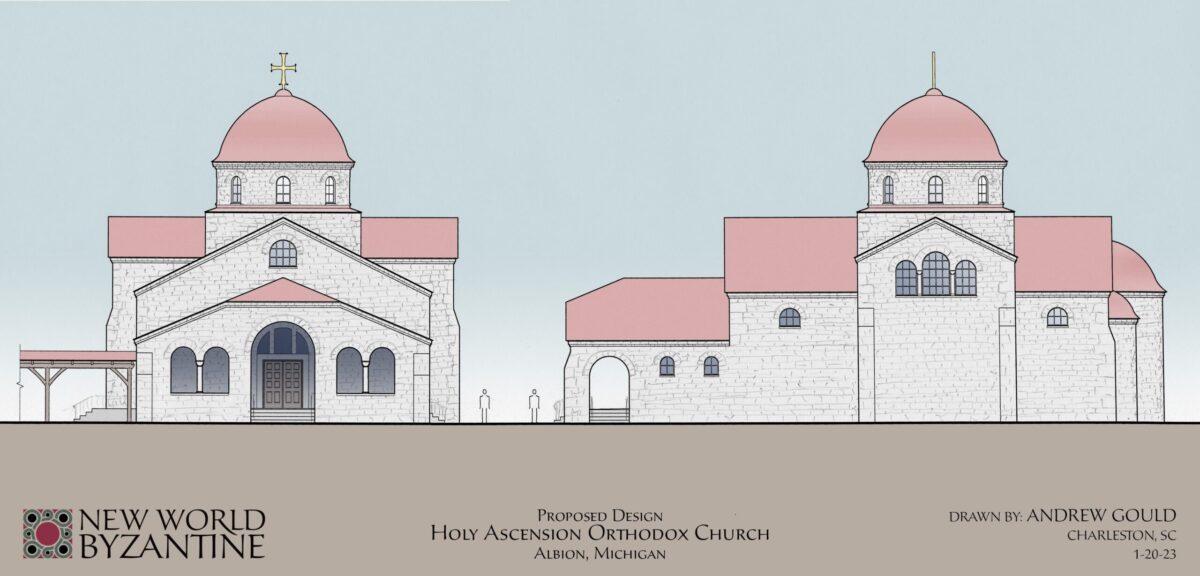
We are using this page to discuss/share and track the design of our new parish church.
This is the best intro to beauty in building Orthodox Churches.
Quick Links that are relevant for the current discussion. (11/16/21):
(use your google login so we can see who is saying what)
The Timeless Way of Building:
http://library.lol/main/7B0EB439990E88F83A4583821E415C7E
Audiobook: https://mega.nz/folder/gqJhzY6Z#yVvx4noEUQqB2ybuxZC71A (may need to rename downloaded file to .m4a in order to play)
A Pattern Language:
http://library.lol/main/6A09E611680C7FA35B6C06824962A9A1
Ch. 6 of The Ethics of Beauty: “The Mystical Architect”.
https://app.box.com/s/lqq7yy7clu4l978kldyntqdg2k5ckrg4
(note: pages 424-27 are a decent 3 page summary of The Timeless Way of Building;
pages 427-30 connect Alexander’s ‘Patterns’ to the Presence of God in all things)
Grounds level patterns summary:
https://docs.google.com/document/d/16AfXvaHrt1rXAV-wBY5IKJh2jJc-xxb44okPPGQMAas/edit?usp=sharing
Here are Andrew’s latest (and final??) plans:
https://drive.google.com/file/d/1Hy1yCtydPMl8trsmIntnUb0m4JMc0mTz/view?usp=sharing
You won’t find much new in them if you looked at the last two sets. The changes are mostly technical and in smaller detailed things.
However, the stone and brick work is all flushed out now, which is pretty cool, but it’s hard to get a sense for it from the black-and-white plans. But stone will look something like this.
And the full effect is supposed to look something like this.
So now it’s Jeanette’s turn again. I have tried to incentivize her to get them done forthwith, not sure if it’s going to change her speed and cooperativeness much though. <shrug>.
Here is a fantastic lecture on Beauty in Church Architecture, by Archbishop Alexei.
https://www.youtube.com/watch?v=c11FFXIlhUg
It’s the best lecture on the subject I’ve heard to date.
Here is an audio file of the same lecture:
https://drive.google.com/drive/folders/1TovRS_Yi_J9RZ57bpenS6qfvW7y1o3VL?usp=sharing
Following up from discussions today… here are all the church plans we have so far:
https://drive.google.com/drive/folders/1FSIKWTQNXDf3EN-HzXaNe-WoWrYjc_UV
Following up with some conversations, here are the mechanical plans from our mechanical engineers as of last week:
https://drive.google.com/drive/folders/1Q5Ag-H_zLKhCl6e9MyUAmi25ST2mJD6n?usp=drive_link
We just had another meeting yesterday so some of what’s on in these plans is already out-of-date, but it will give you the general idea of what’s going on if you’re interested.
Outdoor stairs:
Here’s an issue that has come up. They are waiting for an answer from me, so if you have thoughts on this let me know right away.
As you know, we have been designing the building with a second staircase on the outside of the building up to the balcony. This wasn’t what we wanted, but the size of the balcony required it. So we decided to make the most of it and make it as nice as possible.
But Jeannette raised the question with me and we looked at it a bit more closely. The rule about this, to put it simply, is that anything that holds over 50 people requires a second set of stairs, and that number is in-turn defined by square footage. It turns out that, after all of the tweaks that have been done, and when you count carefully, excluding everything you’re allowed to (such as landings and “hallways”, etc), we are a few square feet short of hitting that requirement. So we now have the option of removing that second staircase.
Andrew is fine either way as far as aesthetics and such things are concerned. He offered this list of pros and cons:
The disadvantages of removing the stair:
The advantages of removing the stair:
I don’t find the above disadvantages very compelling, and the only comments I remember hearing from people about the second staircase were negative, mostly about chasing children around in circles and so on.
Having the access be via a single staircase seems desirable to me, from a “patterns” perspective. It is plenty wide to allow for two-way traffic, and a single access point seems more predictable/manageable to me.
I’ve never experienced a church with a second floor balcony door, so I don’t directly know what it implies for human traffic patterns, but I can’t think of any way it could be better.
Anyway, comments?
I’ll channel those contingency thinkers: in the event that there is some situation where those in the north balcony need to exit quickly, there are a number of obstacles/choke points if there is no exit from the balcony. This is uncomfortable, not just in a way that might prevent those folks from using the balcony, but in a way that hangs in the mind because others you care about are in that space. This is currently one of the burdens that these folks bear in regards to the current balcony, which is smaller.
If we are talking patterns, one conflict that needs resolution is the possibility of getting trapped upstairs. That conflict seems to be more important to the overall parish vibe than the logistical issues with traffic patterns on the north outside the sanctuary.
Here are the “final” plans from Andrew:
https://drive.google.com/file/d/1gju-inhlU_du3v1cPu9rRhFXCOVGjE5t/view
Jeannette is now in the process of reviewing them and adding structural specifications and so on. If that goes well and if her changes don’t screw up anything Andrew intended, then the “A” (architectural) and “S” (structural) plans will be done. But I imagine that negotiation isn’t quite done.
Meanwhile I have been meeting with the mechanical engineers to get those plans done, which are HVAC, Electrical, plumbing, and fire alarms. They are not going very fast, so I’m imagining another 5-6 weeks of that.
Also, if you haven’t seen them yet, here is the final external artistic rendering:
https://orthodoxchurchalbion.org/wp-content/uploads/2024/10/CHURCH-RENDER_color_rev_3-scaled.jpg
And the internal:
https://orthodoxchurchalbion.org/wp-content/uploads/2024/11/finalInterior-scaled.jpg
I got these from a local artist that Jeannette recommended to me. I quite like them!
Concerning the internal one, I though it would be interesting to include some of the iconography, in a blurry sketched way, so as to indicate iconography without being too explicit. That worked for the icons on the iconostas, since they are far enough away from the viewer. But the attempts on the nearer walls did not work since they were way too clearly NOT icons, and thus distracting. So I had him leave those off.
I asked Gabriel to take a look at it and see if closer-up icongraphy could be added. But I’m not sure it’s a good idea to get that specific yet. He’s going to ponder the issue and see if it is worth solving.
Just thought I’d drop these here–some chandeliers from Constantinople in the height of the Byzantine period. Saw them at Dumbarton Oaks museum in D.C. last month. (One is leaning on its side; the other two are hanging as they would be in use.) Just thought they were interesting to consider as they have the wrought iron look Andrew goes for but are 2-dimensional and perhaps less “oppressive” to the eye.
I came across this article which might be of some interest to this group:
https://psyche.co/ideas/how-the-buildings-you-occupy-might-be-affecting-your-brain
In a nutshell, it reads to me like a neuroscience explanation for the same sort of things that Christopher Alexander says.
Building update 8/30/2024
The set of plans we have from Andrew are marked as “50%”, which is some sort of demarkation in the architecture world that doesn’t really mean half-way, as I’ve learned. In our case it’s more like 80%. Andrew is doing the “A” (architectural) sheets, and Jeannette is going to do the “S” (structural) sheets. And there are also other technical sheets for hvac/plumbing/ada compliance, etc.
Here is an example full set of completely done drawings for the church he finished in Denton Texas:
https://drive.google.com/file/d/17wUqkCzswZkspzRjbg_G1So-KOQ6ehq-/view
The work that Andrew has to do yet are the details of things like doors and windows and precasted elements and trim and so on, which you can see in those plans. Ours will look a lot like the stuff he did for Denton.
It took a little while to get Andrew and Jeannette on the same page because the boundaries between the categories (architectural vs structural) are more gray than you might think. Mainly, Andrew includes structural specifications when they are relevant to the aesthetic of the building, but only when it matters, and usually without much detail, intending to leave those sorts of things for Jeannette to fill in. But that wasn’t very clear to her. I think it’s the first time she’s ever worked with anyone doing anything like Andrew does. I met with them both separately to piece this boundary problem together, and then finally we all three met this week to clarify all of that. So for the moment it seems that the logjam is now cleared.
So Jeannette is now ready (in terms of what she needs from Andrew) to start working on her part. But, because of other projects, she can’t start for a month or so, and then she’ll need a couple weeks to do it. So that puts us about two months out. Andrew said he will be done with the rest of his detailed element pages by then. So, in theory, they will both be done in about two months, we set a date of Oct 23rd. And there are a few other smaller parts (like the HVAC, electric, etc) that Jeannette and I will work together with third parties (eg, hvac engineer) to get done in the same time frame.
At that point, when both are done, they will look at what the other has done and make sure that everything fits together. If not, there will be some more going back and forth with revisions.
The bill we got from Andrew for the plans so far was for another 20K. <sigh>.
I asked him what it’s going to cost for him to finish, and he estimated another 50-70 hours (eg, another $10K-14K). So obviously I want to get as much of the rest of the work out of his hands and into Jeannette’s as soon as possible. :-/. Sheesh.
At any rate, what we have so far is enough to start looking for builders. So I started a page to gather together all the information a builder might want to know, which is here:
https://orthodoxchurchalbion.org/buildersearch/
Colm contributed the “Request for Proposals” document referenced there. I (and Colm) would be glad to have any comments about it, in wording or otherwise. I’ve started to send it to builders I’m aware of in the area, and so far I’ve got two “we are interested, keep us in the loop” replies. But I’m on the lookout for more, so if you know of any builders that would be interested, let me know and I’ll reach out to them.
We also still need “presentations renderings” to help with fund-raising. I asked around at church of all the people who have drawing talent, but no one feels up for it, or they haven’t gotten back to me. So I’m pursuing some leads to hire someone for that (rather than keeping on Andrew for that part).
I also chatted with Andrew about some other design details that I was curious about, or that people had brought up to me from looking at the plans:
** I noticed that the awnings and staircase on the outside of north side were all specified as “steel”, which made me picture a fire-escape looking thing. But he assured me that steel things, formed and painted properly, can be quite nice, and sent me some example of what he’s planning:
https://www.dropbox.com/scl/fo/lrx3l6geni3xjr7lnlegl/AIUWRxbl0zp_6GGw6xpdS4Q?rlkey=c1hsaf7qmn34ipodyt890umq5&e=1&dl=0
And indeed, they are pretty cool looking. So I asked him to plan for the same such awnings over the main (west) doors and also over the stairs going down from the south side of the porch. (since they were not in his plans).
** Another question was gutters or drains? He thought either way would work, but not having gutters would be much harder to deal with because of the small overhang all around the building. He also pointed out that you can get gutters that look really nice, like those half circle copper gutters.
** I asked about the hip in the roof at the far west side. There wasn’t a structural reason for it, he had tried it without and just thought it looked a lot better to have those two lines in the roof interrupted by that hip. I think I agree.
** I also asked about maybe raising up the altar floor another step, so that there would be two steps instead of one. It would be easy enough to add a the step in the doorway between altar and sacristy, which wouldn’t change any other elements. I personally don’t have terribly strong feelings about this question – to me one step seems too low, but three feels too high, so I could go for two.
He said he would take a look by trying it in the 3D model. He says high altars (3 steps or more) tend to go hand in hand with a high iconostasis, which makes sense because the taller the altar, the more it would block any view you would get of the iconography in the apse, so you might as well focus on the iconostasis.
But early on we seem to have opted (mostly by shrugging?) for a 1 (or 1.5) level shorter iconostasis, around which he made design choices, such as the visibility of the apse. So raising it up more would block the apse more, depending on where you’re standing. So he was skeptical about raising it any more, but said he’d take a look. (although I’m not sure if he actually will).
That’s all I can think of for now!
Here is the latest set of drawings from Andrew:
https://drive.google.com/file/d/1PqzS6bqlu_c4eozAczxPx1XNhREF2BU8/view
If you’re only casually following the progression, you won’t really notice anything different. It’s basically what we’ve seen on the previous releases, but with all the detail and dimensions drawn in.
I thought we were going to have twelve windows around the cupola, to put each of the eleven disciples and the theotokos, one to each of the twelve spaces between the windows. He has it drawn with eight windows. I’m curious how the iconography plan has changed to accommodate that.
Latest revisions are here:
https://drive.google.com/file/d/1mOkSlusWpdR9XOVHaYkFOP-yrKh6Us-b/view
Concerning the issues I raised from the last drawing set:
The door was moved as we asked, and he rearranged the landings on the north side to accommodate the door move. The basement bilco doors moved to the southeast corner. That’s the area we’ll use for utility type things – AC compressor, exhaust pipes, etc.
The main floor got changed from concrete into wood (I-joists). So now there is row of center supports down the middle of the basement to hold them. And the basement is rather tall now. Ask me more about that if you’re interested.
The previous drawings had the basement extended to be under the outside porch. No need for that, so now it only goes under the conditioned space.
We had a long discussion about stairs and the narthex. The basement stairs are now under the balcony stairs, which got shifted around a bit to accommodate it. Having the two staircases together will give us more space in the narthex closets. And now basement access will go directly into the nave so that should make getting stuff in and out of storage easier. And he arranged it in such a way as to maximize the wall space for people to stand against.
So now the south side of the narthex has a separate closet and coat room, the latter without a door, and the other doors now open INTO the narthex. He thinks the way the coat room is arranged w/out a door and with the walls placed as they are, that it will minimize the view of the chaos that might happen there, while still keeping it relatively easy for people to move in and out of. If it ends up being too much, adding a door would be trivial. And if it ends up not being enough space, we could remove the non-load-bearing wall between it and the closet next to it. Hopefully we don’t have to because a closet right there would be pretty handy.
I seem to have gotten the email thing with this blog resolved, so hopefully you’re all getting this.
But note that,
a) as before, you can’t reply to the email to post something or respond to the sender, you have to do it via the blog, and
b) if you have trouble logging into the blog to post something, note the instructions at the top of the login page that say that after you have logged in, you need to return to the blog and RELOAD it. :-). (Sorry this is so clunky, I can’t figure out how to make it transfer back to original page automatically. )
Anyway….
If you didn’t see my post from two weeks ago, here are the plans Andrew sent us:
https://drive.google.com/file/d/11sUjHVfxqgzyOm097f1h_aQLkr1XjAam/view
As I mentioned, they are not nearly the full set of construction drawings I was hoping to have by now, but maybe they’re far enough along to start to show to builders and get some ballpark numbers. Andrew’s estimates, given the other buildings he’s done that are going to bid right now, is that ours will be about 3 million. But Jeanette thinks it will be less.
I’ll forward Andrew’s email (below) that he sent with the drawings. He’ll be back working on our stuff, he says, after he returns from his trip. That is, in theory, Monday the 24th.
So that gives us this coming week to gather any comments we have on the existing plan before it moves ahead. As he says, we’ll want to identify any basic issues now, before these get turned into final construction drawings.
The only thing I see that I really don’t like is the location of the two side doors together at the northeast corner. I’m glad to have a door to the sacristy there, behind the iconostasis, but not the general door right next to it. Having it way up in the front corner like that is too exposed and people would be reluctant to use it, it seems to create a bad human traffic pattern. Whereas if we put it on the west side of the north transept, or thereabouts, then it could easily be used to slip in and out of the courtyard (especially with kids, etc). (See the attached picture). And it would empty out nicely near the bottom of the outside stairs coming from the balcony, making it easy to get anywhere.
In that spot outside the building, where I’d like the door to be, he placed “bilco” doors, which are the slanted doors that go from outside a building directly into the basement, for getting big things in and out. That’s a utility sort of thing to me, and doesn’t seem well-suited for the nicer-looking courtyard I had in mind. I’m thinking the southeast corner (see attached drawing) would be a good place that sort of utility stuff, like those doors, and the AC Compressors, etc. We could put a nice fence or something around them so that they’re not easily visible when approaching from the parking area.
Besides that I can’t see any obvious issues. If you have anything, weigh in soon. I’ll call Jeanette next week and ask her what she thinks about the drawings and how close we are to getting quotes, etc.
————————
From: Andrew Gould <andrew@newworldbyzantine.com>
Date: Fri, May 31, 2024 at 6:38?PM
Subject: RE: Drawing title information
To: Jeannette Woodard` <woodardarch@sbcglobal.net>, Fr Joshua Frigerio <priest@orthodoxchurchalbion.org>
Hi Fr. Joshua and Jeanette,
I’ve made a great deal of progress on design-development drawings for the church. Attached is a review set in both PDF and DWG.
In the PDF set, I’ve laid the elevations, plans, and sections out on sheets for convenience of review. In a few places I’ve zoomed in on wall-section details and dropped in a few notes so you can see what materials are represented. Beyond that, I think the drawings will be pretty self-explanatory. Obviously, once this goes into construction drawings there will be a million more notes and dimensions and details.
Fr. Joshua – you should carefully review this to be sure you’re happy with the design and functionality. There are some new features you’ve not seen before – like the basement stair and the exterior stairs and ramps. Any changes you might want should be identified now, before we move into construction drawings. I recommend you print the PDF full size (24″x36″) so you can see the drawings clearly.
Jeanette – I think all the wall sections are in line with what we’ve been discussing, so hopefully there will be no surprises there. I wasn’t sure how you’ll want to handle the basement. For now, I’ve drawn formed-concrete basement walls transitioning to CMU just below grade. The floor system is shown as steel I-joists and corrugated steel decking with slab. I don’t know anything basement construction in Michigan, so happy to defer to your expertise if you have a different way you want to do it. Any changes you want – just let me know and I’ll adjust my drawings accordingly.
If you want to start moving on structural design (especially the basement and floor system), the CAD file should have all the layout info you’ll need.
I’m heading abroad for 3 weeks starting tomorrow. Best wishes.
Andrew
I agree with the door placement change, and the need for the basement entrance to be elsewhere.
— Daniel
Oh, glad you caught that door by the altar. I regularly visit a church where the only door to the hall is next to the altar, and I consider it a prime example of a broken pattern. Very awkward.
Does anyone have any thoughts about this? I’ve attached a picture of the area I’m talking about, which is the closet and stairway on the south side of the narthex.
He put in a wall and doors there – one door to the closet and one to the stairway.
I’m wondering why.
I imagine we’d be using that closet space for coat racks, but wouldn’t it be sorta hidden and awkward with the doors like that? Why not leave that area open for easy and obvious access to coat racks? Or maybe a door’ish type of transition without an actual door?
And why put a door in front of the stairs? The intent of the basement is storage and utility, so no need for people to wander down there …. so maybe making it less obvious with a door is good? Seems to use up space though. Hmmm.
I would understand the door for the stairs to the basement to reduce the temptation of wandering children, but the places I have seen coat closets with doors are pretty awkward.
I think we should keep the door to the basement (and maybe keep it locked when not in use) to keep out wandering children and/or confused visitors.
I agree that we don’t want a door to the coat closet area, but in my mind keeping that a doorway-sized entrance is nice. Yes, it may impede traffic a bit, but our coat dumping areas are traditionally, to put it kindly, less than beautiful, and I wouldn’t want that to be visible to someone as they walk through the front doors of the church.
It occurs to me that Andrew may have had in mind that we’d primarily be using the hall for coat racks (which I think is still part of our vision–people go in there first for Sunday School, to drop off food, etc., then come over to the church) and thought this one in the narthex was just a storage closet.
How about this instead? I attached a picture. I removed the doors and instead put a door directly on the staircase. And I pulled in the walls a bit where the doors used to be, to sort of off-set the space as being something separate.
I think we should leave it the way he has it drawn. Those two doors match the two directly across from them on the north side of the of the narthex. By taking out the wall or removing the door and frame the effect of the symmetry will be lost and the space will be lopsided, creating a broken pattern where people will congregate instead of being directed east to the nave. We could prop the door open all winter, or even take it off the hinges, but in the summer it will be nice to close it.
I think I recall that, in Andrew’s church in Charleston, the narthex has the same symmetry – two matching doors on each side. I remember that they were not labeled so I was rather confused trying to figure out which way to go. 🙁
But I don’t really remember the effect of it one way or another when it comes to beauty/patterns.
Thinking about it, they seem to almost always be lopsided in some way or another. If not the space itself, there’s a candle-desk, or a pamphlet rack, or a coat area or bathrooms or hallways or whatever that often seem to only go in one direction. (Not saying this is good, just noticing it.)
I have noticed ugly coat rooms, but I have also been annoyed where there wasn’t one at all, or one that is too hard to find. So maybe something that makes it clear where it is, without being obnoxious. The monastery seems to have accomplished this by making it out of your sight path to the right, but still easy to find.
But mostly as I think about this, I’m noticing I haven’t thought about narthex traffic patterns very much, probably because we don’t have one to speak of in our current situation.
Luke: I’m not seeing how having the door would lead to less congregating, it’s not intuitive to me. But I’m interested to chat about it. I’d like to also ask Andrew his thinking on this point.
I’d say let’s move this to in-person. Let’s try to get together at coffee hour and talk it through a bit more.
As he mentioned he wants any changes by this coming week. Submitting changes like this after this round is going to start costing us money. So this is everyone’s last chance to look closely at this layout for any potential issues.
I chatted with several of you and am still mulling this over, and now I have a new question.
It’s typical to put one staircase over another to make the best use of space. But instead he separated the two staircases, putting the basement stairs in that closet we’ve been talking about, instead of under the stairs to the balcony.
There’s nothing wrong with doing that if separating them serves some other goal higher than space conservation. But I’m not really seeing that it does here… or?
Why not put the stairs to the basement under the balcony stairs?
Option 1: See the attached picture, the arrow I labeled “A”.
Instead of the little closet door he put there, we could have a door going down to the basement. Since it’s a utility/storage basement that shouldn’t get any use during a service, I’m not seeing it creating any pattern problems – people could stand in front it same as if it were just a wall. And I can see a practical advantage to getting things in and out of the main church space if it were there, not to mention the space we’d get back from that potential coat-room.
Option 2: See the same picture where I wrote the “B”.
If there is a good reason to keep the entrance to the basement out of the main church, we could flip the balcony staircase around so that the high part is toward the west (same configuration as the one we have in our current church). If we do, we could put the door to the basement where I wrote the B, ie, at the back of the coat room. We’d gain all the space back in the coat room in this scenario too.
Thoughts?
I’m trying to fix this building design blog so that people receive emails when a post is made, it seems to have broken. I just put in a fix that seems to have worked on other blogs. So, if you’re reading this email, would you let me know that you got it?
Either by text or email to priest@orthodoxchurchalbion.org.
thanks.
Christ is risen!
If you are getting this email, would you let me know?
At least a few people didn’t get an email update from the blog when, 10 days ago, I posted the latest Andrew plans here. If it isn’t sending out notifications (or they are being blocked somewhere), we might have to consider switching platforms or something. 🙁
Here are Andrew’s latest drawings:
https://drive.google.com/file/d/11sUjHVfxqgzyOm097f1h_aQLkr1XjAam/view
Not much to surprise you here, these are mostly just technical layouts of what we already knew. But we’ll need to make sure we’re good with these layouts because the subsequent work all depends on these. I don’t see any issues with them.
These are still not the final construction drawings I had hoped for. I had the impression we’d have detail enough by now to start asking for bids, but I’m not sure that we do. I’ll talk with Jeanette next week and see what she thinks.
During our earlier study of Christopher Alexander’s stuff, I somehow missed this article:
https://www.firstthings.com/article/2016/02/making-the-garden
It’s interesting because it’s his summary of how one finds God in architecture.
Meanwhile Andrew is still promising to have us plans by the end of this week. So, God-willing, maybe we’ll be getting together again and moving this forward soon!
Some random photos from Russian Instagram I’ve been meaning to post. I thought this was an interesting and different direction for a chandelier than some of the work we’ve been considering/seen from Andrew.
I also really love how these choir stands are built and set up. Allows for much more visibility of the director. These seem to be pretty common among the Russian churches I follow online. Also I appreciate the warm lamps.
The clearing of trees is moving right along. See attached picture.
This is from Andrew’s facebook post. He installed some of his chandeliers last week, I gathered the pictures and put them here:
https://photos.app.goo.gl/hYsqgpgN3NRzo4Na9
This was the first time I saw them installed and really liked them – seems to mesh with the churches he put them in much better than I’ve seen so far. Couldn’t tell you why though. ?
This is what he wrote:
Last week I went up north to install chandeliers in two churches – St. Alexander Nevsky Cathedral in Pittsburgh, and St. Mark Orthodox Church near Detroit. I worked very long days for a week and got all eight fixtures completed just in time for Christmas. Each project included one of my distinctive ‘choros’ chandeliers – a type of fixture that hangs from the perimeter of the cupola, invented in medieval Serbia. These ones are seventeen feet in diameter with 64 electric candles and 24 hanging oil lamps.
I think you might be liking these ones more because both of these churches have darker ceilings than some of Andrew’s? Versus some of his with plaster ceilings/walls (particularly where iconography has not yet been finished so everything is very white/bright), where the dark ironwork stands out more.
Incidentally, Susan and I were chrismated in the second church pictured (St Alexander Nevsky in Pgh) and I can attest that in person it is…not the prettiest church, to put it mildly. The photography is doing it some favors here. But I think the fact that the chandeliers are working (and in fact improving the space) attests both to Andrew’s artistic eye (in suiting a chandelier to a given space) and the powerful effect of his chandeliers, which have always reminded me of being in the Hagia Sophia–these broad, low-hanging chandeliers beneath very high, soaring ceilings, bespeaking something of heaven reaching down to earth. (Sorry for the poetics; it’s 11 pm on a fast-free Friday.)
Yes, I think both the dark interiors help and also not much light coming in from outside (overcast days in both cases). And no wall lighting. Makes it go from dark to semi-light as you from the perimeter of the church toward the middle.
And also the chandeliers are not significantly blocking the iconography behind them, as I’ve seen his chandeliers do in other places.
Of course, with his chain design, we wouldn’t be able to swing it at all. 🙂
Luke said: The thing I’ve always disliked about Andrew’s chandeliers is that they look machine made, specifically CNC water jet cut pieces of sheet metal instead of hand worked iron. While I’m not opposed to technologically complex, computer controlled, labor saving tools in general, I do think their products, especially in such a central and visible place, detract from the aesthetics of Orthodox Church architecture and design.
That’s especially true when you’re up close. I went up to St. Marks when he was installing them and got to look at and hold the preassembled pieces. Besides the machine-stamped look, the other thing weird was the fake candle fixtures, complete with fake wax dripping down the sides of them, all stamped in plastic. (although honestly I’m not sure I can think of a better fixture to use just there.)
However, you don’t really notice either of those things as much once it’s up, and even less so once you step back from it a bit.
FWIW, Fr Joseph (at St. Gregory Palamas monastery) didn’t care for Andrew’s chandeliers and instead had one made by Aiden Hart. I’ve attached a picture. It’s a lot more curvy and flows and doesn’t have the CNC-cut look to it at all. (and, of course, it swings!)
Ooo, I like that!
I also really like this! The reason I’ve articulated not liking his chandeliers thus far is largely how dark the metal looks against a bright/light background. Doesn’t seem to fit. I hadn’t seen the quality up close though.
Here is the latest floorplan from Andrew:
https://app.box.com/s/1fvzpc3uxwglgnefj3tje1mmvsnfubsc
I’ve attached an overlay of our current church (red lines) over the new church. Each square is 1 square foot.
It’s a bit hard to calculate standing-floor-space because of all the pillars and things, but my current guess is a 974 sq ft increase on the main floor (from 1238 to 2212). That’s about a 78% increase.
The balcony size is roughly doubling (260 to 525), plus the walkway between the two.
And there’s also the Narthex, about 375 more square feet of lingering space.
So, all told, that’s quite a larger space increase than I was thinking we we’re talking about.
Not sure what to think about that….
Since I’ve finally bothered to login again… I think this additional space is great! Looking at the main floor, I think what you’re essentially doing is moving the choir out of our existing amount of standing space–that’s where the main additions are in this layout. And if you think about places people are reluctant to stand (close to the iconostas/ambon, or in the middle “aisle,” or up near the front icon veneration “paths”), this layout, on the opposite “wing” from the choir (I know there is a proper word for this but again, 11 pm on a fast-free Friday) (thus also all the parentheticals; I apologize) gives you “up-front” space that is NOT in the middle of those paths/points of standing-resistance. Frankly, I think I’d feel nervous if we were looking at a building plan that didn’t give us at least this much additional standing space.
The thing I’ve always disliked about Andrew’s chandeliers is that they look machine made, specifically CNC water jet cut pieces of sheet metal instead of hand worked iron. While I’m not opposed to technologically complex, computer controlled, labor saving tools in general, I do think their products, especially in such a central and visible place, detract from the aesthetics of Orthodox Church architecture and design.
A small miracle – we got designs from Andrew!
Here are a bunch of pictures he sent me:
https://app.box.com/s/7wo70ig9liwi9nqf1s94nn6gmrabcyuo
I’ll share them at the parish meeting tomorrow, if I can get the tech to work.
Here is the email he sent with them:
————————————————
————————————————
————————————————
?
Hi Fr. Joshua,
I’ve made a great deal of progress. The interior of the church is essentially fully designed, and I’ve totally rebuilt the 3D model with all the current details. The iconostasis and choros are still placeholders, but everything that’s actually part of the architecture is accurately modeled.
Attached you’ll find a current floor plan and 37 screenshots of the model.
A note on the windows: They look a bit plain in the screenshots, but the idea is that they’ll be fitted with leaded glass – mostly clear, but in decorative patterns. I attached a couple photos to give you an idea of what the glass will be like.
A small miracle – we got designs from Andrew!
Here are a bunch of pictures he sent me:
https://app.box.com/s/7wo70ig9liwi9nqf1s94nn6gmrabcyuo
I’ll share them at the parish meeting tomorrow, if I can get the tech to work.
Here is the email he sent with them:
————————————————
————————————————
————————————————
?
Hi Fr. Joshua,
I’ve made a great deal of progress. The interior of the church is essentially fully designed, and I’ve totally rebuilt the 3D model with all the current details. The iconostasis and choros are still placeholders, but everything that’s actually part of the architecture is accurately modeled.
Attached you’ll find a current floor plan and 37 screenshots of the model.
A note on the windows: They look a bit plain in the screenshots, but the idea is that they’ll be fitted with leaded glass – mostly clear, but in decorative patterns. I attached a couple photos to give you an idea of what the glass will be like.
Andrew was ready for another short meeting yesterday. The columns got smaller and changed a bit, the balconies got connected, and a few other things. But I’m having trouble getting pictures to illustrate so I’ll post again once I have them.
Here’s a short lecture from Andrew Gould on some of the side aspects of church beauty: textiles (icon stand covers, etc), flowers, embroidery, carpentry, and so on.
In particular I enjoyed the attempt to bring together the ethos of Orthodox traditional beauty with the beauty/style/tradition of American craft traditions.
https://orthodoxartsjournal.org/lecture-exploring-church-as-the-center-of-our-life/
I have a few questions. Will that dampen the acoustics? The balconies come quite far forward. I wonder if that is a big reason why sound does not carry well in the monastery church. I’m also wondering how much the arches coming down from the ceiling are going to dampen the acoustics. Are the apses smaller in this version?
Andrew told me up the other day and said he’s full-time on our design now.
He had done a rough 3D-modeled of the inside of the church and asked me to jump on zoom and have a look.
The pictures I attached are two from the rough modeling software, one facing east and one west.
There are no full renderings of ours yet, but I also included two such pictures he gave me of another church he’s working on that is almost the same as ours at the front.
The only surprise change he made was that he split our balcony into two small balconies, as he didn’t want any balcony over the main doors. With the proportions/size of this church, it felt-too cave-like to him, and he didn’t like how you couldn’t see the dome/arches/etc when you came in until you walked half way in. (I kind of thought that would be a cool effect, but I can also see how that could go too far. maybe? hmm.)
Our previously planned balcony was of a size that it was going to need two staircases (fire code). We had a discussion back then of maybe having one of them be outside, to save floor space, and so on. Smaller balconies (that hold 50 or less) are only required to have a single staircase, but since there are two balconies now, it’s basically the same thing as far as stairs go.
Anyway, I told him to forge ahead! 🙂
Off the bat, two balconies seems really impractical to me. I could envision a lot of scenarios where you go upstairs looking for someone or something and end up having to go all the way back down and up the other side (ie, looking for a kid during service). It might also double our stair problems, though I suppose we might not have been able to to avoid that anyway.
The cave effect also seems like it has equal but different problems in each scenario. Taking the monastery as an example, maybe you see everything when entering the church, but the two side balconies seem to direct people to stand almost exclusively under them on each side, which means you get the cave effect for *all of the service* instead. Even though the staircases look like they take up most of that space in this rendering, the balconies still have that same effect of making the whole center space feel like an aisle/walkway, even though it’s way too much floor space to be reserved for that. I think it would still feel vaguely uncomfortable to stand in that center space, similar to the monastery.
I’m having a hard time picturing the problem with one back balcony. Would St. Tikhon’s be a good comparison? That certainly doesn’t constrain where people stand, and to my mind it has a *lot* less of a cave effect than the monastery does. Would the square footage of the balcony we’re planning come further forward?
I really love the beautiful wood panels shown on the railings, though.
Here’s a good video of a tour through an Orthodox Church, talking about architecture & iconography, etc. It’s Jonathan Pageau and Fr Josiah Trenham.
Do we have any idea of the total cost of the church at Holy Cross in West Virginia?
Or has Andrew said anything about a cost estimate?
I’m at a professional development seminar on capital fundraising so I’m thinking about our project too…
I asked Andrew that very question while we were walking around the building when I was there, but he wasn’t sure himself, and I wasn’t able to meet with the abbot at all. Andrew guessed 4-5 million.
I’ve talked myself out of worrying about that number too too much, because our building is nowhere near what they are building. Besides it being larger, it’s got a huge bell tower, and full refectory in the basement, and it’s on a hill, and all of their labor and materials are coming from very far away which is really increasing their costs. Not to mention all the money they lost of their first contractor who took off.
Once we get some real plans, we need to take them to builders in the area to get some estimates from them so that we have a target number. I think (hope!) we’re getting close to that point, so I’ve also been thinking/reading and talking to people about capital fundraising. But soon we’ll need to sit down and map it out more specifically.
Alexander lent me his manual “Principles & Techniques of Fundraising” that he got from an “IUPUI”? conference, which is a real page turner! 🙁
Anyway, let’s chat more about this at parish council on Saturday.
Okay, thanks!
Yeah, I’m not worried about the numbers either, just curious. The seminar I’m at is out of the same IUPUI Fund Raising School. They have some formulas and charts to figure out how many donors you need of certain $ amounts to reach a goal. Maybe doesn’t apply perfectly for us, but thinking about it is something to keep my brain alive during the sessions. 🙂
After pestering Andrew last week, I got this reply today:
—————————————————–
Hi Fr. Joshua,
You’re finally at the top of the pile! I’ll plan to send you new drawings before the end of this month. By then I should have gotten through most of the design development and 3D modeling.
Thank you for your patience.
Andrew
When I visited Andrew a couple weeks ago, we emailed afterward and I was able to get the file for the floorplan. It’s probably not the latest iteration, but here it is anyway.
1box=1foot. So the whole footprint is 60×100 (from porch to apse).
For reference, the hall is 50×100.
I’m thinking about maybe setting this up in the parking lot with 2x4s stands as we did before.
Andrew’s building at Holy Cross is coming along, see updates at their facebook page:
https://www.facebook.com/holycrosswv
I noticed in the pictures that Andrew is there right now. I texted him and he said he’d be there until Wednesday afternoon. So I’m going to drive down there tomorrow (Tuesday) so that I can be there for Wednesday morning services and after breakfast Andrew will show me around the building. We’ll see what I can learn. And of course the more subtle intention is to get back on his radar. 🙂
Here are a bunch of pictures of the ongoing construction of the church at Holy Cross Hermitage in WV. It’s one of Andrew’s that uses similar construction as he’s planning for us:
https://app.box.com/s/na47kw47f035lw0lhschru8p3ymewpbr
Here are a bunch of pictures of courtyards (or other outsides/facades) I came across during my Holy Land trip that I though might inform our later courtyard design:
https://app.box.com/s/k0wwiifts7i7b7x97sp3976xjk5xxbw5
I’ll gather together a separate collection of pictures that I took that I found had interesting architecture in various ways, but that will take me a little longer.
Is this Comic Sans in mosaic form?? Trippy.
The courtyards are gorgeous, on the whole, but they do make me wonder what an ideal courtyard would look like for Michigan’s climate, i.e., how to create one that wouldn’t just look dead and unwelcoming half the year. I wonder what they do in Russia, etc.
So what I’m hearing is we’ve gotta hustle so we can be the *first* parish in the OCA with a solid stone church? 😉
Yes 🙂
Last point discussed with Andrew on 1/24/2023 – dome configuration.
Some churches dedicated to the Ascension paint the Ascension scene in the dome instead of a Pantocrator. At first glance it’s still basically a Pantocrator (Christ in the middle of the dome blessing). However, as you follow the curves of the dome down, all the figure from the Ascension icon are in between all the windows. So basically a 3D Ascension/Pantocrator. Pretty neat. See attached pictures for examples, or the links below if you want to VR yourself around some of those churches.
The reason this matters at this point in the design is because in the usual dome window configuration, there is an East window, which offsets the whole lower window scene pushing the central figure, the Theotokos, off-center. (see picture). Andrew’s idea was to turn the windows so that the east wall of the dome is *not* a window, but rather a space between the windows, where you’d paint the Theotokos, thus centering the whole thing.
This seems like a fine idea because, even if we opted out of this idea in our iconography later, the windows are all still perfectly symmetric/normal.
https://www.blagofund.org/Archives/Pec/Demetrios/VR/
https://www.blagofund.org/Archives/Pec/Apostles/VR/
I love the Ascension dome idea!
I’m open to pretty much anything for the exterior, though I’ll chime in in agreement with Andrew that I’d like to avoid fake exposed timber rafters.
This type really makes sense given our our patronal feast.
Notes from meeting with Andrew Gould on 1/24/2023:
(thanks to building design secretary, Anastasia Farison!)
Stone cladding vs timber vs stucco—materials, aesthetic, etc
Stone type not exactly yet determined. We’ll have different options from the quarry. Particulars still need to be researched. The stone that Andrew drew is just a fill-in.
We can still do half stone and half stucco if it comes to that. It’s half our aesthetic decision, half a cost decision. If we decided to stucco the top portions, dome, etc, it could save us some money. It’s something that can be on the table in the future if we run out of money or if we want to do all or only some stone cladding.
Many old Michigan buildings are partially stone and partially brick. Andrew showed us some beautiful old Michigan buildings where the main portion of the wall is stone and all the edges and lintels are fun brick patterns. Also the arches and finer work are much easier to accomplish in brick if the stone is large and rough.
What is the roof material/color?
No decision there. It’s just a fill-in—we need to decide that kind of thing.
Roof overhang? Exposed timber rafters?
“Impossible to do that in a way that is structurally authentic.” We won’t *have* rafters that will naturally stick through the walls to create overhang, like an old building (which would have poor insulation). In our area we’re going to need a significant amount of insulation in the roof, which thickens it to the point where the rafter is much lower than the roof overhang. This means that while he *could* do it, any kind of overhang/rafter would be structurally fake, complicate things considerably, and compromise the integrity of the insulation.
We can gutter it or not. Those can be quite inconvenient—get clogged with leaves, overflow, etc. Can just put a gravel ‘gutter’ around the perimeter for water to fall on. (such as at Dormition Monastery)
Much overhang not necessary on an all-stone building, and not usual on Orthodox Churches, except for Romanian, because they like icons on their outside walls.
(However, if some of the building ends up being stucco, then we might want to revisit this overhang question…)
Handicap ramps?
Hasn’t thought through site planning things, where it will fit best on our land. This drawing wasn’t meant to depict that yet, and he hasn’t forgotten.
More windows? In that balcony area? Altar window?
Yes, in the 3 east apses there is a window in each one, wasn’t visible in that rendering.
There will be quite a lot of light through the dome and the big apse windows, so Andrew thinks we won’t particularly need more windows further back (which would presumably only send more light mostly into the balcony). (He likes the center to be well-lit, and should get darker as you proceed down any transept.)
Transition to Walkway/ possible hall vestibule?
Not his radar yet. Talked about it only generally.
Possible to make it all masonry as well, but certainly not as cheap. We like the timber framing, just asking about transitioning—seems that will probably be a later date problem. Phase 2, if we even get the church built.
A vestibule is a whole new idea to Andrew, he’d like to think about it and see how we can tie it into the walkway.
Front steps
We can widen the steps outside the arch as they come down so they’re not so narrow.
What’s next?
He still has much work to do, mostly we’re waiting on him.
Have civil engineer, consultants lined up, etc. Zoning rules, stormwater rules, utilities…
The township has approved our stuff, Jeannette looked at the rest of it, we’re good all the way up to the point where we actually start pulling permits.
We could probably get Jeannette involved at this point, Andrew can give her the building footprint so she can start looking into more details.
We want official plans so we can get official numbers from a builder and go ahead with fundraising, not just pretty presentation.
We’ve got some more design work to do, very helpful to figure out our stone (what kind, masons, how thick, how big is the stone). We could get a cost estimate for just the stone cladding from a mason— HOW much extra money for all stone vs. half stone, etc.
Andrew promises to keep working on ours, along with a couple other churches.
Cool new idea:
Should we turn the dome windows 22.5 degrees in order to have an “Ascension Pantocrator”??? Find out on the next episode! Separate post coming for that…
Sorry for the short notice, but we have a meeting with Andrew at 8pm. Let’s meet at 7:30 to take our own pulse beforehand. Church basement.
Andrew has been working on our design this week. He sent us a rendering of the exterior for comments. He wrote me the following:
This exterior corresponds to the floor plan and building sections that I presented to you previously. It is very much conceived around use of stone cladding as the exterior material, and by the sober straightforward use of stone that I see in old stone buildings in Michigan (meaning it’s not all gussied up to look European or Medieval).
I’ve attached the drawing.
I love it!! The different levels, the outdoor enclosed space, that it is 100% clearly an Orthodox Church…all of it! What material will the roof be to be that color?
That use of stone is beautiful (and I enjoy his description of the Michigan inspiration). Would it look a lot like the monastery’s church exterior?
The porch is different than I’ve been envisioning–a little more enclosed, and less use of timber than I think has been on some of our concept drawings. I’m not sure I mind that–if anything, I like the extra solidity and emphasized space that this has– but I’d be interested to discuss. My immediate reaction is to want wider steps, especially in front. Another thing I notice is the abrupt transition between porch stone and walkway timber, though I like the variety of all those lovely stone arches and then the sharper angles in the roof and the wood.
I also keep wondering if that’s enough windows in the church as a whole. I assume Andrew knows what he’s doing, but some of them look sparse. Maybe it’s good ambience to have the most light towards the center of the church?
I also expected timber pillars on the porch and more upper windows. I know the light streaming in on the south side will be beautiful, and in some ways more beautiful with fewer windows, but we are used to a bright sanctuary, and I would like to see more upper windows in the nave.
That said, I really like this.
I really like it. Any handicap ramps though?
If anyone has any more questions or comments on this, send them today. I’ll compile them and send them all to Andrew later tonight.
I also thought there would be more wood on the front of the church, and is the entire building cladded in stone? It seems like a lot. Maybe more wood would help balance it out. Either that or more than one texture on the building.
I love it! I like the idea of a little more wood but I also think that the stone is going to provide a lot of wonderful texture not just because it’s stone but also because of the different sizes of the blocks. Is this the color of stone proposed? There will probably be some color variations?
I am trying to summarize our thinking to Andrew about having more timber on the porch, but I’m not sure I know what I’m asking for …
When I talked with him earlier this year, I gave him some of the more recent renderings we had done, and all of them had solid stone porches. The last time we tossed around an all-timber porch was several iterations ago before Andrew got on board. So he gave us what we asked for. :-/
It’s only now when I look at his building that I’m becoming conscious of what some of you mentioned … so I’m trying to figure out why our rendering made the transition from stone to timber less stark than his seems to be ….
Hmmm …
I think it must be because we put all those curved timber things sticking out from all sides under a large roof overhang. Whereas his roof hardly has any overhang at all.
In our design, the building was mostly stone, but had hints of timber peeking out all over, so it appeared to me as a “stone-and-timber” church, whereas his is pure uninterrupted stone.
So maybe that’s why ours blended into a timber walkway more seamlessly?
Is that what’s going on?
I really do love the stone, but maybe he overdid it on the stone?
The other area where it seems over-stoned to me is that it goes all the way up to the dome. When I saw that I thought, wow, that’s going to be too heavy for those columns, and that’s when I noticed the buttresses. So I’m guessing those inside columns have grown in size?
I’m thinking …. could the top part of the church (the tower part leading to the dome) maybe be stucco or timber or something?
I’m just thinking out loud here. It feels like we need a meeting to do some communal out-loud thinking.. Tomorrow? 8pm?
But please reply now if you have any helpful thoughts. I want to send him some sort of reply to make sure he stays our our project and doesn’t get distracted!! :-)}
I pestered Andrew last week with an email, since he said he’d be back to us in November. He replied today with this:
————————————————————————————–
Hi Fr. Joshua,
I’m nearly done wrapping up the ongoing projects I mentioned. I’m done with the big church in Portland for now, and another I was working on in Utah has been put on long-term hold. So I should have a lot of undivided time to attend to your project after Christmas. (I will probably get back on yours before Christmas, but don’t want to promise anything just yet).
Thanks again for your patience! I do apologize for the long wait.
Andrew
Here’s a new interview with Andrew Gould. Sounds like he’s gotten even better at talking about this stuff
https://www.instituteofsacredarts.com/luminous/2022/11/30/andrew-gould-building-beauty
Glory to Jesus Christ!
This post is about the hall remodel, rather than church design, but the topic is more appropriate to this group of people, so I’m posting it in the church design blog.
Since we’re delayed on the building design, maybe we could do some group thinking about part of the hall design.
First load the new floor plan into your memory:
https://uofi.app.box.com/s/cz7bam1x63d5yeo02vfgohtmynxz68b5
The large main room and kitchen are not in the current scope, but everything else inside is. I’m thinking that the bathrooms and the office and classroom can be pretty generic/utilitarian, ie, same ceiling, lights, tiles on the walls in the bathroom walls but otherwise standard sheetrock walls, etc. I haven’t been giving those areas too much thought. But if anyone wants to weigh in those things feel free.
(Actually, Luke and I are pretty excited that we’ve designed a pretty pipe-clog-proof and super low maintenance bathroom setup! He said something like, “it’s one thing to put in bathroom pipes for someone else, but it’s quite another when you know you’ll probably be the maintenance guy for those bathrooms for the rest of your life.”)
But concerning the rest of the remodel I think some groupthink would be good. We’ve talked a lot about entry way spaces and transitions, and also about what makes a room work as far as design and flow. So put on your Christopher Alexander pattern-language thinking caps and look at the “entry area” and the “reception area”/”bookstore/library”.
What I have had in mind is something like the monastery’s reception room (but not as over-the-top-fancy). A comfortable living-room kind of area, sofas, coffee table, lamps? A large window. A rug? a coffee pot? Pictures on the wall. Flexible enough to host an Adult Ed or be a Sunday school space, and somehow also formal enough to be welcoming to visitors and inviting to someone wanting to peruse for books, icons, etc.
And likewise the “entry area”. It’s kind of a mud-room so mostly a practical passage to the other places, but how could we make it be a welcoming transition space? Is it even enough of a space? (should we consider even adding a 10×10 room right outside the main double doors, as a transition to the walkway between the buildings?) Should the door from the entry area to the hall be larger? What kind of doors? half glass, all glass? Should there be doors at all at every each place where I put one on the plan? Or just walk-through?
What should we do with the walls and ceiling in these spaces? Colors? Textures? Wood? suspended or sheetrock ceiling? Or at least what should we avoid? Some sort of pinterest theme connecting these spaces together? 🙂 Also, the ceilings are 10′ everywhere, which seems excessive to me for spaces like these, so I was going to bring them down to 9′ or so. (saves heat/AC too.) All the floors in the remodeled area are getting the same concrete coating, but we could do something classier over the top of that in certain areas if we want to.
The walls around the bathrooms are set in stone, but the rest of them haven’t been placed yet, so there’s still (a little) time to adjust those things. I’d love to hear your thoughts, either here or in person. If there’s enough interest I’d be glad to host a meeting. (Otherwise you’ll all be stuck with my personal aesthetic design choices for years to come! Mu-ha-ha-ha…..)
Attached to this post are some pictures that show the finalized drawings of a church Andrew is doing for a Greek church in Oregon. You might remember seeing some of these because he showed earlier versions of them to us at our meeting with him this summer. It’s relevant to us because many elements of this church are what we’ve asked him for: the central square layout, the middle pillars/pendentives/dome, the four central arches, the wood ceiling on the transepts, etc, Obviously ours is much smaller, and cruciform instead of basilica, etc. But it works to get a sense of what we hope to be looking at . . . some day …. :-/
Here’s what he wrote about this church:
Here’s my latest church design – for Saint John the Baptist Greek Orthodox Church near Portland, OR. This design provides room for 400 worshippers, some seated, some standing.
It was important to the parish that the church look recognizably Greek Orthodox, while also expressing the prevalence of timber construction in the Pacific Northwest. My design combines a timber-roofed basilica with a great Byzantine dome – a hybrid that never existed historically, but which some modern churches attempt. I worked hard to make this combination look graceful and inevitable – a worthy American contribution to the tradition.
It’s looking good! Glad he’s going to be able to use this to help with the Holy Ascension project too.
Finally got an email response from Andrew, here it is:
Hi Fr. Joshua,
Sorry I haven’t had much to report lately. Here’s what’s going on.
At Holy Cross Monastery in West Virginia, after a year of delays and switching contractors, construction is suddenly plowing ahead. And the monks have requested some significant changes to the building while it’s under construction. So I’ve had to scramble to keep on top of it, and get them updated and completed drawings. It’s a massive and complicated construction site, with no one locally in charge, so it’s been consuming a lot of my time. I attached some photos.
Meanwhile, a year ago I promised to provide design renderings for St. John the Baptist Greek Orthodox Church in Portland, Oregon. They just recently informed me that they have to have those for a 25th-anniversary celebration with their bishop at the end of next week. So I’ve been scrambling to design this massive church for that deadline. Attached a screenshot of that also.
Meanwhile, St. Maximus Church in Denton, TX, which I conceptually designed several years ago, and which has been held up in land-use permit issues all this time, has suddenly been approved by the city to move forward. The approvals are time-limited, so there is huge pressure on me to complete the design and hand over the drawings to the local architect of record. So that’s going to consume all of next month.
Hopefully I can resume your project in November. I would much prefer to be working on your project, because I’m quite excited about that design. But I’m already working 10-hour days 6 days a week, and there’s only so much I can do.
The good news is that I’m working on standardizing my details and specifications for all these churches. My work on Holy Cross Monastery largely consists of detailed research and design specifications related to windows, doors, timber details, plasters, flooring, etc., all of which is work that I won’t have to do again on subsequent churches. Having actually built one of these masonry-and-timber-frame churches, I’ll have figured out how to do every detail already. So in that sense, I am working on your project, along with all the others, in parallel.
Andrew
This article on beautiful gardens seems relevant to our endeavors:
https://www.newliturgicalmovement.org/?m=1#.YvKUcyX3aEd
Update from building design meeting on 8/2.
Andrew sent me some drawings today, mostly the same as what we saw at the meeting with a few small updates. He put in the staircase, and elongated the west part of the nave slightly, and I’m not sure what else.
It’s here:
https://uofi.box.com/s/zn7czytv0446fq20mxf0fbzyt99s69t9
Anastasia took notes from the meeting, here they are:
—————————————————————-
4 foot round columns, circular Byzantine style (probably plastered, with icons)
Nice large transition b/tw timber roofing and plastered pendentives/dome
Equal in 4 directions—relatively short timber stretches w/out needing trusses (thus less expensive and breaking up the space less). (update from fr Joshua: he has since made the back (west) part of the nave slightly longer than the other three directions, see pic.)
Current balcony is 250 sq ft. That footage would be very small proportionally for a new balcony—probably at least slightly bigger.
Horseshoe shape? We like it.
Fire codes want 2 staircases, if accommodating 50+ people or larger than 250 sq ft anyway. We can claim there will be pews (taking up space and therefore fewer people), fudge the code numbers, etc. If open plan then we really need 2 staircases.
Thinking about having one nice one instead, and then a fire escape style one on the outside. Make the staircase a beautiful object itself, maybe wooden balcony. Brought up the idea we previously talked about: a staircase that turns, with a platform also looking out over the church. Andrew willing to work on that.
Talked about deacon’s path through choir. Where to put choir for that to make sense. More of a behavior pattern than an architectural problem, which we probably just need to decide when we’re in the space.
Talked about altar space: how to use. Father asks if a way to put a proskemedia nook in the wall, keeping the two sides for sacristies; second preference is proskemedia in left apse; least desirable is a second table in the altar space. We definitely want to be able to access sacristies WITHOUT being in the altar, so they’re practical storage spaces available to anyone. Plenty of space as is, which Andrew was particular about asking.
We like a window in the central altar apse. Shouldn’t mess with the iconography: plenty of room for platitera above, appropriate iconography to either side.
Narthex:
We like the nesting of a soft narthex. But we need junk space, coat closet (bc of traffic—can’t go all the way to trapeza to hang up coats).
Discussing bathrooms again. Maybe one single bathroom?
Bathroom at one end (has to be north side for plumbing), coat and utility closets at other. We want a lot of glass in the center of the narthex/nave wall : look like nice paned wooden doors. Two in the center to open and function as doors, two on each side fixed (as windows). Solid walls on the sides of the narthex, around closets etc.
Acoustics: no curves, but lots of reflective surfaces in different materials, so should still be very nice acoustics. Much more ‘live’ than we have now.
Dome options: More Russian (helmet dome, not super duper twisting onion); Greek dome (just round dome and a cross). We’re not too preferential either way: on our size dome, both look nice without going too far Russian or Greek.
Ductwork: Andrew likes to put it under the floor. There’s not really another option for us, without attic space. He wants to know if we really need forced air? Can we just do it with radiators and radiant heat? With thicker walls and a naturally cooler church, we may be able to manage with just dehumidifiers, but we reeeeallly don’t want to bank on it. We think we’d install ducts either way, just so we have them if we need.
Andrew doesn’t like radiant heating. Looking at 50 years til you have to tear up your floor for maintenance, but not for a church you want to keep for 300 years. So it would be forced air through the floor and hot water radiators above the floor. Luke saying radiant heat is much more efficient. Lots of details I didn’t get. We still need ducts. (note from Fr. Joshua, I think radiant heating is good, not sure why Andrew thinks the pipes will need to be ripped out alter. needs research.)
Three options: a crawl space; ducts buried in the dirt below the slab (modern way usually); utility troughs (concrete troughs in the floor with lids and ducts laid in them).
Thinking we’d like the crawl space to get in there and maintenance things ourselves. Maybe an annoying amount of work, but possible.
Does the crawl space have to be above grade or not? We’re comfortable having it drop below grade: we’re on top of a hill, it’s very sandy, and we can have a sump for water if it somehow turns out to be an issue. Crawl spaces here are often 54” deep bc they’re already going that deep with the footers (against frost), or might as well go 8” with a full basement under part of it. Half basement maybe?
Structure on top of basement? Wood framing, steel/concrete slab (especially if we’re thinking of a stone/tile floor—are we?). If we want a wood floor we can just do a wood structure and sub-floor. Andrew tells us not to assume one is cheaper. Argument for steel/tile is that it’s pretty great to have a non-flammable floor, especially in an Orthodox church.
Mechanical room in crawl space? We think yes. How to enter crawl space? A cellar door type thing from the exterior for access, maybe also a small access from the inside. We don’t want to take up space on the inside with a whole stair down to the basement.
Structural materials:
Outside: concrete block stuccoed over. We’re interested in stone cladding (not just the 1” stone veneer), which would make the walls significantly thicker. We’re feeling in favor of stone, huge thick walls are fine. Maybe 5-6” stone, layer of foam, 8” concrete block. Andrew tells us we’re not totally crazy. Also wondering about part stone/part stucco options, maybe just stone on bottom half. Andrew’s going to think about that and possibly mock up some images.
Outside:
We need a topographical survey for the land. Andrew strongly suggests finding a civil engineer to get us started on the requirements from the county/ etc.
Andrew wants to know if we need to have steps up to the church. In our previous discussions we liked the sense of transition from the outside to the inside sacred space, but Andrew suggests just berming up the land around the church at a slight slope (this is what he usually does), so that it is still a higher point and a slight transition, but still handicapped friendly and not raising the church itself by a couple steps.
Finally:
Andrew wants to know what the next goal is. Pretty renderings for fundraising? A hearty yes, but— He thinks if we want it to run smoothly, we should be getting in contact with contractors and engineers and have them at the ready, or else it might be a significant delay to actually get things moving. To do that would have its own costs, but they could weigh in on meetings with lots of good advice, especially with how to do things in our area.
We at least want to pause for a little bit after getting renderings, because we need to see if we get *any* money and start getting off the ground.
Thank you for the update, sounds great! A little concerned about the ductwork…it would be nice to have appropriate temperatures inside. I was reminded how not great it is to need fans to cool it down, both when the AC went out and when we visited the Saunders with their very loud wall unit, it’s impossible to hear anything not sung. Because we are regularly packed, it feels extra important to me, but also maybe even more so being a woman with the potential of being pregnant in the summer again haha.
Thank you for the update, sounds great! A little concerned on the duct work…I was reminded how much of a bummer it is to need fans when the AC went out and when we visited the Saunders with their very loud wall unit. Makes it nearly impossible to hear anything not sung. It would be nice to continue to have a way to fully regulate temperature without a lot of noise. We are regularly packed that even with more space it would be difficult to make it comfortable enough. And I don’t think I’m just saying that as a woman with the potential of being pregnant in the summer again haha.
We have a meeting with Andrew tomorrow (Tuesday) at 7pm, we’ll meet at the church.
He says he has some “general drawings”, just trying to make sure we’re ok with the direction he’s going before he continues. So I’m not sure what to expect exactly.
Sounds good.
Stumbled across this very beautiful little stone church (in France): https://www.newliturgicalmovement.org/2010/02/russian-iconographer-fr-gregory-krug.html
Thought it was worth noting since stone Orthodox churches are relatively rare.
Another photo.
Yes, please!
Here is Andrew’s latest design for a parish in Orlando, Florida.
https://newworldbyzantine.com/sacred/saint-stephen-the-protomartyr-longwood-fl/
I like it, but it does make me realize that I’m quite committed to our layout with the balcony overhanging the back section of the main floor, variety in ceiling heights, and the inset space created by the transept. This Florida design feels like one big square/rectangle, without differentiation in the space apart from the pillars.
I did note that, though they’ve chosen to put bathrooms in the church, they’re separated from the narthex by an additional hallway. I appreciate that both on a “holiness gradient” level in approaching the nave, and because it keeps the sounds of flushing toilets and running water farther from the nave.
P.S. Father, it’s saying this link to our 3D model of the building is invalid: https://app.modelo.io/share-token/1499215744921305088?source=copylink Do you have an updated link?
> This Florida design feels like one big square/rectangle, without differentiation
> in the space apart from the pillars.
That’s apparently what they wanted. But we talked about it and he knows we do NOT want that. :-).
Although I do like pillars large enough that you can paint icons on them, as well as, as you mentioned, bathrooms that aren’t too near the narthex doors.
> it’s saying this link to our 3D model of the building is invalid: …
That site was not free, there was a non-negligible monthly fee, and since we had sorta paused design discussion I suspended my account there. But if Andrew gives us 3D models to check out then I can activate it again and put them there. Or I might look around to see if there is something more affordable or free that offers the same service.
> Did he say how much time on average he’s been booking on other projects?
> Might the $200/hr rate end up being a better deal than a flat $25k fee?
I only got a vague answer on that, it was something like, “well it depends on how much we have to go back and forth”.
But we talked about it and he knows we do NOT want that. :-).
Good to know. 🙂
Got it on the website.
Hmm, okay. I guess it encourages us to be clear and concise in our communications.
Glory to Jesus Christ!
I chatted with Andrew about the work. We didn’t talk much about the exterior or site plan, his idea is to start on the inside and let that inform the rest of the design. He is working up some ideas and will let me know when he’s ready to present them to us, which sounds like it will take the form of a zoom meeting.
He showed me some pictures of another church he’s working on:
https://www.dropbox.com/sh/cyf2gf8dsjsrqc7/AABT7FpDRs9miu11-0oXckDYa?dl=0
That one is much bigger than what we want, but it seems to share the basic idea of what we’re after: a dome, 4 main columns holding it up, and timbers holding up the roof in all 4 directions. We’d subtract the long row of columns on the west side though and make it only 1 (or few) arches in that direction. (and not butt those round/square columns up together like he did, and of course not have such a huge iconostas, etc.) At any rate, he’s taking that as a starting point.
I’ll also include the contract-proposal he sent below. It’s changed a bit since we spoke about it before. At the time it was a 25K flat fee, but now it’s hourly at $200 per hour. He says he gets burned by flat fees because then parishes ask for time-consuming plan changes ad infinitum. That makes sense and I can appreciate having some incentive to make decisions and stick with them, but it also makes me a bit nervous since I don’t know how that hourly fee is going to extrapolate with reasonable design requests. And the other part of it that still gives me a little pause is the “intellectual property” section since it’s so vague and could really mean anything.
—————
Proposal:
Dear Father Joshua,
I have considered the work necessary to proceed with development of a design for your new church, and to provide presentation renderings. I am prepared to offer the following proposal for conceptual design services.
Scope of Services:
Fee Schedule:
Disclaimer:
Intellectual Property:
SIGNATURES
…
I think it’s not too crazy. Looks like it sets expectations for the project without being too heavy handed handed one way or another.
Just now seeing this post, but I agree. It seems the intellectual property section is mostly there to protect his “brand,” so people don’t go rogue with his designs and he ends up with his name attached to low quality results.
Do we have anyone with legal expertise who could take a look at it, though, and see if there are potential traps?
Did he say how much time on average he’s been booking on other projects? Might the $200/hr rate end up being a better deal than a flat $25k fee?
Christ is risen!
Some news:
1) Andrew says he’s ready to start working with us in the week of June 6th. I’m not sure about details on how this process will work yet, so stay tuned.
2) As we’ve talked about, it hasn’t seemed right to publish widely any kind of “official” building campaign yet, since we’re still lacking a concrete design, and it’s hard to get buy-in on vague future ideas. But I’d actually like to do something in that direction because some of us will have some opportunities in the very near future to get this in front of sympathetic eyes, so we need something short-term that’s less vague and more vision-setting. (?). Also there’s now some real hope of having a design in a couple months anyway, since we have a starting date from Andrew.
To that end I started a page on the website for this:
https://orthodoxchurchalbion.org/building
We talked about all of this a lot at parish council last weekend. I started it up, but most of the text there is from Katie, as she organized and rewrote it using her expertise in this area. Gabriel and Colm are working on some rough rendering ideas, I have Gabriel’s in there now. I dug around for good pictures from the parish for the various sections, but I’m not satisfied with the selection, so Brooke is looking through her collection for more. And for some things I had to just make reasonable guesses. Basically it’s supposed to show that this is a real thing with real work happening on it in order to inspire some confidence and generosity, even though the airplane hasn’t technically left the ground yet. It will be a page in progress for a long time, so jump in if you have helpful comments/corrections/etc.
I’m also going to try to come up with some sort of poster-board thing that corresponds to and points to that page, with pictures and basic info, etc., which we can put on the basement wall. I’d be glad for anyone to take it and make it better – this is for-sure not my area of expertise. It won’t have a thermometer though! 🙂 It seemed to us at the parish council that it’s not helpful to have such a thing until there’s something in it, not to mention we don’t really know how tall to make it either. <shrug>
Pictures from Napoleon stone quarry:
https://uofi.box.com/s/g9ol7o96r24yzhrjn11ior4zqlb8px8i
It was a rather interesting visit. I was thinking stone was going to be super expensive, but it wasn’t so bad. When I talked to Andrew about using stone, he was saying we should use the “real” stuff: horizontal stones of some depth to make a full-width stone wall. Not, in contrast, the stones cut thinner and placed on vertically as a veneer (such as at the monastery church).
Until today I figured that using whole stones would be the more expensive option since there’s so much more mass involved. Turns out, it’s the *cheaper* option, because much less labor is need in their creation. Woohoo!
Cool! Good news on the whole stone.
Peter and I are leaving at 10am tomorrow instead of 3pm.
Christ is risen!
https://www.firstthings.com/web-exclusives/2022/04/what-christopher-alexander-saw
While we were on our trip, we stopped by Holy Ascension in Charleston NC, and attended Holy Trinity (Greek), the closest parish to where we were staying in St. Augustine. It was an interesting comparison. Holy Ascension was beautiful, but too narrow, and the pillars and nooks/alcoves created some traffic problems. Some of this was due to the nave just being too small for the number of parishioners, but the other aspect was that there were icons with candle stands on at least one side of each pillar, and there was not enough space for veneration without moving people moving out of the way. The size of the pillars was such that if you are tucked away in the corner, you could see most of the people in the nave, but not the altar.
In contrast, Holy Trinity was more of a square layout, and the nave was about as wide as it was deep. This made the nave more shallow, which also meant that more of the fellow parishioners were out of peripheral vision. It clicked for me that the long narrow basilica style nave we have now contributes to the visual noise significantly as you go further back towards the narthex because it pushes more activity into your field of view. Perhaps widening, and spreading people out, will bring everyone closer to the altar both physically, but also with the senses.
Anyway, previously I did not really like the square or wide layout, but after experiencing both (extremes), I think I prefer the wide layout because it spreads people out to the sides rather then forward.
Building design update:
Had a zoom call with Andrew Gould today. He thought he’d be ready for us in a couple weeks, but I suggested we wait until May since Lent is about to arrive. He is behind on other things, so he readily agreed to get the extra breathing space.
Otherwise we talked about plans, and I used our site plan and building design models to get the discussion going. Here are the latest of both:
site plan
https://app.modelo.io/share-token/1499215514079395840?source=copylink
building:
https://app.modelo.io/share-token/1499215744921305088?source=copylink
On the site plan, he didn’t have much to say, seemed to work for him at first glance.
On the building, lots of interesting stuff. Even though the model I’ve been working on is far from a completely thought-through building, it worked great to bring out talking points and give him a good idea of our direction.
Issues as I remember them:
Apparently, having apses over wide transepts, such as in our model, when you plan to put a full choir in them, is a bad idea. It leads to “acoustic lensing”. Appropriate only for smaller monastic settings. A barrel vault would be OK there, but only if it’s sufficiently high.
Most of his other smaller comments were about things that were not of any great significance to us, like the exact position of the iconostas, the balcony, and such things, so whatever.
But the main thing that was wrong about what I designed is that I put in a “basilica” style timber roof down the middle over the top of a “cruciform” style floor. And since I put a round dome on the top, as wide as the two columns in the arch underneath it, there wouldn’t be any normal way to hold it up, without doing some extra gymnastics.
If we want a normal round dome of a decent size (20’ish feet), then we need the four columns underneath it to have arches in both directions (north-south too, not just east-west like I had it), which are joined by pendentives to hold it all up.
So that’s one ideal: have four central masonry arches (roughly the size I already have them) in a square to hold up a nicely sized round dome, and then have timber-framed roof each direction from there. Keeps our floor like it is. Pricey though.
Or a smaller dome is OK, but that brings the columns more into the middle of the church, and ruins the floor-plan we have and makes for a very different kind of church.
Or we can leave the roof timber-framed basilica style with just east-west arches as I have it, but then the “dome” needs to be square. (is a “square dome” an oxymoron?). For example, see St. Anne’s in Oak Ridge from one of my previous posts. This would be much cheaper. But I’m not sure I can handle having a square dome? Andrew pointed out some precedent for that, but I’m not sure I buy it.
For outside material, he was excited about using real stone for the whole building, if we could manage to find the money for it. He was of course NOT a fan of stone that looks like a façade, but rather we talked about getting the thick stuff. So that would be masonry block inside, foam, then stone, 12-16” or so. Pretty massive.
Besides all of that he liked our floor-plan and said he could work with it. That’s the part I’d really given a lot of thought and planning to, so I’m glad for that. 🙂
Anyway, that’s all for now. Give this some thought over Lent and be ready to dive in starting somewhere around Bright Week!
Blessings!
Woohoo! Glad he finally got in touch, and glad our plan isn’t too off kilter.
I agree that a square dome isn’t really an option…
I tried putting some stone on the outside of the church, see attached pictures. I couldn’t get the stone “material” pattern to always align horizontally, even after much trying. So you can tell it’s stone, but it’s not always “stacked” the right way.
Anyway, making the entire thing out of stone seemed a bit much after I did it, so I tried it with leaving the porch in all stone, but wrapping it around the rest of the building about 6′ high with a ledge thing. Above that could be stucco.
I’m not sure how I feel about either design, but I think it will depend a lot on the color and size/scale of the stones, both of which are probably not easy or possible to represent in the model. Here’s an (admittedly much smaller than ours) all-stone church in Romania, which I think works well because of the larger stones.
I’m running into the limits of my ability with this software. In theory I ought to be able to take a pic of any material and make it repeat at the right size and in the right direction on a surface. But none of the instructions I’ve found for that have actually worked for me. So I’m using downloaded materials, but having the same trouble.
Check out how crazy it gets when I try to just swap the material onto different size surfaces (attached pics are “stone” and “brick”).
Unless I figure that out I’m not going to be able to render anything very accurate for any patterned surface. Nonetheless, to help us envision the building, I was hoping even a malproportioned stone surface might be more useful than none at all? I’m hoping Andrew will be able to fill in those gaps for us – I imagine saying things to him like, “this shape, but not that surface … these pillars, but not these windows, ” etc (:-}
I updated the church model after our walk-through last Sunday. It’s not much different than the last one. I fixed some things, and from some discussion we had on Sunday, I knocked the narthex wall back two feet and moved the narthex pillars forward, and added two more (now 4), so that they go across the back, and the balcony now sticks out over the columns.
It’s here: https://app.modelo.io/share-token/1489082443465494528?source=copylink
The layout in the hall seemed to have the desired effect of feeling small/cozy, even though it’s a larger space (45% larger).
So on the model the floor plan seems to be pretty good. But I haven’t given any thought yet to the placement or shape or size of the windows (feeling out of my depth there).
And also I haven’t done anything with the facade of the building, it’s just mono-colored right now. I’ll try to put some stones or brick or something on the outside of it at some point.
I also updated the site plan with this new building model.
https://app.modelo.io/share-token/1489088865586511872?source=copylink
Since the building I’ve been working on is smaller than the one I had in there before, things got moved around a little bit.
I like the changes, especially bringing the pillars into alignment. And it looks like you found a solution to the narthex arch/balcony railing issue you emailed me about. I personally quite like the way the big arches are arching over/into the balcony, and how those smaller arches that mark off the narthex align with the balcony and stairs. They create some lovely little nooks. But I am curious to hear an architect’s opinion on those portions; I have a hunch we could be doing something “improper” with the arches.
(It looks like the choir is on the wrong side?)
Here is the latest model, followed up on the points from our discussion on Jan 9th.
https://app.modelo.io/share-token/1483293351224115200?source=copylink
I’m laying out the floor plan of the building (used in the model) in the hall. It just fits if you leave out the altar. I’m setting up the walls like we did with the outside walk-through we did in December. Shall we have a communal walk-through to feel out the space? Let’s say Sunday after coffee hour, 1pm’ish. (There’s a baby shower at 3pm, but this should be really short so it should end with plenty of time to get to Hillsdale.)
I have setup the hall using tables stacked on each other and some plastic to mimic the floor plan, see picture. I labeled a bunch of things with signs to make it clear what is what. If you can’t make on Sunday with us, stop by any time and walk through it. We don’t have a rental there until 2/19, so we can leave it up a few weeks and play with it.
It might help to have a floor plan with you as well. I’m also attaching a picture of the floor plan, and I overlaid our current church on it in red lines, which makes it easier to compare and imagine the spaces I think.
I came across the concept of a daisy wheel today while doing some reading on timber framing and my mind is blown. This article has a good description of the different truss systems in timber framing and finishes off with a blurb on daisy wheel: https://www.timberstructures.net/services/timber-framing/ I then started reading about Laurie Smith and his articles here: https://historicbuildinggeometry.uk/downloads/
One of the relevant topics is the layout of a church using five circle and daisy wheel. Particularly in relation to aisle and nave.
This software is really amazing. So cool to look around. Regarding the church I can’t find within myself strong feelings regarding most of the elements you are playing with. Regarding the timber ceiling, which I personally find aesthetically pleasing, I worry about its effect on acoustics. My beginner level understanding of acoustics is that having the timber framing above the choir will be an impediment to the sound traveling where it needs to go to fill the church. I thought I read in one of the Orthodox arts journal articles that you want smooth surfaces from the choir/chanting alcoves up to the dome for best distribution of sound to avoid the need to use microphones. So I am personally plus 1 for how timber framing looks but minus 5 for using it in a way that hurts the acoustics and/or leads to needing microphones. I went to find the article I read to include the link below and see that it was written by Andrew so I assume he will keep us from using timber framing in a way that ruins our acoustics so maybe most of this comment is irrelevant 🙂
https://orthodoxartsjournal.org/acoustical-considerations-in-orthodox-church-design/
Replying to Ben’s note on acoustics:
I think having acoustics that are good, so that we do not need amplification, is in the non-negotiable category. If we end up coming up with something that isn’t good for sound, I think we’d just have to keep changing it until it is.
The model I’m working with is Andrew’s, so I imagine he thought the acoustics were fine with the mix of timber-to-flat-walls in that space, configured as it was.
I just reread the article you linked to. I’m not sure but I’m thinking that, if I changed the acoustics much at all, I would think the changes improved it slightly, because I’ve made it less long-and-skinny and more side-to-side, and otherwise kept the height/dome/ceilings as they were. (see the section on “Acoustical Phenomena Related to Form”).
But we’ll find out for sure what he thinks once he starts our project. :->
Wasn’t there some mention some where of adding a coat of shellac to wood to make it more reflective of sound? Can’t remember if that was mentioned related to one of the Santa Rosa church plans or somewhere else.
Here’s an updated model of the site plan that you can walk around in:
https://app.modelo.io/share-token/1473829749698195456?source=copylink
I put in a few small changes we talked about last Sunday. (first row of parking dead ends, parking drop-off area, “echo” of the church door entrance on the arcade, impassible bushes to spaced out bushes, etc)
Following up on our discussion of the church itself, I mocked up a model here:
https://app.modelo.io/share-token/1473841530667679744?source=copylink
I took Andrew’s church from Oakridge, the one with all the timber framing, and moved walls and pillars around so that it more closely matched the floor plan of the one from Bob’s church in Louisiana (the one with the barrel vaults) – the two we were looking at on Sunday.
I knocked out both of the transepts further, and pushed the narthex/balcony up into the church nave, changing it from long-and-skinny to more cross-in-square, removing the row of columns.
I tried something different on each side. On the south side I widened the transept a bit, and used a single plastered thick column for under the arch/dome.
On the north side I left in one of his skinny columns, a left the transept with the original width.
You can walk around each side in the model to get a sense for each one. I also took a few pictures of the renderings and attached them.
I also added a balcony and a narthex underneath it, with a “soft transition” from the narthex to the nave. (not walls/doors, but rather columns and candle stands).
The only thing I’m playing with here is the layout/floorplan and how it interacts with the columns, arches, balcony, narthex, and timber ceiling. I’m NOT proposing many of the other elements in this model (brick windows, square dome, etc). :-)}
This is probably the last bit of work I’ll be able to do on this for a few weeks. Let’s meet at coffee hour on Sunday January the 9th to take another inventory of where we are.
Blessings.
Anastasia thought it would be good to add some people and some rugs to the model to give one a better sense of size and perspective. Photo attached.
(sadly the kinds of people models you can download for free are not always the ideal for inside a church. Oh well.)
Hey, visitors from the nearby Ewok village!
When you are maneuvering around the space via the website, if you hold down a “look left” or “look right” key you can then pan around in that mode with the mouse to get a look around like you are turning your head. Not holding down a key will make it so you are yanking the whole building around.
Here is a view from above to get an idea of proportions. I remember we had talked about having the two rooms on either side of the altar, for music and vestments. It is nice that this current layout reflects that. I like the soft transition. I am trying to imagine how it relates to the beginning of a baptism service.
Some thoughts on Exterior Aesthetic:
I keep saying how much I dislike the siding we’ve seen on some of the church designs we’ve looked at, but since we’re trying to make this a more productive discussion than “likes and dislikes,” I’d like to try to pick that apart a little.
I should probably clarify that I don’t think siding itself is always terrible–I don’t mind our current church, and I can certainly imagine churches designed in such a way that siding would be just fine. However, I think at best siding becomes ‘invisible’–I don’t notice or think about it, but I wouldn’t ever look at siding and note how beautiful it is. Probably for a discussion about materials, I would say that siding ranges from ugly-invisible, stucco produces a nice overall aesthetic that is still mostly invisible as a material, and brick or stone actually make me think ‘beautiful.’ (Wood spans the whole spectrum based on a lot of other factors.) If we’re focusing on making a beautiful building, siding just doesn’t have much potential, and I think will *require* extra work to even keep it invisible. I know stone is expensive and probably not an option for us, but it automatically gets you closer to the ‘beautiful’ level without as much work.
In general, I think I object to the farmhouse or barn aesthetic much more than the siding, even though siding can contribute heavily to those impressions. We’ve thought a lot about the effort Andrew and Bob both like to put into making their churches match (or feel appropriate to) their surroundings, but even though barns probably *are* the primary architecture in rural Michigan, I don’t think it’s appropriate to make a church to match that. Churches are meant to be set apart a little, to be more imposing, less like our daily lives. All the old churches around here I can think of look…like churches? They’re congruent to their surroundings but clearly are following some sort of church patterning rather than house/store/anything else patterning. It seems important to know in my gut that it’s a church building, and not somehow feel like it’s a really big house.
The forces we’re trying to balance here are probably something like “approachable/culturally appropriate” and “setting apart/beautifying the sacred.” As long as we’re aware that we need a middle ground, I don’t think it would be that difficult to achieve. I think we shy away from too imposing anyway, but maybe we could think about having that farmhouse porch but no siding, or using siding but designing the porch differently? The ways that we’ve been talking about using wood all seem like good ways to find a middle ground as well. Does anyone else have strong feelings about this topic either way?
Speaking of exteriors, the stone quarry place in Napoleon has a website with all sorts of pictures: http://napoleonstone.com/gallery
Recently I was in Hudson, which is in the same area, which had several churches built out of stone, which all looked more or less like the picture I’ve attached of the Methodist church there.
I love those buildings, they’re the kind I always notice on a drive. There are a lot of great uses of stone in that gallery–have we talked about using stone from them as an option for us, or are we just using them for inspiration?
> have we talked about using stone from them as an option for us,
> or are we just using them for inspiration?
If we go with stone, they are a likely choice of supplier since they are so nearby and have such a large variety.
Looking up pictures of stone and timber-framing together is a fun exercise!
Eg:
https://www.pinterest.com/pin/187603140712407209/
As far as exterior, here is a random church I just found via Russian-mom-Instagram land, which I found notable because it seems attainable for us, structurally, and not terribly Russian (once you remove the onion domes, which I think could be easily done here). I particularly like the framing on the windows and the brick/stone fence with gate.
Lots of interesting detail in that picture. It’s a stone wall, but with brick “fence posts” ? Agreed, the arched gate is pretty cool. Stucco’d building with nice detailing around the windows, and with white pillars? I can’t quite make out what’s going on with that.
Thinking about stucco exterior, vs stone/brick, I’m attaching an interesting picture I bumped into. It’s got a sample of 5-6 different kinds of exteriors, all in the same picture. Some of them are pretty cool.
Also we can combine exteriors if we wanted to, I’ve seen many churches that are stone/brick/whatever up about 4 feet, and then stucco above that, which seems to work.
I came across this yesterday: https://www.youtube.com/watch?v=d50xTNITvDg
His basic premise is that building with brick can be comparable pricewise to stick built and that it can be done in a way that is energy efficient and sustainable. Elevator pitch “Hope for Architecture: A structural masonry revival fusing the best of the old with the best of the new to create a profoundly lasting and beautiful built environment.”
> I came across this yesterday:
> https://www.youtube.com/watch?v=d50xTNITvDg
> His basic premise is that build …
This was an interesting video, he’s definitely speaking the same language we are. Those were the most beautiful horse stables I’ve ever seen for sure! I liked how bring and wood come together in his designs.
Oh wow, lots of cool stuff going on there.
Looks like I’m not having much luck getting an online discussion of the site plan going, so let’s try it in person. Let’s meet this Sunday (the 19th) at coffee hour.
That’s good with me. It’s been a crazy few weeks, and it takes me a lot more energy for me to read through and post something cogent here than to have a discussion in person.
Here’s a rough draft of a site plan. For these renderings I used the church model from Andrew’s church in Greenville SC (St John of the Ladder), I cut-and-pasted that church into our site.
I took some screen shots and attached them.
But the cool thing is that there’s an online model viewer, so you can walk all around the site virtually using your browser, you don’t need to download any software. Just go here:
https://app.modelo.io/share-token/1470295475117588480?source=copylink
I noticed that Chrome works better than Safari, but they both work.
If you click on the question mark, it will tell which how to navigate.
As you can see, the rough idea is forming, but there are several spots where I had to kind of guess what we might want. I wasn’t sure how to made the transition spaces and the boundaries between them (fence, hedge, grass, gate, etc?) So lots of detail still needs to get worked out.
Maybe we could play with this model over a zoom call?
I’d like to nail the rough relation of things down a bit so that we can move onto the church building itself.
Or stone instead of wood? Picture attached.
These are great! Will be a good discussion point for our next meeting.
Parked cars capacity will be a good talking point too.
A note to consider.
Do we know her many parked cars we have on average during the school year, and also for extra large events like weddings and Pascha?
> Do we know her many parked cars we have on average
> during the school year, and also for extra large events
> like weddings and Pascha?
I probably have the least accurate guess of anyone, since I’m usually the first one there and last to leave. Maybe a full Sunday is around 50?
For notes:
45 cars full average Sunday
75 cars Pascha/weddings
Just a thought. We talked about having a campground style parking arrangement. This would be beautiful, but it wouldn’t keep kids from playing away from cars and lot traffic. Consider the great camping past time of kids riding bikes and scooters in the circuit. Maybe it’s not a problem, but seems like something to keep in mind if that situation is to be avoided. I’m sure there’s a solution to be thought up.
Let’s make this post be a thread where we post pictures from our “On Sight/Site” investigation.
This looks a little bit like a porch off of the new hall.
Some lofi sketching.
High view overlooking the narthex and main sanctuary from the door.
Two Courtyards with an arcade:
So sorry to miss this. Looks like it was great fun.
It was. Wish you were there.
My photos aren’t as good as Peter’s but here they are.
A loose sketch on flow. Parking, driving, walking. Just playing with ideas
Great drawing! Yes, that is the sort of thing we’re envisioning. I think you’re officially in charge of this now!
Of course, for the final drawing, we’ll have to take into the account where the trees actually are, and put the little lots in between and around them. So I think the final product will end up being more random than the nice symmetric one you’ve drawn. If you want to figure that out, it should be possible. Peter and I walked that whole area and marked off some trees by painting and orange “O” on them, figuring all the rest would come down. The trees marked that way are larger canopy-forming trees roughly equidistant from each other. So if you paced off the location of all those trees and made a map of them, then you could redraw the parking to fit within them, and then we’d be pretty close to the final product.
About the kids playing near cars problem: making the lot this way wasn’t primarily meant to address that issue. It was more about avoiding a sea of cars on hot black asphalt, and managing the integration of the less pleasant necessity of cars/driving with the more pleasant trees, shade, nature, etc., and managing the pedestrian-to-parking psychological transition as best we can.
But as for the problem you raised, kids riding around the circuit, I’m not sure if that’s a bug or a feature? 🙂 In fact, I can envision kids riding a path around the perimeter of the whole property some day. But yeah, as far as keeping little kids away from that area, we’ll want to keep in mind ways that can we naturally funnel kids toward the kid areas and away from the car areas.
Haha, a feature for sure! Very good points and insights.
I came across Gate Maker while reading through this: https://www.buildingbeauty.org/learningjournal
Video showing how gate maker works: https://www.youtube.com/watch?v=o8b7ZBWGmu4
And urbanology/gate maker: https://www.urbanology.com/
Also on generative building:
It’s always good to know the criticisms of whatever you’re reading, using, etc.
To that end, here’s a link to two episodes from a podcast where two architects roast Christopher Alexander:
https://www.listennotes.com/podcasts/about-buildings/70-christopher-alexander-12-1WRO6zGP8Bh/
Just finished listening to it. I came away from it feeling like they were saying “We really can’t say anything good about this guy and his ideas. He is quite unhelpful.” They fixated on something to do with an ideal tea pot and his analysis of an Indian village that he did when he was in his 20s. About to listen to the follow up episode.
On building placement, and shade vs sun…
Following a tip from Luke: You can go websites where you can calculate the length of shadows at any GPS location for any time of the year, given a certain height, and they get extrapolated onto a google satellite image for you. For example, go here to see our new building and parking lot:
http://shadowcalculator.eu/#/lat/42.269551297078785/lng/-84.73613891836388
You can draw a building using the tools there, and set the height, and then move the date or time of day around to see what you get. I’ve attached a screenshot of a kind of best-case scenario where I made the building 20’ high, placed it 40’ south of the hall, put in a porch against the hall, and set it to about noon in the middle of June. As you can see, there is only a small strip of sun that hits the space between the buildings, and that’s only for a fleeting time of day and only for 3 months of the year at all. That is to say, unless we rearrange drastically, the spot between the buildings will always be in the shade.
A slightly more surprising revelation from playing with this tool is that even the space in front of the church (west of it) is half-way shaded (the north part) until 1pm or so at which point it’s all in the sun.
The space in the back is interesting too. I setup some blocks as trees in that tool, in the spots where the trees are, estimating the heights, to see what would happen during the day/months. Coffee hour would start with filtered light in that area, through the trees, around 11:30am, and get more and more direct sunlight until 1:30pm or so at which point it would be all direct sunlight.
So what to conclude from all this? How much does where the shade falls matter to the arrangement? What do we have in our “pattern language” that governs this? From CA there’s the courtyard and small public square patterns, and north-south shade/sun pattern, “sunny place” patterns, and … ? From our patterns, I only see the one Stasia wrote up concerning “Connection between church and hall” as being only partially relevant to this (it was more about the breezeway).
I’m trying to think, if we write this one up in the pattern doc, what are the underlying factors/forces we’re trying to balance? We want these places to allow for a “sacredness gradient”, transition spaces between the sacred and the not-so-much. A place for kids to be outside and play, but they should be more or less funneled to the rear (east) of the hall/church. A place pleasant enough that people will want to hang out there, and eat lunch there, linger there. Groups should be able to converse easily, but also smaller sets of people should be able to break off. Shouldn’t be too far from more food and more coffee, or from bathrooms. What else? Seems shade is only one consideration here, and seemingly much less of one than the basic placement of stuff, and hedges, walls, etc. … or?
I’m glad to be convinced otherwise, but my thinking of the basic arrangement doesn’t really shift after running the shade simulations. For one, I have to disagree with CA on the idea that people only want to gather in sunny areas. I, for one, will always seek out the shade and avoid the sun. And I don’t think I’m alone. When we’re outside for coffee hour now at our current location, I’d say 85% are sitting in the shade. And I’ve often found tables that were originally in the sun pulled into the shade. So it seems to be intentional, it’s not just people sitting where the tables landed. But not sure it matters, because with the configuration we’re roughly contemplating now, we’d sort of have something for everyone. The middle courtyard would be the shade, the front courtyard/garden would be for the sun-lovers, and the back area/garden/play-area is a mix, with the filtered light turning into sunlight, but you can pick-out a sunny spot or shady spot there regardless. Seems to me, being conscious of how the sun will interact with those three areas, we could lean into the things that make those kind of areas work the best.
If no one wants to write a pattern language for shaded courtyards, who’s up for writing one for baptismal fonts? Fr Justin found this to help guide us:
https://www.yahoo.com/news/horse-troughs-hot-tubs-hashtags-124603933.html
What I get out of this is that access to direct sunlight will be mildly terrible everywhere. Maybe that makes it easier to make other decisions, if we know that we *can’t* optimize sunshine and will just have to make the best of it later? That is, we could determine distance from church to hall based on other considerations than “how much sun can we get into that courtyard”, for example. I feel like I’m not surprised enough by any of these results to want to change anything drastic–does anyone else feel differently?
Overall, I think it might be difficult to work directly from C.A.’s sunlight patterns. It’s one of the most important decisions for him in placing a building– putting it on the north side of the lot, maximizing surface area towards the sun with narrower ‘wings’, ‘positive’ space which make you want to stay outdoors, etc. We have other priorities that override anything else, like a pre-determined shape and direction for our building, so it seems like we’re just starting from a different point.
It seems most everyone is very settled in to this site plan for one reason or another, but for what is worth I don’t think it’s the direct sunlight on human flesh that makes a space desirable. It’s the effect of sunlight on the surfaces and plant life in the space. Spaces where the sun never shines are dead dark and dank, and therefore usually avoided. The best places especially on a hot sunny day are shaded parts of sunny places. Outside at coffee hour no one sits on the north side of the church, they mostly sit in the shade on the edge where they are close to the sun.
Units!!!
I was starting to work on a site layout using the “rhino” software that Andrew uses. As I was placing the buildings and rendering them I noticed it was showing far less shade between buildings than the online tool I referenced earlier.
What I did NOT notice the first time around with that online tool was that the site uses METERS, not feet. doh! So the picture I posted was for a 65 foot high building.
Turns out there will be a fair amount of sun between the buildings after all. Revised picture attached.
(someone should be in charge of checking my math from time to time. 🙂
Haha! I don’t see what’s stopping us from building a 65′ high church, though.
What height are you working with? With the sq ft were talking about I thought anything less than 40-45′ would look too short and squat.
> What height are you working with? With the sq ft were talking about
> I thought anything less than 40-45? would look too short and squat.
For comparison to the original experiment, I kept it the same, 20′ at the lowest point, same date/time. I don’t know if that’s a realistic edge height since I don’t know what the pitch will be, but yes, for sure the middle would be taller.
Feel free to play around with it and see what you get.
Today we moved the church another 10 feet away from the building while trying to get the size of the courtyard to feel right, so that added some more sun.
So here attached is another attempt with a building that’s got a 40′ highest point down the middle ridge, 20′ at the edges (north and south) and a 50′ dome (square in the pic) on top of it, simulated at noon on June 21st.
The shadow doesn’t get to half way across the courtyard until Oct 20th or so.
It’s looking to me like the sun to shade ratio is going to be generally OK here.
This bit from The Timeless Way of Building seemed apropos to our conversation on Sunday, from chapter 17:
But it is not yet fully living as a language.
First, to be living as a language, it must be the shared vision of a group of people, very specific to their culture, able to capture their hopes and dreams, containing many childhood memories, and special local ways of doing things.
The language we have constructed, and written down, is built on our own cultural knowledge, of course: but it is more abstract, more diffuse, and needs to be made concrete in a particular time and place, by local customs, local climate, local ways of cooking food, local materials.
To be a the common language of a people, and alive, it has to contain much deeper stuff — a vision of a way of life, personal, able to make concrete people’s feelings for their parents and the past, able to connect them to a vision of their future as a people, concrete in all their individual particulars, the flowers which grow there in that place, the winds that blow there…
Following up on one of our discussions from yesterday …
I poked around google images for “beautiful breezeway”.
(how did people design churches before google images? it’s a mystery…)
First thing I discovered is that I’ve been using the convention that “breezeway” means a walled-indoor thing, and “arcade” means same thing but not enclosed. Not sure where I got that, but sorry if it confused anyone.
So clearly “breezeway” can mean either kind. And “arcade” seems to mostly refer to the sort of breezeway with an arched roof on it, usually punctuated by columns.
So instead I’ll try to say “indoor” (has walls) vs “outdoor” (only a roof and pillars) breezeway from now on. 🙂
Anyway, a quick images search shows that there’s lots of ways to make these beautiful. I dumped some interesting ones into a “Breezeways” folder under the same link I’ve put other stuff:
https://uofi.app.box.com/s/ysxqixfaobepg1hmpmt6snpg8vm8w2hp
I’m not directly suggesting any of these – they were just the ones that made say, “cool, I could hang out under that one, or process underneath it.”
Limiting my search to “enclosed breezeway” brought up significantly fewer such positive reactions for me. Does this count as empirical evidence for an outdoor breezeway over an indoor one? 😉
Here’s the breezeway I mentioned at St John’s cathedral in DC.
You can see some more of it in this video (at timestamp): https://youtu.be/uydsEVB2Gbc?t=225
You can see the exterior and its double doors (quite pretty) in this…interpretative dance about the Romanovs??: https://youtu.be/p3_8HaEookE?t=45
I just read pattern 101 Building Thoroughfare. I think it applies very well to what we are trying to build here.
This one has sliding doors on the breezeway. I like the idea of that concept, even if it looks differently.
Next meeting: Monday, Dec 6th, at the hall. (following/during St. Nicholas festivities).
Bring a coat. 🙂
Audio recording from last night’s meeting:
https://uofi.app.box.com/s/ysxqixfaobepg1hmpmt6snpg8vm8w2hp
Go into the folder called “DesignMeetingRecordings”.
Several parts of this audio will probably be hard to follow w/out the diagrams we were pointing to, so I’ve attached photos of them to this post for whatever help that might be.
Dec 6th meeting is at 3pm. Not sure how I forgot to include that insignificant detail. 🙁
I found this on a random Google image search. It’s St Michael Orthodox Church in Israel. I like the high ceiling made of wood and the narrow stone pillars that accentuate the space without dominating the standing area in the nave. There’s lots of iconography! A chandler. ? And it’s bright! I know there’s a place for churches to imitate the catacombs, but I prefer bright, natural light when the sun is up. Light that’s illuminating, but not blinding. There’s a video tour here:
https://jerusalemexperience.com/michael-greek-orthodox-church-in-jaffa/
As far as lighting goes, I think being aware of how to use natural light is very important. One of the big issues i have with light in our current building is how harsh it is. Having a church that faces east will be a big help in that area. In my opinion, the most beautiful light is what photographers call “golden hour”, or the hour before sunset or after sunrise. Characteristics of this lighting are that it is redder (like candle light!), softer, and more diffuse. The shadows it creates are soft. There’s a lot of indirect light. If you get a chance to go outside around 415-445pm one evening, just take a walk to look at how the light illuminates things, especially when is not being hit by direct sunlight.
I mentioned the Olivet Congregational church today the other day. It is built of local stone, cut and uncut. Interior is timber frame and plaster. I stopped by today and took some pictures.
Thanks, Luke. This is lovely. I love the ordered disorderliness(?) of the various sizes of fieldstone. And the turret!
“Temperance activities continued into the 1930s.” Then church potlucks got a lot more fun…
Have you all read chapter 22 in The Timeless Way… ? It’s the chapter where he recounts how he and a group of doctors came up with the building layout for a clinic campus.
It’s kind of inspiring. Once we get our “language” worked out, it would be fun to try as a group.
I found this Flickr group of Orthodox church architecture: https://www.flickr.com/groups/orthodoxchurcharchitecture/ I think paging through it is helpful for thinking about recurring patterns in Orthodox churches, and for exposure to design elements we don’t always see in churches in our part of the world.
The wood framing around the frescos in this one reminded me of our discussions about timber-framing on Sunday: https://www.flickr.com/photos/28095414@N02/51623162237/in/pool-orthodoxchurcharchitecture/
Whoa! how cool is that church? Curved timbers into arches? That’s sort of the answer to the question I was raising. How could a church, on the inside, have a timber framed feel to it, but still be mostly canvas for icons?
I also love the use of wood in arches! I think it helps avoid the sharp corners (Y shapes, etc) I associate strongly with stereotypical German buildings, or some of the other churches which look more Protestant.
Talked to Andrew today.
He said he thought he could start on our church in January.
So maybe March is realistic? I was hoping it would be before or after Lent, but wouldn’t be surprised if we start this in clean week. :-/
I told him what we were up to (discussions of patterns and such) and he thought that was great. We’ll need to have another long discussion with him once we get to kickoff time, because I don’t think we are where we were then. Besides, his memory of meeting with us was that it was very vague, and he would like to have more concrete input from us before beginning.
While chatting he told me he spent a long while trying to hire a new person and that they had it all worked out and then the person changed his mind at the last second. So it’s still Andrew by himself for the moment.
So glad he responded!
And this one on light in churches. Apologies if this has been shared before: https://orthodoxartsjournal.org/lighting-in-orthodox-churches-liturgical-principles-and-practical-ideas/
Good article, he makes lots of important points. No, I’ve never seen it before. (even though I thought I had scoured the Orthodox Arts Journal for such things.)
We should keep this article in mind when we get to the point of deciding on lighting.
Not sure if this has been shared yet, but it is a good write up of the architectural, theological and practical design of Orthodox churches, from Aidan Hart:
https://aidanharticons.com/wp-content/uploads/2012/08/orthodox_church_architecture.pdf
Just to bring everyone up to speed …
We met briefly at the end lunch on Sunday.
The plan is to meet again next Sunday (11/21) at Daniel’s house at 7pm.
The topic for the evening will be “site plan”.
The time we have together as a group is limited and thus valuable, so the idea is for us to get up to speed on the topics/reading before we meet, so that the time we have in the same room can be used well. So we’re starting with “site plan”, the layout of the whole property: church, hall, parking, roads, cemetery, playground, courtyard, etc? So Peter’s list was about that – patterns that relate to our site plan. And Daniel’s as well.
So, to get ready for our meeting next Sunday, those are the patterns to read up on in advance.
We also talked about ways to make the on-going discussions more accessible to everyone.
-Father will be recording meetings from here on out.
-Daniel reiterated his plan to create a thread with sections specific to each chapter of the books in question. These can be added to at any time so that there can be an ongoing discussion no matter which part of the book people happen to be reading.
-There is also a separate document to list and discuss ‘Patterns’, both from Christopher Alexander as well as formulated by us as we attempt to apply them to a Liturgical space. I would like to point out that as people add ‘Patterns’ and accompanying discussion it will be fairly easy to jump on and comment/critique, even for people who have not been able to read. The explanations get specific enough that it will be pretty obvious if you feel that something important is missing or inaccurate.
-I am willing to make recordings for any of the texts we don’t yet have audio versions of, if those would be useful.
Would it be possible to make a list of all the resources that have been shared part of the permanent top-of-the-page post? I’m already finding it difficult to scroll and find particular links.
> Would it be possible to make a list of all the resources that have been shared part of > the permanent top-of-the-page post? I’m already finding it difficult to scroll and find
> particular links.
Sure, send it to me and I’ll update the top of the page.
One other thing we discussed on Sunday: should we leave a public blog up that has lots of comments about these architects, not all of which are flattering?
We could require everyone to login, but that would setup some barriers to people who just want to read it w/out the additional hassle.
So that we can leave it public, I went back and purged a whole bunch of older posts that fit that description. And I also purged a whole bunch of smaller information posts that were relevant at the time but aren’t now (meeting times and locations and such things) so as to clean it all up a bit, while leaving all the posts that have links to important resources.
I created an archive of the whole blog before I did any of that in case there’s something from it we want. It’s here:
https://archive.orthodoxchurchalbion.org/buildingdesign
It’s password protected with the same password we use for the church directory.
Do we have an aerial view of our property that could be shared?
Here’s a satellite pic with the property boundaries marked.
I realized I am feeling uncomfortable talking about a site plan until we have established a common language. Not everyone has read A timeless Way of Building, or is familiar with A Pattern Language. It feels like we are jumping into doing planning and design before we have established a common language to use.
As Christopher Alexander notes in A Timeless Way, the bulk of the work, and the hardest part of the work, and the work that takes the longest, is establishing the patterns and a shared language.
I am excited, and I think we all are, and want to see things happen, but I think we might be getting ahead of ourselves, and not building up enough shared context before discussing details.
So maybe this is something we can talk about on Sunday.
I agree with you, Daniel. If we’re committed to taking a Christopher Alexander/Pattern Language approach (and it seems we all are, more or less; there’s certainly not an alternate formal approach suggested), I think we need to give everyone who wants to be involved the opportunity to familiarize themselves with the pattern language vocabulary, and then develop our own patterns, from which we go on to lay out a site plan, make design choices, etc.
I do like how Peter pulled out patterns from PL that would apply to a particular element (in this case, the site plan) and listed them for review. Once people have gotten the gist of the Timeless Way, this might be a good way for people who don’t want to read through all of PL to start to approach it in a way very relevant to our project. But of course, we’re also developing our own patterns as we go.
Has anyone found an online version of The Battle for the Life and Beauty of the Earth? It recounts Alexander’s work with a group of people building a school in Japan. I recall a large portion of the book committed to their strategy for developing their pattern language, and then site layout. It might be helpful at this point in our own project.
I’m game for this approach as much as I understand it. 🙂
In The Timeless Way… he says to develop the language first, and then the design will be easy after that! Uhh, ok?
I still don’t really know what that means completely. Is that the process we’re doing in those two google docs? Should we be resisting the urge to apply each one to concrete design ideas?
I’m having trouble imagining a “language” apart from a concrete thing, like a site plan. Somewhere in The Timeless.. he says to start with a vague notion of where things go, “somewhere over there”, and then let the patterns fill in the details. or something like that. It feels to me like we could start to do that while developing the language, or? If not, walk me through this! :-)}
To answer Katie’s post, here is a link to “The Battle for the Life and Beauty of the Earth”:
http://libgen.rs/book/index.php?md5=5C6A9C613B24348808BD09BBA1C2C96F
It doesn’t help that I’ve never been a quick reader. 🙁
I am also struggling with how to develop a language without application to a real problem (if that’s the suggestion?). As beautiful and intuitive as The Timeless Way is, I spent most of it going “okay, so how do I do that??” and am now reading A Pattern Language and saying “ah yes, perfect, that’s something I can do.” The impression I’ve gotten of how these Patterns were developed from CA’s anecdotes is that it was precisely a conversation in which they identified a problem, proposed solutions, and then dismantled each solution for parts, eventually building something whole. (Or discarded them as ludicrous, haha). I don’t think we run the risk of making hasty decisions, if that’s the fear, so long as we recognize that we’re all just throwing out solutions to use for parts.
Another interesting read I have come across, written in the 1940s:
Churches – Their Plan and Furnishing on hoopla digital.
https://www.hoopladigital.com/title/11565468
> Churches – Their Plan and Furnishing on hoopla digital.
> https://www.hoopladigital.com/title/11565468
That was a fun book to flip through, those pulpits are awesome!
Care to share a hoopla login? ? Our library doesn’t use it.
You can find a copy of the book here: https://archive.org/details/churchestheirpla010156mbp
General Grounds Patterns
Sacred Sites – 24
Green Streets – 51
Main Gateways – 53
Quiet Backs – 59
Small Public Squares – 61
High Places – 62
Dancing in the Street – 63
Holy Ground – 66
Public Outdoor Room – 69
Grave Sites – 70
Beer Hall – 90 JK 😛
Main Building – 99
Site Repair – 104
South Facing Outdoors – 105
Positive Outdoor Space – 106
Connected Buildings – 108
Half Hidden Garden – 111
Hierarchy of Open Space – 114
Courtyards Which Live – 115
Stair Seats – 125
Something Roughly in the Middle – 126
Sunny Place – 161
North Face – 162
Outdoor Room – 163
Tree Places – 171
Garden Growing Wild – 172
Garden Seat – 176
Front Door Bench – 242
Sitting Wall – 243
Great list!
I would add:
Adventure playground – 73 (this is something we have now, with sticks naturally occurring, and it seems like a pattern we want to maintain)
Circulation realms – 98
Small parking lots – 103
Arcades – 119
Paths and goals – 120
Activity pockets – 124
I’m totally lost
Me too!
The above patterns can be found in “A Pattern Language”-> http://library.lol/main/6A09E611680C7FA35B6C06824962A9A1
The pattern name followed by the pattern number as listed at the top of each page. The patterns in the book are in numerical order. The first half of the book is really city/town level patterns. The last half is at the scale we are working/thinking in.
I keep talking to people who are feeling a little overwhelmed by this list. While skimming these patterns seems doable if you are already familiar with the structure of the book, I think it might be slightly intimidating to start from scratch, especially in the format of a pdf. Hopefully to make that a little easier, I’ve compiled the summaries of each of the patterns on this list in a Google doc. Greg, who is not a particularly fast reader, was able to read through it in about ten minutes.
https://docs.google.com/document/d/16AfXvaHrt1rXAV-wBY5IKJh2jJc-xxb44okPPGQMAas/edit?usp=sharing
Thank you! That was very helpful. For the record it took me about 35 minutes
Mary’s thoughts: Oh yes, good digest. I think the concept of nested precincts, under “Holy Ground,” is what’s traditionally done with the sequence of courtyard, narthex,nave, altar. (Our current building lacks narthex and courtyard, so we end up with the dysfunctional basement entry and comfortable but undignified side yard.) I like the idea of a main gateway at the boundary too. Also, re outdoor rooms, we should build a shelter house on the east end of the hall, with double doors opening onto it. Larger outdoor gatherings could spill onto a lawn between church and hall, which would otherwise be part of the processional way.
Thanks so much for that Stasia, there was no way I was going to get through all the reading. I haven’t needed to read speedily for 10 years! 30 mins was very doable though.
Including this on the top of the page to make it easier for others to find.
I am attaching a few pictures from Iceland. The first and last two are pictures of a timber framed church in Husavic -> https://accidentallywesanderson.com/places/husavik-church/ . The three in the middle are of an old turf church with some lovely embellishments.
On the topic of timber framing …
Andrew designed St. Anne’s (in Oak Ridge TN) new building, which isn’t built yet, but he sent me the design files for it so that I can look around inside and outside of it using the software he uses (rhino3d). I’m attaching a couple screen shots I took.
Glory to Jesus Christ!
This discussion is really great! I’ve had a doozy of a week so I’m falling behind, sorry!
There’s so much to cover here, could we maybe convene for a little while tomorrow? Toward the end of lunch?
My quick updates from our meeting topics:
– I have not heard anything back from Andrew concerning a possible estimate on when he can get to us. surprise! 🙂
– I’ve gotten together the relevant docs/site-plan/etc with Janette to get approved for our cemetery. Supposedly that should happen on Dec 2nd, but it didn’t go according to their time table last time we did this.
Luke: I took an audio recording of our meeting last Sunday if you want to get caught up. I just uploaded it here: https://uofi.box.com/s/jvenrg1wm2tkcor23qj7xaipgskjl1x6
About the planning and patterns and so on, I’d be up for a documentary showing followed by a discussion. At Daniel’s house? Let’s find a date/time/place among us tomorrow?
Daniel’s ideas for walking through this stuff are great, and I’m glad we’re getting organized on this, so this is awesome! Those docs for patterns and anti-patterns are a good place to start to collect our specific ideas there.
Daniel: I have to digest your structure a bit better before I start adding/modifying it, and we have a lot of overlap. These are my notes from what I came up with last week (at the bottom):
https://docs.google.com/document/d/1v46ooysJpnfw-F6kYcH_v9MtmOcfPMQimU-KkhMwYCQ/edit?usp=sharing
Could you incorporate them into your docs to avoid any redundancy? Then they’d be organized the same way you started and we can go with that structure moving forward.
To everyone: One feature I like about Google docs is that it has a “sweet-spot” feature, as maybe it will encourage contributions in a way that you might not otherwise feel strongly enough to make. Ie, if you look through those docs you might see things you might have a thought or a comment about, a curiosity strong enough to say out loud, but maybe you don’t want to actually edit the text with your additional thought. In those cases use the “comment” feature. Highlight some text and then right click on that text, and one of the options will be “comment”, where you can add a thought in the margins, which everyone can see, but it also won’t interrupt the flow of the original text. This way there can be a discussion in the margins about a particular pattern, without disturbing the pattern itself until some conclusion is reached.
I have created a Google doc to collect Church Patterns, and also a separate one for Church Anti-patterns (specific to our existing church building). I am populating some to get us started.
What I would like to do with these is define the patterns using Christopher Alexander’s format:
context -> system of forces -> configuration
In many cases, we have the context and the configuration, but it would really insightful to identify the system of forces at play that are resolved by a given pattern, or what it is about an anti-pattern that makes it anti.
For instance, a raised altar is a pattern, and I can immediately think of some forces at play:
I just added a pattern for “Memorial Table,” which is something we currently lack but resolves some conflicts (what to do with the big Holy Week crucifix during the rest of the year, where to serve Panikhidas; Susan’s even told me of one Russian woman who was visiting Holy Ascension and asked her where to light candles for the departed!) I couldn’t add photos via the comments in the Church Patterns doc, but here are photos of what I have in mind.
If anyone wants to watch a short documentary about Christopher Alexander’s work titled “Spaces for the Soul” made in 1990 you can a low resolution one here: https://www.youtube.com/watch?v=NAjz0INs3Lc or the original here: https://www.amazon.com/Places-Soul-Tries-World-Transforming/dp/B07F39L6XW
I would be happy to host a showing of this!
That would be great!
I have been thinking about this church building reading group, and I think it would be good to have some structure around it. I would like to see the conversation and learning continue at a steady pace, and don’t think that is as likely if it is done ad hoc.
So… I have a proposal:
1. Chapter 6 of Ethics of Beauty is hard to get through, and if it is the first thing, and a prerequisite read, it is a significant hurdle to overcome for mammas with babies, and those working full-time and commuting, or anyone else that has a hard time carving out dedicated time to read dense material. The conflicting forces: 1) it is somewhat dense and yet skips around so it requires focused attention, 2) Not everyone is in a position to dedicate the time required to read it at a single sitting, let alone the attention it would need to comprehend or process. So I am thinking either it is something recommended that folks try to fit in and we proceed to the much more approachable Timeless Way of Building, or we find a way to make it more approachable, like record someone reading it so it can be listened to on a commute, while watching children/cooking, or while taking care of chores.
2. The Timeless Way of building has 27 chapters, and the chapters are not all that long, and fairly approachable. If we did one chapter a week, it would take us half a year to get through it. That might be really slow for some (I am half way through my second read) but just right for others. It would be a long steady conversation that still leaves room for other reading from our discoveries and learnings. Or we can start with the expedited path as the initial read, which gets everyone a high level starting point, and then go through the chapters at a faster pace, knowing that everyone has already gotten the high level whole, and if they can’t keep up, they are not left behind.
3. Meeting weekly is a bit too much to ask I think, but meeting monthly might work well. This means reading might be weekly, but structured in-person conversation would be less frequent. We will likely discuss when we see each other (like Abe, Matt, Stasia and I did last night at the Porters), but it might be helpful to have a place to share our reactions and have conversations on each chapter. It could be here on the Church blog, or a setup like the choir newsletter (Substack). The idea I have for using Substack is that we could send out a weekly thing that has the chapter and the bit from the detailed table of contents that gives the big idea from the chapter. Comments and conversations can happen on the post for that chapter (each post is both an email that is sent out, and a blog-style post). The conversation can start, and others can keep up as they can, and add their thoughts on the chapter post for the chapters they have read. It is then easy for others to join the conversation later on, as it is as easy as subscribing to the newsletter, and following the link to the posts.
4. At some point, maybe partway through the book, or after the first expedited read through, I think it would be useful to get together and go through an exercise in describing some living patterns in Orthodox churches, and in particular, our existing church.
Thoughts?
I really appreciate the thoughtfulness and inclusivity of these suggestions! Personally, even having the kids around, I still function best by reading in huge chunks, but I have to have the physical book in my hands. I only got copies of all the books in the last week or so, but I’m going to get through them quickly, and I’m eager to apply the ideas to our real Orthodox patterns. The Timeless Way currently has me a little frustrated at the lack of specificity (because it’s all in Patterns!), but it’s been a fun mental exercise to imagine solutions to all of our current “broken patterns” that Father identified, and I’d actually love to talk those over sooner rather than later. Then maybe start a thread for continuing ideas/patterns?
For those who don’t/can’t read like that, I’d also be interested to know whether a notes version of The Ethics of Beauty chapter would be helpful. I’d be happy to put work into a recording and/or notes, depending on what people would find most useful.
I’m so sorry to have missed the meeting Sunday. Our daughter’s third birthday required a visit to my ancestral homeland. Would anyone like to give me a rundown of the conversation? Specifically, Father’s list of our broken patterns. I’m sure I’ll get caught up at coffee hour this weekend, but if someone wants to put things in writing that’s ok too.
Father mostly went over them after Vespers on Saturday, and the big ones I remember off the top of my head are: Communion lines, and the way we enter the church from the side (never use the front door, always traffic jammed at the side door, always go downstairs to coat room first and often get distracted before going up to church).
This list would be really helpful to collect somewhere and build on. One thing that I am hoping we can do is describe why a pattern is a dead/living pattern
Christopher Alexander’s “The Nature of Order” series of books is available via hoopla digital. In the first book he has a good description of “Wholeness” which will make the whole “Patterns” thing make more sense. It was written 30+ years later so he has made headway on articulating these ideas.
Thank you Daniel for the audio book share! I’ve got a lot of driving in the next 6 weeks, so audiobooks will be the way to go! I also have a hard copy of The Ethics of Beauty of anyone wants to borrow it.
Thanks Stasia! Also, great ideas Daniel and thank you for the audiobook share!
For those that might not have started reading The Timeless Way of Building, this is the expedited reading I mentioned:
ON READING THIS BOOK
What lies in this book is perhaps more important as a
whole than in its details. If you only have an hour to
spend on it, it makes much more sense to read the whole
book roughly in that hour, than to read only the first two
chapters in detail. For this reason, I have arranged each
chapter in such a way that you can read the whole chapter
in a couple of minutes, simply by reading the headlines
which are in italics. If you read the beginning and end of
every chapter, and the italic headlines that lie between
them, turning the pages almost as fast as you can, you
will be able to get the overall structure of the book in
less than an hour.
Then,if you want to go into detail, you will know
where to go, but always in the context of the whole.
I really appreciate your thoughtfulness in this process, especially in regards to having limited time. I think some sort of designated place online to talk about the book between “book club” meetings would be helpful, whether it is this thread or another medium. I also think once a month is the most I could personally do, but not sure how sustainable that will be for me after we have baby #3.
I also think a running list of both broken and positive patterns is a great idea- again, on a platform everyone can see and add to.
Overall I am really excited for the thoughtfulness going into this process and excited to be a part of something this meaningful for us and our children and their children, etc.
I’m going to be organizing a “Top 5 List” of many different things.(We should have sessions where we look at designs, elements of particulars etc). It’s going to be helpful in identifying a unified vision of aesthetics. Whoever our future architect will be, it will be helpful for them to know what we like in advance. They might not be commands, per se, but it will help inform.
My “Top five list” won’t be absolute or only my ideas. Just a starting poin to get the ball rolling.
I’m digging this general design.
It’s simple, but not bland.
https://www.francisbryant.com/commercial_project/st-symeon-orthodox-church/
The Anonymous poster here was Gabriel.
I’ve attached the full plans of their parish – St Symeon’s in Birmingham, AL.
I love the robe hook next to the urinal.
On another note, I’ve seen the Greek dome + onion dome thing on some other churches, and REALLY dislike it. I know we wouldn’t go for it, but I point it out as an example of the kind of incoherence of style and tradition I hope we can avoid.
I totally agree. I like the rule: if you ever get heavy snow fall go with onion dome, if not, not.
We get an onion dome? ?
The pillars in this design have an “in the way” feeling. I wouldn’t be encouraged to go stand in front of them, but I also wouldn’t enjoy standing behind them. I’ve seen this design is several orthodox churches. Yet, it seems odd to me to have an architectural feature like the pillars and arch here that seems to separate the area under the done from the rest of the church where we will be standing.
I think it’s hard to have pillars that don’t feel heavy or oppressive in a space, especially a small one. The function of pillars as solid, unyielding support lends to the feeling they create. The nature of pillars creates the feeling they give to a space, and their syrup structure and material can add to or counteract the nature of pillars.
Here’s what the head of St. Symeon’s building committee has to say about the columns:
“As for columns, those were a necessity in our church due to the dome. Structurally, in order to hold the dome, we had to have a four-footed steel frame. The front two feet of the frame are incorporated into the wall at the ends of the iconostasis, so they are not even noticed. But the other two feet are those columns that you saw more in the nave of the church. If we could have done without them, we would have, but the dome can’t exist without the frame (and therefore the columns), and we certainlly wanted the dome. However, we have regular “column huggers.” On one side, Fr. Alex’s mother and Fr. Seraphim’s wife sit in their wheelchairs or rolling walkers. They both sit adjacent to the column, and this gives them a place where they can see, but where people don’t have to navigate around their chairs/walkers. That is also the side where the choir is. No on stands in front of the column or the wheelchairs on that side, mostly because they would be blocking the view of those sitting in the wheelchairs, and also blocking the choir. On the other side of the church, however, we have several families who have adopted the wing. They stand opposite the choir in the area between the column and the icon shrines, and between the wall and the stands. People have their “usual” spots in church, and there’s a pretty large group who are regulars over there.
Most people don’t “pass” the columns and stand further toward the front. That may be partly due to the visual barrier that the columns proviide, but it really has more to do with the fact that anyone up there would be “in the way” of things. They would have to move for every entrance, they would have to move for people who were coming up to venerate icons or light candles, etc. We even put carpets all the way up there to see if we could get people to move forward, but between the columns and the “in the way” feeling, people just won’t do it. We have enough space without using that, so it’s not a big issue for us. Overall, I do expect that if we could have had the dome without the columns, we would have chosen that. But they provide some lovely space for iconography, and are not really a problem for us.”
Overall, it sounds like it works out fine for them, but I agree that it’s not ideal. This response made me think that having a dome is going to necessitate having columns like this, but Father tells me that’s not the case.
I wanted to share some info on the church we visited in Bloomington, IN. It’s called All Saints Orthodox Church. I started digging further into their website, which is a pain to navigate on the mobile version (highly recommend a desktop!). I discovered that they have plans for a new church building, and guess who they consulted? Andrew Gould. And they’re looking to connect the old building with the new church via a walkway. See here:
https://www.allsaintsbloomington.org/building-project/
(image: proposed new building)
The entire church property is on 25 acres, a bit more than we have to play with, but they’ve taken advantage of it. We didn’t have the opportunity to fully explore the grounds, but it includes a cemetery, infant memorial garden, eight prayer shrines, a gazebo, a couple ponds, walking trails, a playground, and a pavilion. I loved the natural look to the space. Trees were only cleared where they needed to be to fit the cemetery, church, and parking lot. Unused lawn space was frequently marked as “don’t mow”. There aren’t many photos of the grounds, but small descriptions can be found on their website.
https://www.allsaintsbloomington.org/our-parish/grounds/
Google search led to this image of the cemetery.
(image: cemetery entrance)
(image: Satellite view from Google maps)
Google satellite view is helpful in understanding the layout of their space, but it’s not up to date. There is a second level of parking in between the lot seen on the satellite and the pond immediately to the west. From the satellite, you can see that the proposed plan for the new building would be to the north of the old building, to the south there is now a large fenced play area with a play structure followed by a pavilion for eating outdoors before the driveway. Directly opposite the driveway is the cemetery.
Anyhow, it was a very lovely parish community to visit, both the people and the space. It seemed like they had implemented some of the ideas our parish is looking for: natural use of green space, areas for the children, and a cemetery on the property.
Basic info about Andrew Gould
This post is simply the text that’s been sitting on top of the blog since I started it. I’m just copying-and-pasting it here as a new post so that it’s preserved because of all the links, but it’s nothing new. I want to change the text at the top of the blog to more accurately represent where we are now in the process so that’s why I’m moving this bit to its own post.
——————————————–
Let’s use this page to start to think about how our future church will be built. The first thing to do is to get a reading list going. Anyone who wants to participate in this process can use this list to get up-to-speed on Orthodox Church art & architecture, etc.
I’ve been talking to Andrew Gould – he’s the guy in the Orthodox architecture and liturgical world in the US these days. He’s really good at what he does. Visit his website and browse through some of the churches he’s done: https://newworldbyzantine.com
He recommends we should read his series of 12 articles on liturgical arts in the Orthodox Arts Journal. They are here: https://orthodoxartsjournal.org/an-icon-of-the-kingdom-of-god-the-integrated-expression-of-all-the-liturgical-arts
As I read though them I found the the links at the bottom of the page appear to take you to the next one in the series, but they don’t, they just confuse. Instead follow the index at the top of each article.
Here are two issues of Road to Emmaus with articles about Orthodox Church architecture:
Here is a great interview with him on youtube, conducted by Jonathan Pageau, who is also into liturgical arts like iconography and wood carving. It’s here: https://www.youtube.com/watch?v=5TvJiSb0YHQ
There is also a podcast called “The Opinionated Tailor”, by Presvyteria Krista West. She mainly talks about Vestments and textiles/etc, but she also speaks more broadly on beauty in the Church. Her podcast is at https://www.ancientfaith.com/podcasts/kwtailor.
I haven’t listened to all of her podcasts, but here are a few I can recommend on our topic:
Here’s an interview with Gould by Frederica Mathewes-Greene.
https://www.ancientfaith.com/podcasts/frederica/byzanatine_architecture
Here are some finished fully detailed Orthodox Church designs:
Saint John of the Ladder in SC: https://www.dropbox.com/sh/evykpgdxih3vac4/AACylP8LffjDZFPywmmGUhL4a?dl=0
St Gregory Monastery: https://www.dropbox.com/sh/cjzi1xg8716im8y/AADTin6SZGYPOjBi2jbviLnLa?dl=0
St. Michael Skete:
https://www.dropbox.com/sh/dbulwxrkf4zy8kl/AADIM-OPRb47nJsFPRS2ay9Ta?dl=0
The Timeless Way of Building:
http://library.lol/main/7B0EB439990E88F83A4583821E415C7E
A Pattern Language:
http://library.lol/main/6A09E611680C7FA35B6C06824962A9A1
I own a copy of The Timeless Way of Building in audiobook that I would be happy to share.
What app do I need to play an m4b?
Here’s a few options to play m4b:
It should be readable by any app designed to play audiobooks. This article lists and links to many on different platforms: https://www.epubor.com/best-8-m4b-audiobook-players.html
Looks like you can also rename it to .m4a, which is the same format. It is an MP4 format with additional metadata for audiobooks (chapters, keeping track of where are, etc.)
Thanks everyone for your candid sharing today. I am really excited for the future of our church. And I am really honored and excited to be apart of this community for (God willing) the rest of my life.
Here is the article I mentioned during the meeting: https://medium.com/@danklyn/einmal-ist-keinmal-28afb7965ab3
It was fun coming across this article written by someone I have met in Ann Arbor, even if it was 9+ years ago.
Thanks for sharing! That was great.
This pattern stood out to me, particularly at this stage in our project:
Site Repair**
On no account place buildings in the places which are most beautiful. In fact, do the opposite. Consider the site and its buildings as a single living eco-system. Leave those areas that are the most precious, beautiful, comfortable, and healthy as they are, and build new structures in those parts of the site which are least pleasant now.
Klyn links to a webpage by the couple who lives in the C.A.-designed house on Whidbey Island, WA: https://www.annmedlock.com/building-with-christopher-alexander-an-illustrated-memoir/the-tour
Look what I found in their sitting room. 🙂
This works nicely with our current plan of using the parking lot space to build the church and maybe a garden in front. Leaving the woods more intact (lots of space for Child Caves!).
Coming in at the 11th hour to scratch down some thoughts in response to what’s piled up here—mostly so I can be mildly articulate for our discussions tomorrow.
1) Fr Joshua hit my first point in his homily tonight, via Christopher Alexander: that beauty (in architecture or anything else) is ultimately not determined by preference, or education, or aesthetic refinement, but is on the whole accessible, agreed upon, already perceived in the some way by most everyone. A few quotes because he says it better than I do:
“Each one of us wants to be able to bring a building or part of a town to life like this. It is a fundamental human instinct, as much a part of our desire as the desire for children. It is, quite simply, the desire to make a part of nature, to complete a world which is already made of mountains, streams, snowdrops, and stones, with something made by us, as much a part of nature, and a part of our immediate surroundings.”
(The Timeless Way of Building)
The language frees you to be yourself, because it gives you permission to do what is natural, and shows your innermost feelings about building while the world is trying to suppress them.
One student of architecture, here in Berkeley, his mind filled with images of steel frames, flat roofs, and modern buildings, read the ALCOVE pattern, then came to his teacher and said, in wonderment: ‘I didn’t know we were allowed to do things like this.’ Allowed!
The more I watch our pattern language being used, the more I realize that the language does not teach people new facts about their environment. It awakens old feelings. It gives people permission to do what they have always known they wanted to do, but have shunned, in recent years, because they have been frightened and ashamed by architects who tell them that it is not ‘modern.’ People are afraid of being laughed at, for their ignorance about ‘art’; and it is this fear which makes them abandon their own stable knowledge of what is simple and right.
A language gives you back your confidence in what seemed once like trivial things.
The first things—the innermost secret likes and dislikes we have—are fundamental.
We give them up, and try to be important, and clever—because we are afraid that people will laugh at us.
The SHELTERING ROOF, for instance, is so full of feeling, that many people daren’t admit it.
A language will allow this inner thing, which carries feelings, to guide your acts.
(The Timeless Way of Building)
“How did you come up with the pattern language?”
“Well, it was not so very different from any other kind of science. My colleagues and I made observations, looked to see what worked, studied it, tried to distill out the essentials, and wrote them down. But, we did do one thing differently. We assumed from the beginning that everything was based on the real nature of human feeling and—this is the unusual part—that human feeling is mostly the same, mostly the same from person to person, mostly the same in every person. Of course there is that part of human feeling where we are all different. Each of us has our idiosyncrasies, our unique individual human character. That is the part people most often concentrate on when they are talking about feelings, and comparing feelings. But that idiosyncratic part is really only about ten percent of the feelings which we feel. Ninety percent of our feelings is stuff in which we are all the same and we feel the same things. So, from the very beginning, when we made the pattern language, we concentrated on that fact, and concentrated on that part of human experience and feeling where our feeling is all the same. That is what the pattern language is—a record of that stuff in us, which belongs to the ninety percent of our feeling, where our feelings are all the same.”
When I said this, a sort of cry went up, people shouted and clapped again, stood up and cheered. Then dimly I began to understand why they had been clapping when I first came forward. What they saw in me was a voice saying that our shared human feeling has been forgotten, hidden int he mess of opinion and personal differences. What people find, and what moves them, in all the work which my colleagues and I have been doing for so many years, is that we have tried to honor and respect the reality of this huge ocean—this ninety percent of our self—in which our feelings are all alike.
(The Phenomenon of Life)
I think this is helpful perspective, especially when we consider the possibility of going with Jeannette alone as our architect and needing to contribute more of our own decisions to the design.
2) My greatest fear/potential for disappointment in our project is that the materials would prevail over the form. To put it more bluntly, some recently built churches I’ve seen in America (either in person or in photographs)
times I look at the
To put it more bluntly, sometimes I look at recently built churches in America (either in person or in photographs) and most of what I see is something that looks like it could be easily replicated with supplies from Home Depot.
For instance, this iconostas:
[Darn, no inline photos–will try attaching via number]
[1]
[2]
My eye sees wood with little floral carved bits (from Joann’s?) glued on. Maybe that’s not what’s happening, but it’s what I think of when I see it in this arrangement. The predominance of sheetrock doesn’t help; I feel like I’m in any modern construction dwelling.
Similarly, when I saw the tile in the Colorado Springs church Father linked to, all I could see was a 1990s shopping mall floor:
[3]
Or when I look at this church (one of Bob’s) what I see is materials I am used to seeing built into a warehouse, or a house in a suburban development, refashioned into an Orthodox shape:
[4]
I was at a church the other weekend whose nave was divided from the narthex by those metal-framed glass windows (and doors) with wires running through them—exactly the sort they have in a principal’s office in a school:
[5]
Conversely, when I look at something like the very earthy frescos at St Seraphim’s in Santa Rosa, framed with stone and timber:
[6]
[7]
or these columns at Holy Ascension in SC (Andrew’s church):
[8]
or these glass roundels in windows:
[9]
I don’t know where I’d find the materials to replicate such a thing. They’re not like materials I see in other types of buildings I enter. Does that mean they’re more expensive? Probably, but not necessarily. Their otherness is the chief thing I’m trying to point out here. I think our current temple has some of those virtues simply by virtue of being old (the pressed tin ceiling, the warm wood floor). I’m not saying we need the world’s rarest materials to build this church, but I think it’s important that what we choose—both in the broad scope and in the details—be something other than the norm, something set apart. Think simply of the difference it would make to your soul to enter church through doors that looked like this:
[10]
(without the ugly covid notices, please)
rather than this, which is the same door as at your dentist’s office:
[11]
3) On a similar note, I think there are a lot of handmade elements we can add at very minor expense that will help give this quality of “otherness.” As an added benefit, a lot of them are little things everyone could have a hand in adding (painting simple decorative borders, simple tilework) that would leave human touches everywhere. And I think this type of decoration is in general very reflective of the scrappy (in the best sense), resourceful, DIY Holy Ascension spirit. I’ve compiled a sampling in this Google doc:
https://docs.google.com/document/d/1Jx8c6rp85Uj-sGsUHaBdFIJ60YY41n13CnI82mV6aXw/edit?usp=sharing
Okay, just putting the photos (with all my comments) in a Google doc so it’s easier to follow: https://docs.google.com/document/d/1o0FnGzQFzalP3YSvpHr8-P22heNYrE2sVr28bQ6xQlk/edit?usp=sharing
And for reference, a few photos I gathered of how people fill the space in St Seraphim’s in Santa Rosa, since that came up as an item of concern when we thought about how no one stands in the middle aisle at Holy Dormition. Includes some pictures of their porch/transition area: https://photos.app.goo.gl/VBiPATJj4RkKifXs7
And finally, some videos of people filling St Seraphim’s as well:
https://www.youtube.com/watch?v=0nRXOXikJyI
https://www.youtube.com/watch?v=-lnqBTBlstA&t=9s
https://www.youtube.com/watch?v=OIh5oV_UVe0
https://www.youtube.com/watch?v=qsH_xHZ44zM&t=277s
https://www.youtube.com/watch?v=Es18djawELM
Okay, I think that’s everything that’s been sitting on my computer for two months. 🙂
Very good points, Katie. Thank you for articulating my thoughts for me 🙂 We will have to be diligent to do these things ourselves yet maintain the highest standards. We don’t want a Home Depot church and we don’t want a Pinterest “nailed it” church either. As far as finding unique materials, you’re right they will be more expensive, both time and money. Probably more money, but most likely more time searching for and acquiring. That will be the big difference, I think, but well worth it.
Meeting with Janette Woodard on Oct 24th.
There isn’t too much to say here, but I figure there should be a blog entry about it for those who missed it. This is what I wrote in a previous post:
Meanwhile, also talked to Jeannette Woodard in Jackson, who did the church for Dormition. She’s very personable and flexible and it’s easy to see why the nuns like her so much. She’ll be coming on Sunday (10/17) for a meeting with us. Katie and I met with her last year and talked over the plan generally, and I worked with her last summer to get our site-plan approved by the township, which she didn’t seem to know as much about as I thought she would. Luckily Ruxy told me about a bunch of things to have ready so it went OK. She’s a more “old-school” architect, she uses autoCAD for 2D drawings and does renderings by hand (unlike Andrew and Robert who both use modern modeling software). She’d be willing to work with plans from someone else (like Andrew/Bob), but would rather do that part herself (she says, that’s the fun part!).
At our meeting I think everyone in the room felt super-comfortable with her and she was very down-to-earth and easy to understand, so I don’t have much to add to what I already wrote above about her personally.
Her main advantage over the others is that she’s local, so knows what’s going on around here. And she’s licensed (unlike the other two), and I imagine working with only a single architect might be easier than juggling two of them?
But of course, she doesn’t know anything in particular about Orthodox building design, so we’d have to fill in all those gaps for her if we choose to go with only her. We’d have to really own it ourselves.
If anyone else would like to add something of what they remember from the meeting, feel free to jump in.
We’ll meet on Sunday (11/7) at 1:30pm at the church to decide this.
This is what St. Vladimir’s in Ann Arbor has planned:
Notes from visit to St Gregory Palamas monastery:
This is the recently completed church that was designed by Andrew Gould.
Details at: https://orthodoxartsjournal.org/design-for-an-orthodox-church-in-amish-country/
Ryan and Ben and I stayed there from Sunday-Tuesday this week, and attended services in the new church, and we had a lengthy conversation about it with Fr. Joseph, the abbot. We found the space to be very beautiful and prayerful, and the acoustic quality seems to have been right at the sweet spot.
They have been super happy with their church design, and even with their builder (which is really rare). His experience with Andrew was pretty much what we’ve come to expect people to say: very good holistic design and it works together, but not so great on timeliness and communication and so on. Andrew was a little bit involved in the building process too, but late on delivering some things, so they had to scramble and make some modifications.
Their church ended up costing around 600K, only slightly more than they thought it would. But they put a bunch of labor into it themselves, so it’s hard to know exactly how much that would have been worth. There were a few items of design where Andrew suggested one thing, such as what kinds of tiles to use, but Fr. Joseph opted for something else, and then later regretted it. But on a few other items, like how to run some HVAC ducts, they were glad they didn’t follow Andrew’s advice. But by and large, he was glad it was not designed, “by a committee.”
Fr Joseph had a couple of good points. In talking about the interrupted space (as I’ve been calling it) or the “nook-and-cranny effect” (as Katie calls it), he pointed out that a church is not supposed to be like an auditorium, you are not supposed to be able to see all of it at once, or try to make it so that everywhere has a clear view of the altar (or anything). He said that, similar to the spiritual life, you have to move through it in order to properly take it in, you have to experience it by being in various places at different times. Or as I’ve read elsewhere, the experience of the person within the worship space ought to mirror the experience of the person with Christ.
Or, quoting Andrew, “an Orthodox Church should be like an Orthodox Christian: simple on the outside, but beautiful on the inside.”
About their construction:
Interestingly, they used “SIPS” construction for the walls (https://www.youtube.com/watch?v=C3KX8c3UVo4), which I didn’t know Andrew would do, but Fr Joseph insisted on it. The walls were normal thickness (8”), but that’s mostly dense foam, so even though it didn’t give one that “massive” impression, the effect of dampening sound from the outside to the inside was surprisingly more than I would have thought could be achieved with that kind of wall.
The inside has no sheetrock, instead there is metal lathe screwed onto the OSB (part of the SIPS), onto which several layers of plaster were applied. This was a specialized and expensive process for which that they had to hire special people from some distance away, but he thought it worth it to make sure that there is a proper base for iconography and that it would be impervious to water (unlike sheetrock).
The outside has the “clapboard” look, but it’s actually think (5/8”) painted concrete board siding, with a dark metal roof, a timber-framed porch on the front (painted white to match), and all those rafters are exposed from under the roof (see pic). Before standing in front of this church, I wouldn’t have thought a clapboard church could look classy, but I was really surprised at how nice it looked.
Lighting: almost none. There were two small wall lights near the entrance, but that was it for electric. The central chandelier was only candles, and oil lamps hung in various places, but that was it. Monasteries are typically lit minimally, but this was super minimal. (Dormition’s number of bright lights is quite unusual for a monastery.) He’s planning on replacing his minimal wooden chandelier with a larger multi-leveled brass one.
The iconography (it’s not completed) is the more soft/muted type, rather than the vibrant/bright type like Dormition has.
That’s all I can think of. Ben or Ryan, want to add anything?
I will just share my personal thoughts/experiences. The visit has left an impression on me.
Some pictures I took of the church there:
I’ve been processing our visit for quite awhile and it left a definite impression. I’m not sure I’ll be able to articulate it in a way that is helpful to anyone else, but here goes…
I first visited St. Gregory Palamas Monastery about 15 years ago. At that time they had a different church. There were some aspects of it that were beautiful like the iconostasis (which they kept and put in the new church) and a marble floor. But there were some quirks too, like a circle of pillars right in the middle holding up the dome and acoustics that made it difficult to hear the prayers being read.
Praying in the new church, however, was a wonderful experience. When I think of that church and the monks who pray there, I think of Christ and I too want to pray. I am convinced now that had much to do with the architecture, but at the time I wasn’t thinking about that – which likely means the architecture was doing it’s job 🙂
The experience of standing in church there was analogous to what we say about icons: that if when we see an icon we don’t primarily see an icon painted in a particular style – but instead see Christ – then that icon is closer to the mark. The church too was very beautiful and very well designed, and as such it also pointed to Christ.
Father has mentioned several times the “sweet spot” between too much or not enough of a particular aspect in church design. This church was in that spot with many things. The acoustics were excellent and the proportions felt right. The cohesiveness of the design both inside and outside really worked. I appreciated that the church matched the surrounding area and the other monastery buildings, while still standing out as the heart of the life of the monastery.
If at the end of this process we have a church that gets as many things in or near that “sweet spot” as this one has that will be a great thing. I am very thankful that Father and so many of us are doing this work of love for our current community and the generations to come.
For extra credit reading, try this. It’s chapter 6 of The Ethics of Beauty, called “The Mystical Architect”.
https://app.box.com/s/lqq7yy7clu4l978kldyntqdg2k5ckrg4
Buckle up though; it’s an amazing read, but NOT an easy read.
I invited our local architect from Jackson, Jeanette Woodard to meet with us this coming Sunday at 2pm. She’s the one who did the monastery church.
See http://jeannettewoodardarchitect.com
Gould’s most recent design for a parish in Orlando, Florida:
https://www.dropbox.com/sh/6gnr76offqmu8pt/AAAz_uJNybX3-b2zhQBU2aMDa?dl=0
Here’s one from Ashton, Oregon. It’s not built yet. They took the plans from Santa Rosa and tweaked them into this. They used Andrew for an initial consultation but then used local architect for the rest:
I had a chat with Fr Marcus Birch today, whose church was built by Andrew Gould. It’s St John of the Ladder in SC,
https://newworldbyzantine.com/sacred/saint-john-of-the-ladder-greenville-sc/
I wasn’t the first person to want to talk with him about it, so he already had a whole thing typed up for a previous parish that sent him a whole questionnaire about it. He said I could share it further, so here it is.
——————-
Questions Regarding Working with Andrew Gould
Answer=>his fees were 10% of the building cost as designed/proposed (not as built), so in our case, where building expense increased (both due to Andrew’s poor estimating and escalating building costs in a “hot” economy), we got something of a “deal”.
Contractor: $1.68M (a bit “under” budget) We had an additional $500k in site work.
Plaster: $60k so far;
Interior Finish Trim: $90k
Columns and Installation: $35k
Chandeliers and Lighting: $19k
Subtotal: $1,884,000
Yet to be done:
Plaster: $70k (probably another $60-80k to complete)
Porches: $200k (approx)
Choros: $21000
Shellac: $50k? Really no idea, yet. But we need to get this done.
Other?
Remainder: $341,000
Projected Total: $2,225,000 + $500k (site work)
13. Is there any other advice you have or other people you suggest we talk to? Please see my longer “prose” explanation of our process.
If I were to do it again I would build the same building. I would insist that we work with a contractor from the beginning to assure that we stay within budget.
Our experience with Andrew was not bad. I did not find him to be difficult. One simply needs to remember that he is working for you. Therefore be insistent that he work toward compromise where warranted. I actually enjoy working with individuals like Andrew. He is clearly brilliant, backs up his architectural assertions with both theological and historical arguments, precedents, and examples, and is interested in designing buildings and other items that reveal truth through beauty. I “cut my teeth” working with Fr Andrew Tregubov who is very much the same in artistic temperament, albeit with more pastoral sensitivity than Andrew Gould, but still in the realm of iconography unwilling to make compromises (at least as he understands it), and will clearly articulate the reasons why. Eg, Fr Andrew T refused to paint icons for the royal doors made by one of our parishioners because they were “improper” (and he gave reasons).
I also did not find Andrew Gould to be particularly expensive, or at least no more expensive than any licensed architect. I think his fees were 10% of the building cost as designed (not as built), so in our case, where building expense increased (both due to Andrew’s poor estimating and escalating building costs in a “hot” economy), we got something of a “deal”. He has also continued to make adjustments to drawings, etc, where changes were necessitated because of his design. One example that has come up recently: he has suggested a slightly different way of putting on interior T&G that will cut down on the time and expense of installation. He is provided the drawings without additional cost.
If I had to “do it again” I can affirm the following:
1. I would absolutely build this same building. No problems. It is beautiful, functional, etc.
2. I would push him on actual building costs (perhaps insisting that he work with a design build firm from the beginning to keep cost in line). I would also negotiate into his contract (to hold him accountable) that he only get paid the full amount if the building is built at estimated cost. Not sure how this might work, but I can think of a few approaches.
3. I would be clear from the beginning and willing to “push back” if you don’t like a particular design, etc. He is working for you. On the other hand, you have hired him because he is good. Be willing to learn from him.
That being said, I can’t disagree with X’s critique (someone who was critical of the perceived condescending attitude toward “storefronts and converted buildings”. SJOTL is sort of “living proof” of both ends of the spectrum. We lived out our life in Christ and grew in both an old mill house and then in a revamped Methodist Church. We seem to be doing okay in our new AG-designed building. If we “fail” here, it won’t be Andrew’s fault, but certainly having this beautiful building has been and will continue to be helpful. Regardless of where we have been, we have endeavored to do so with beauty, elegance, sobriety, whether in art, music, liturgy, etc, but also with the “realities”of our situation. So, that is some of the tension we all live with. The church is the church whether in a mill house (or repurposed UMC), under a shelter by the French Broad River in Hot Springs, in a funeral home in Mt Pleasant, in Hagia Sophia, in converted warehouses (or an old pizza parlor) in West Columbia, etc. And all of these we can build, redesign, and/or renovate to the best of our ability and with the resources we have, to reflect something of the transcendent glory and beauty of God. Still, when Christians have had the ability, resources, and the opportunity to build temples, they have always done so with this purpose, seeking to point to Christ with theological precision through stone, brick, mud/mortar, wood, pigment, etc. I would encourage you to do the same.
Presentation and meeting with Robert Latsko, Sept 4-5, 2021.
It might be an understatement to say that the personalities and presentation styles of Andrew Gould and Robert Latsko were worlds apart. They are both likable but quirky, perhaps super-quirky, each in their own way. If I could get the two to do a live debate, and sell tickets, that would be a pretty good fundraiser!
Robert studied mechanical engineering at MSU, and architecture at UofM, and somewhere in there got an MDiv from St. Vladimir’s seminary. He knows a LOT about the history of American Orthodoxy and church buildings in the US. He seems to be a kind of architectural nomad; continually travelling from site to site to work on designs or builds with his clients. You can read more about him personally on his website www.orthodoxchurchdesigns.com under MORE -> ABOUT.
In contrast to Andrew he seems to have a lot of knowledge and experience in all sorts of different construction techniques and methods, not a newbie to construction, a clearly diverse portfolio. But he doesn’t seem to have a wholistic artistic vision like Andrew has, not much emphasis on how things work together artistically and complement each other, and so on. At least he didn’t think to talk about it with us – but his writings and his buildings/designs seem to suggest that it’s not altogether absent.
He has a great deal of experience with computer modeling buildings and churches, and he makes pretty cool animations of walking around and through not-yet-built churches. (I think he enjoys them a bit TOO much, they are the highpoint of his presentations.). He, like Andrew, also likes to include design elements from the local environment.
Andrew did a kind of comprehensive analysis of us when he visited, like a kind of church consultant. This was not Robert’s style at all. Speaking about such things as fund-raising or familial atmospheres would not have occurred to him. He didn’t see his job as consulting us in that way, but rather just being the architect. A consequence of him not knowing much about us was that was that his first presentation was a bit too technically rudimentary, and it wasn’t until well into the second meeting that we were able to speak more technically specific with each other. So we had to bend the discussion toward specifics at times, he would otherwise have spoken in generalities the whole time.
Robert’s method of designing would be to come and live here for a couple months and sit down with us every few days and work together on an iterative design, which, ideally, would already include input from a local builder during the design phase. He showed us an iterative video of what that process would look like, going piece by piece from the inside out. In this model there would be a lot of interaction between him and us with each piece of the design, and then after the design the details (furniture, icons, lights) would be up to us to finish. It would not occur to him to insist on this color over that color. This stands in contrast to Andrew’s method which seems to be more of entrusting the whole thing to him, and then we get to make only smaller changes to it, and then he’d be involved in subsequent details like selecting furniture, iconography, etc. Neither of them were extreme in those directions, but the difference isn’t small either, and each approach has clear advantages and disadvantages.
Concerning specific design elements:
He seemed uncomfortable when one of us would say, “shouldn’t it be done this way, instead of that way…” (which we did a lot of because of our experience with Andrew). He tried to impress upon us that there all sorts of valid traditional historical ways to make beautiful churches, and he does have a point there.
His answer to such specifics usually began with, “well that depends on how it will match the design we choose.” For example, why talk about lighting until we’ve figured out the shape of the pendentives, height, etc.
Materials. He doesn’t shy away from using modern materials, steel for load (dome) and stick-framing would be his default method, using the “EIFS” building system on the outside and sheetrock on the inside. He doesn’t have the idea that walls need to be thick and massive. He wasn’t opposed to it specifically except that they seem unnecessary to him. The EIFS would be foam and then a stucco-like outer look, but it’s a more modern material than stucco (and doesn’t crack). For what it’s worth, even Andrew’s ideal material choice (concrete block with foam inside it) is also “modern” on the inside, in the same way a decorated column made of steel would be modern on the inside. Andrew does build stick-frame churches too, so we could get that with Andrew too if we wanted it.
Concerning stucco, Andrew’s idea was normal stucco for the outside, but Robert gave me pause about this, saying that stucco always cracks and makes maintenance issues. I think we’d want to research this some more if end up wanting to go with Andrew’s stucco outside walls. Another issue with this is finding local expertise: I was chatting with Mother Gabriella about this the other day, and she said, “well good luck trying to find someone in Michigan who will apply (or repair) stucco.”
Balcony: Robert, like Andrew, thought that a balcony for overflow was a good way to add some standing space for big events without increasing the cost much. (he had a real love for the glass railings he uses there, for the kids to see through, he mentioned it a handful of times.)
Basement: Robert didn’t think we needed a basement at all, slab on grade. But we didn’t discuss it much.
Layout: He agreed with the same basic site layout as detailed above.
Bells: He didn’t have a strong opinion on this, but his default method is to add a small bell tower on the front of the church, connected by a door through the balcony.
Copper domes: He was not a fan, they turn black for a while, and then green and splotchy, and they water runs off and stains the building (as with Holy Ascension in Charleston), and they’re expensive. (personally, I agree, and can’t think of a good reason for copper. I know it’s got more precedent, but isn’t that just because it’s the best they had at the time? I’m willing to be convinced otherwise, anyone?)
That’s all I can think of. Whoever else was there please feel free to weigh in.
In re: chandeliers, I just stumbled across this photo of a mosque in Istanbul and I thought it was helpful for considering lighting/chandeliers. We can surmise they were getting their lighting inspiration from other sacred architecture that occupied the city before them… I found this photo helpful because it shows that the main purpose of the wide and low-hanging chandelier is to get LIGHT at that level, radiating from the center, and to create more or less a “ceiling of light” much lower than the actual ceiling. The ironwork here is slim enough that the oil lamps predominate. I think Andrew’s chandeliers are often so thick, dark, and heavy in appearance that they overshadow (no pun intended) their own light-bearing property.
If I haven’t already debriefed with you, I’d love to hear everyone’s impressions of Andrew Gould’s presentation and the meeting we had with him. Come chat with me if you’re at camp this week, or some other time if that doesn’t work.
Meanwhile, set aside Saturday Sept 4 and Sunday Sept 5 for the next architect, probably doing the same thing with a presentation after Vespers and a meeting Sunday afternoon.
Robert Latsko is the architecht, his website is http://www.OrthodoxChurchDesigns.com.
He also sent me some pictures that are not on his website, I uploaded them here:
https://uofi.box.com/s/911xspl8ymavs6zdwhi4bhiocqrc4be0
You can read more about him on his website. I met with him for an hour last week. He’s about as opposite a personality from Andrew Gould as I could imagine. So I’m thinking this will be nothing at all like our experience with Andrew Gould.
This is a rough idea of the layout I was describing. But it’s really rough, I’m not very good at making curves in this software.
Here’s what I remember about discussion part II.
Size:
We had a discussion about size in terms of the number of people. The formula Andrew uses is 10 square feet per person. At the time I said our sitting/standing space in the nave was 1320, plus 260 in the balcony. But I just redid my analysis of our space being a bit more careful to remove space for the stairs, doors, cabinets, and so on, and I want to revise it down to 1240 in the nave, and 200 in the balcony.
How many square feet did each person have at Liturgy last Sunday? If we had 115 people as we guessed, it comes out between 10.5-11’ish per person. (1240/115) ( I didn’t count the balcony because almost no one was up there last week.) So, if last Sunday’s crowd density was about right for us, then his formula should work OK for us.
If we add in the balcony to our current nave space, then in theory our current church is made for 144 people.
As far as what our target number is, I believe we left him the number of 200 to work with, ie, 2000 square feet. I’m not sure how I feel about this, so no strong opinion here. To me, 200 *people* sounds a little high to me. But since the floor space would only be growing by 40%, that sounds more reasonable.
Materials:
For the basic structure, walls, etc, we talked about all options, but I think we left Andrew with the notion that we’re all good with the idea of a masonry church (concrete blocks with stucco on both sides). It’s his favorite, and I am a big fan of this construction method too, so maybe I was pushy on it. But I’d be fine with other wood options if push comes to shove financially, as long as it was still beautiful. He mentioned to us that a masonry church can be as cheap as wood if the lines remain simple enough – it’s really the amount of ornamentation that increases the price.
However, a masonry church can have a timber framed roof and columns and other elements out of wood. We looked at some pictures of such churches and seemed to like them (Santa Rosa). Before this discussion I was thinking that the ideal would be to have all surfaces stucco/plastered to maximize the iconography. But after seeing some pictures and hearing what everyone else had to say, I think I tipped the other way on this one, preferring a healthy amount of wood mixed in. Besides seeing examples of how really beautiful this can be, decreasing the amount of iconography needed to make the place “warm”, and thus decreasing the transition time in a “cold” space, seems like an increasingly good idea to me.
I think we left him with the impression that we’d be cool with a timber-framed roof, right?
Shape:
Not much discussion here, no reason to not go with the traditional cruciform-in-square church. The only question is how square and how long the precepts are and so on, but he didn’t seem to think that part needed to be discussed, as I imagine the rest of his design would inform that aspect necessarily, so not really something that can isolated out.
Other basic elements that belong to the shape were likewise not needing much of a discussion: yes a dome, yes to columns, narthex, porch, etc.
There was a short discussion about the material of the dome. He spoke of various ways it could be done, but he didn’t seem interested in our preferences on this either. Again, I have the impression that these sorts of things are integrated into the overall vision in a way that makes isolating it difficult. As to the shape of the dome, we mentioned the Serbian style which he seemed to agree with. (short bit of walls with windows, straight up to a dome with a medium curve (not Greek flat, and also not Russian onion)).
Narthex:
I covered this in discussion part I.
Basement/storage.
I suggested we could use a basement to minimize the church footprint (to save money) by putting HVAC and other storage things there. I figured that we could use a dehumidifier to keep it try for vestments and church linens, etc. But it was pointed out to me that we live in Michigan! Good point! No matter what precautions we take, storing anything nice in a basement in Michigan is just a bad idea. So yeah, let’s not do that. So we told Andrew to make sure we had ample storage space for altar stuff, choir stuff, church cloths, candles, etc. It may still be a good idea to have a narrow utility basement for pipes/wires/etc, but it wouldn’t have to be the same size as the church. It could run the length of the building but not extend out on the sides. That’s the impression I think we left him with, but he looked ambivalent about this, so I’m not sure where it landed.
Balcony:
We talked for a while about the pros/cons. A balcony lets us add space for people, especially of the “overflow” type, without increasing the church footprint. But it adds other design complications, and the placement of the stairs can be tricky, and those stairs take a lot of space. Katie mentioned how cool it is that our current balcony can be reached without leaving the nave.
A balcony can’t be too deep or too high or too low, and we’ve all seen example of churches where they didn’t get it right. The ideal shape would be a horseshoe, which fits the most people with the least amount of obscured view.
But we reached no conclusion on this point, and Andrew didn’t think we needed to, so we set it aside.
Money:
Estimating what this might cost is very hard even for a seasoned designer like Andrew. He thought a beautiful but modest building for our needs and size would be around 1.5 million. He said we could shoot for something more grand, or more humble, but we stuck with his middle-of-the-road 1.5 million estimate. It’s not like we have anything near any of those numbers anyway. 🙂
As far as how it would be raised: the usual thing to do is try to raise enough seed money so that the mortgaged remainder owed has a monthly payment that’s sustainable for us to be able to pay. Once we cross that threshold we can get the loan and start digging. Once the church is built, then we can refinance at more favorable interest rates (moving from a construction mortgage to a conventional mortgage). But we didn’t run numbers or go into that very far, that would be a whole separate meeting.
Andrew told about how his parish tried to raise enough seed money but was short about 300K, and they managed to raise that amount from their own parishioners by “aggressively” asking for it, which came down to each family finding about 10K on average. So Andrew asked what effect it would have on our parish once we start to “aggressively” ask for money for this building, from which I had the impression he’d seen unpleasant results from such capital campaigns.
I mentioned that I’d sooner see the whole thing fail before I’d start beating people up for money, and Fr Justin said as much, that this wouldn’t be our strategy, to which I think we’re of one mind. I’m certainly not opposed to encouraging our many non-tithers to get onboard with the rest of us, and that would help a lot, but no amount of doing that is going to bridge a gap this large. If this is ever going to be built, it’s going to have to come from outside our parish, or some other combination of unexpected but providential windfalls.
Marissa said she has many fund-raising ideas too. The general problem with those, when we’re talking about sums so large, is that it’s hard to come up with one where the work-to-income ratio is meaningful. But if we can come up with any, that would be great. That should probably be a whole new discussion.
Iconostas:
We didn’t seem to have a lot of strong opinions here, so we’ll probably go with whatever he suggests to match the rest of the church.
Altar:
The only thing I had to say about this was that we’d like it to be a bit bigger, we’re rather crammed in there some days. Or the other option is “byzantine” style, where the altar has smaller rooms left and right of it for all the vestments, candles, supplies, proskomedia, etc. Either way is fine with me.
Lighting:
I think Andrew is pretty brilliant when it comes to how to do lighting with the windows, and he didn’t even ask us about that, so I don’t think any input we might have had would have been meaningful anyway. I would not trust myself to make any decisions about that aspect anyway.
As far as the artificial light inside, he really likes lots of chandeliers that really dominate the space, with dim lighting spread out on them, and no lights on the walls. We didn’t talk much about that either, so I think that what he’s going to do unless we say otherwise.
I’m personally still not convinced about this and I still want to look into it some more. Hmmm….
Bells:
Andrew suggested a “bell gazebo”, which sounded like a good idea to us.
Placement & Bathrooms.
These two are oddly linked. If we place the church close enough to the hall, and connect it, then we don’t need bathrooms in the church, or even plumbing at all, which would save us a significant amount of money. No one argued that the buildings should be apart and distinct, and Andrew didn’t think so either, so this seems to be what we’re probably going to do.
So the question is how to connect them. After some of us talked about this on Saturday, and after hearing Andrew’s input, I put together a sketch of what I think would work. I brought it along to the Sunday meeting and Andrew seemed to like it too. I’ll add some more detail to it and post it here.
You’ll need to reference that picture for this paragraph to make any sense: The idea is to put the front of the church even with the double doors on the hall, connecting them by an enclosed breezeway, which would have doors facing perpendicular that allow for processions. That would put the bathrooms quite near the church and you’d just have to walk through the breezeway to get to them. By planting trees on the street side of the hall, that leaves only 20-30 feet of the hall, at the front corner, visible to the front. By putting a porch along that bit that matches the breezeway, it would connect the two nicely while covering the industrial looking walls of the hall. This moves the “center” of the property onto the church, rather than the ugly hall.
In the space behind the breezeway between the two buildings, we’d have a porch along the hall and a central sidewalk and then other church garden features, which would empty out into the green space behind the hall. Parking would get moved to the right and behind the building.
That leaves a bit of space left to define with landscaping somehow between the front of the church courtyard and the road. Andrew thought a scenic timber fence of some sort would work to define that area.
That’s the rough notion of the layout that Andrew seemed to like too.
What did I miss?
I meant to record our conversation with Andrew on Sunday, but it slipped my mind until we were almost done. I only have some scant notes and what I remember of it. So before we forget too much of it, if anyone would like to jump in and add whatever pieces I’ve forgotten, please do so!
Generally we discussed issues of how our parish functions (or doesn’t) as a community, for at least the first hour or so. Then we took a break and started to talk about specific design elements.
Concerning part 1, I found it super-interesting, much more so than I was expecting. Firstly, it was fascinating to have someone like him come in and observe us and share his reflections about us, as he is someone who seems to have thought long and hard about how communities like ours function (or don’t), and how the space (as well as icons, music, etc) and people interact with each other. And he also seems to have seen many many such churches so his experience with doing that seemed pretty broad.
Secondly, although we sometimes have such short meta discussions about our community from time to time on a smaller scale, to have a couple hours of intense, focused and undistracted discussion about that, with so many of us (15?), was super thought-provoking for me, I learned a lot.
The particular elements that stuck with me from this portion of our talk:
I hadn’t at all thought about how the acoustics of a space can so drastically affect how we move throughout a space. He compared our parish to his own, which is VERY acoustic, and concluded that it’s exactly because sound travels so well in his parish that families do NOT feel free to let their kids move around or make any noise in church. He expressed how great it was to simply let his son loose in our church without having to worry about being embarrassed by what noise he might end up making. Clearly sound isn’t the only element at work here, but I hadn’t realized its importance. Previously I would have thought that the acoustic quality of a church space should simply be made as good as you can get it. But now it’s clear to me that this, like so many other elements, has a sweet spot between the two extremes as well.
Concerning traffic patterns:
In our current space there’s very little to define where you should stand and where you should be moving, or chasing a kid, etc. We also talked about our current bottle-neck at the back of our church and how it would be nice to have better flow there. Andrew explained that in a wider space with pillars/etc, that traffic would more defined and less frustrating. (Marissa mentioned how hard it is to chase down a kid in our space, but Andrew amusingly countered saying that he was GLAD he wasn’t able to chase down his kid in our space! Let some other parent deal with him! 🙂 )
But that sort-of connected to a related topic. Andrew said ours was the most “familial” church he’d ever been at. That kind of feel is comforting for most, and chaotic for others, or sometimes even a mix given a particular day. Kids milling about is one thing, but too many kids milling about with lighted candles is enough to stress folks out. :-). My sense on this is that we could move a little bit toward a better balance, but not too far.
This topic also overlapped with discussion of design elements later – we all think that the narthex should be designed in a way that allows someone to leave the nave with a crying baby, but also still be able to see what’s going on and be somehow still connected to the service. This is not the case in our current configuration, and it would be a nice addition. Andrew said narthex doors should be mostly glass for this reason, and we could also have a window or two on each side of the doors to make it even easier.
Concerning a possible transition:
Andrew also likes the words “warm” and “cold” when it comes to describing spaces and colors and icons and so forth. I’d be glad for some input on this, because I frequently did not follow him when he spoke in this language. I know what I personally find warm and intimate and what I personally find cold and uninviting, but how subjective/objective this is still kind of eludes me.
For example, I find our current space warm and intimate, but I couldn’t tell you why exactly, it doesn’t seem to be any one feature or another. Andrew, on the other hand, was firmly convinced that all of our current church elements work together well, with the notable exceptions of the color of the iconostas and the color of the ceiling, both of which he thinks we should fix forthwith.
At any rate, on this topic I thought what he had to say about transition was helpful. It would be a bit of a downer to someday move from a “warm and intimate” space to a new larger, but cold and “blank” space. So we have to give some real consideration to how quickly we could get the new space to rival the old space, and make design choices and building/planning/furniture choices with that in mind. For example, 10 years of blank white walls while we save up for iconography could be a real bummer.
We also had a discussion of what could be done with the current building, and what we might do with it if we do get to build a new one. But a lot of that ground was covered in the discussions we had last summer. So to keep things organized, I’m going to add notes on those topics to the blogs we’ve already made for them:
https://orthodoxchurchalbion.org/currentbuilding/
and
https://orthodoxchurchalbion.org/oldbuilding/
This post is already getting long so I’ll split this up and create a new post for the 2nd half of the discussion we had on the more practical elements.
But please add to this post with what you all remember from part 1 of our discussion that I haven’t mentioned. Thanks!!!
Much of the warmth and intimacy comes from the dark woodwork, honey hardwood floors, extensive use of red in rugs and icon backgrounds on walls, and the amber light from the windows and candles. The color scheme leans heavily toward warm colors. In a new building where most of the wall space is white, daylight through untinted windows will be in the cooler spectrum unless there is direct sunlight coming in. Increased volume of space and blank walls will feel austere and decrease the sense of intimacy unless we specifically do things to address it (alcoves, icons to venerate, etc.). I note that until a couple years ago, our walls were white plaster on the east and west sides. I think we really like the icons and red background, but it is relatively new in the church.
This leads to the following observations/opinions:
On the point of feeling unfamiliar/less attached to a new space, while that will certainly be true to some extent, I think our intention for the parish to be very involved in the construction process will alleviate that quite a bit. It may not be like other parish projects Andrew has been involved in, where the contractors come and plunk down a new church, and then the parish steps into it for the first time at a Sunday Liturgy. We’ll feel a lot of ownership and connection to the building even before it’s completed.
I’m not sure I was even there for all the Voldemort-ing being referenced, so I can probably still blithely utter Luke’s name. Andrew’s surprise that we are thinking of building a new church instead of forming a mission, and our responses to it, made me think that it was an option being considered for the near future. The concept of an organic separation in the long-term is much more palatable. I’m sorry my knee jerk reaction was a little intense there…
Something else from discussion part 1 occurred to me. There are obvious reasons to stay put and not put forth all this effort/money/risk/etc. So we considered reasons we’d want to make this move. Besides the obvious discussions of having space and so forth, there are two other less obvious but, for me, more compelling reasons.
Firstly, I really think the atmosphere we created that keeps people for lunch and hanging out has been an indispensable part to building real ties in our parish. And it’s the main place that our “outreach” happens. It’s where the new folks connect with the parishioners and it gives me the opportunity to talk and welcome people and pile books on them. And it’s the place where so much planning and catching up and general conversing and connecting happens, and where all the practical parish planning happens.
But it’s been slowly breaking for a while, and covid was no help. Even when many of us are outside the noise level downstairs drives people away. In the winter it’s really keeping people away since we’re stuck inside, and even now in the summer it’s too much for some.
There’s a thin threshold for getting those people on the edge to stay and eat with us, and I think we’re missing it more and more. Some of us have thought about having church in our current building and lunch in the other building, but I’m pretty sure that trip would fall well below the threshold needed to get those on the fringe to stay and eat with us on a regular Sunday.
Secondly: beauty.
Katie raised this at the meeting and I’m glad she did because it’s no small part of this, but easy to overlook given such a technical discussion. Being Orthodox we come to truth through beauty. Beautiful and worthy liturgical prayer in worship is not a nice add-on, it’s the essential core of being an Orthodox Christian, from which all else that we do is formed and informed. If there is one thing that our culture is lacking, and one thing Orthodox are uniquely qualified to provide here, it’s beautiful, consistent, faithful, worthy and sane communal worship. Churches have all sorts of good things to offer, but we have the chalice. To have a once-in-a-lifetime opportunity to be a part of adding a nice big 10 acre chunk of heaven to this earth, to plunk down an “embracing warm jewel box” (as Andrew said) here in little ole Albion – that’s something I would be really honored to be a part of, if we’re accounted worthy of it.
To participate in the making something beautiful is really a healing balm for the soul, and something we seem called to do at a very deep level. I’ve only really begun to understand this deeply in the last few years. Outside of church art, I haven’t paid much attention to this most of my life, and I’m really regretting it. I’m currently reading The Ethics of Beauty (Timothy Patisas) and it’s blowing my mind. The lines along which Orthodox understand the healing of a soul are most clearly expressed by the pursuit of the divine through *necessarily beautiful* means. The opposite of war, for example, is not peace, but liturgy. Liturgical integration into a community (of whatever sort) is the path to healing. This author is doing a great job of expressing in words how this mystery comes to being in us, and I’ve never seen anyone do such a good job at it. My recent trip in Germany gave me a real insight into myself about this – I saw so many churches/buildings/art/etc through new eyes. I’m still working on wrapping my head around this better.
Recently I happened to be listening to a Jordan Peterson talk on art. I think he has a really good knack for taking really abstract truths we deal with every day and expressing them out loud in a tangible way. He seems to understand these things about art in the same way, and he’s trying to spread the message to the masses, saying things like, “a real piece of art is a window into the transcendent.” Or “beauty is the pathway to God, an invitation to the divine.” Or, “cultures and people that ignore art in their lives do so at their own peril.” Since so many people listen to him, maybe the word is getting out? 🙂
Ethics of Beauty is really good, and makes a great case for the central importance of beauty (not just visual, but all the ways that beauty is manifest) in real existence. The beauty of our current church (sights, smells, and bells) was definitely one of the out-of-time aspects that invited us to join this thing bigger than us. As was the highly “familial” atmosphere: it communicated an “as it should be” ethos for worship as a family. Those things are deeply ingrained in our parish, and even if a larger space might lead to some increase in formality/austerity, I don’t see it significantly changing those patterns in our parish.
Here are the pictures from his Saturday presentation:
Here’s a nice 360 view of the interior of St Seraphim’s in Santa Rosa, which we all seemed to like yesterday: https://flickr.com/photos/54144402@N03/49965804372/
I’m less concerned about cost and feelings of familiarity, but to me having an entirely plaster ceiling (e.g., Holy Dormition) can give a somewhat cold and stony feeling and, depending on the iconographic color scheme, be darker. I really like how the Santa Rosa church has some wood framing around the plaster, though the overall effect is predominantly plaster/icons. (Actually, looking back at the photos, I see that they have an entirely wood ceiling…)
I had an interesting chat with Fr. Lawrence at the church in Santa Rosa, St Seraphim’s.
The final product sure came out OK, but the process was terribly tumultuous. All sorts of things went wrong, they eventually had to fire both the architect (a local architecture professor) and the builder, and it almost came to lawsuits over some stuff the builders did. The entire dome had to be replaced after it was all built due to water leakage from building errors, and even now he says the spacing in the windows isn’t right so it made the fresco painting there quite hard. Some issues with indentations on columns had to be plastered over. Somehow the furnace ended up being on a back wall in the altar. Lack of storage generally. The initial church cost them $750K, but after all the fixes it was more like 1.3 million.
Good tips I got from him though: Have someone who has frescoed churches look over your final plans before settling on them, he will be able to see issues that an architect cannot. He really likes the concrete block & stucco that they have, but he regrets that they didn’t run enough electrical conduits for things they needed later, and that sort of construction makes it about impossible to retrofit that sort of thing later. They love their radiant heat in the floor. He likes his several small chandeliers (as opposed to the imposing huge central one). He also like his sconce lighting on the walls under the frescoes (which I hadn’t noticed, since they match the walls so well, you have to really look for them). Allow ample space for storage (choir books, vestments, etc).
Had an interesting chat about how to connect columns to domes to apses, and how that can go terribly wrong. For example, see St Seraphim’s in Dallas Texas, photo attached.
This evening I had a long chat with Fr. Ciprian Streza, the priest at Archangel Greek Orthodox Church in Traverse City. They just finished their new building at the beginning of 2020, at 3.8 million!
He gave me a link to pictures of the entire process, which I found super interesting. They’re here if you want to peruse them:
https://www.dropbox.com/sh/i1en4428schimqj/AABrMugpDx3gLIw_dRcxP-r2a?dl=0
Obviously we’ll be needing a drone to take similar photos and movies when we start. 🙂
Fr Ciprian also shared a story that happened just when they were starting to build their church. One of the parishioners found the most amazing thing in the ground right where they were supposed to build their altar. He wrote an article about it, here:
https://tcorthodoxchurch.com/?p=1152
I’ve never heard of it, so I googled it. Looks like there is a website https://www.patternlanguage.com. I haven’t gotten very far, but so far, yep, looks like lots of overlap. thanks for the tip.
This is a good short intro to his philosophy: https://www.firstthings.com/article/2016/02/making-the-garden
Amanda and I hit up two of Andrew’s buildings as we were passing through South Carolina: One was Edmond’s Oast and the other was Holy Ascension.
The brew store was pretty cool, all the exposed timber frame and metal work. It was also quite small!
HA definitely did not feel like a new building. It had the materiality of something old. It was also fairly small. They were given two house lots by the community, so they had to work within with their limitations and have already outgrown their sanctuary.
All of the pictures are here:
https://photos.app.goo.gl/mhibvzhte1GmKKtu7
If we visit any more churches on the way home, we will add to this album.
Today I visited the same Church and spoke with Andrew Gould and his wife Julie for a few hours. Here are the pictures I took, but they’re mostly the same as what Peter took.
https://uofi.box.com/s/ryd3wc4yqgo4usokfhyooqc8yipsetic
Afterward we visited at their home, the inside of which looks like one of the floor plans from that “A Pattern Language” book.
I’m planning on having him come up this summer and give us a talk on Church architecture/etc, look over our property, give us recommendations, etc. His whole family might come along because, as it turns out, they’re looking into Hillsdale college for their kids! :-)}
This “Church Beautification” checklist, also by Krista West, is more nitty-gritty, but I think it’s helpful to keep in mind: https://f6906f90-418c-4836-b69e-15ff519d9c0c.filesusr.com/ugd/ce2840_735f4624c724428aba082016a8dc611f.pdf
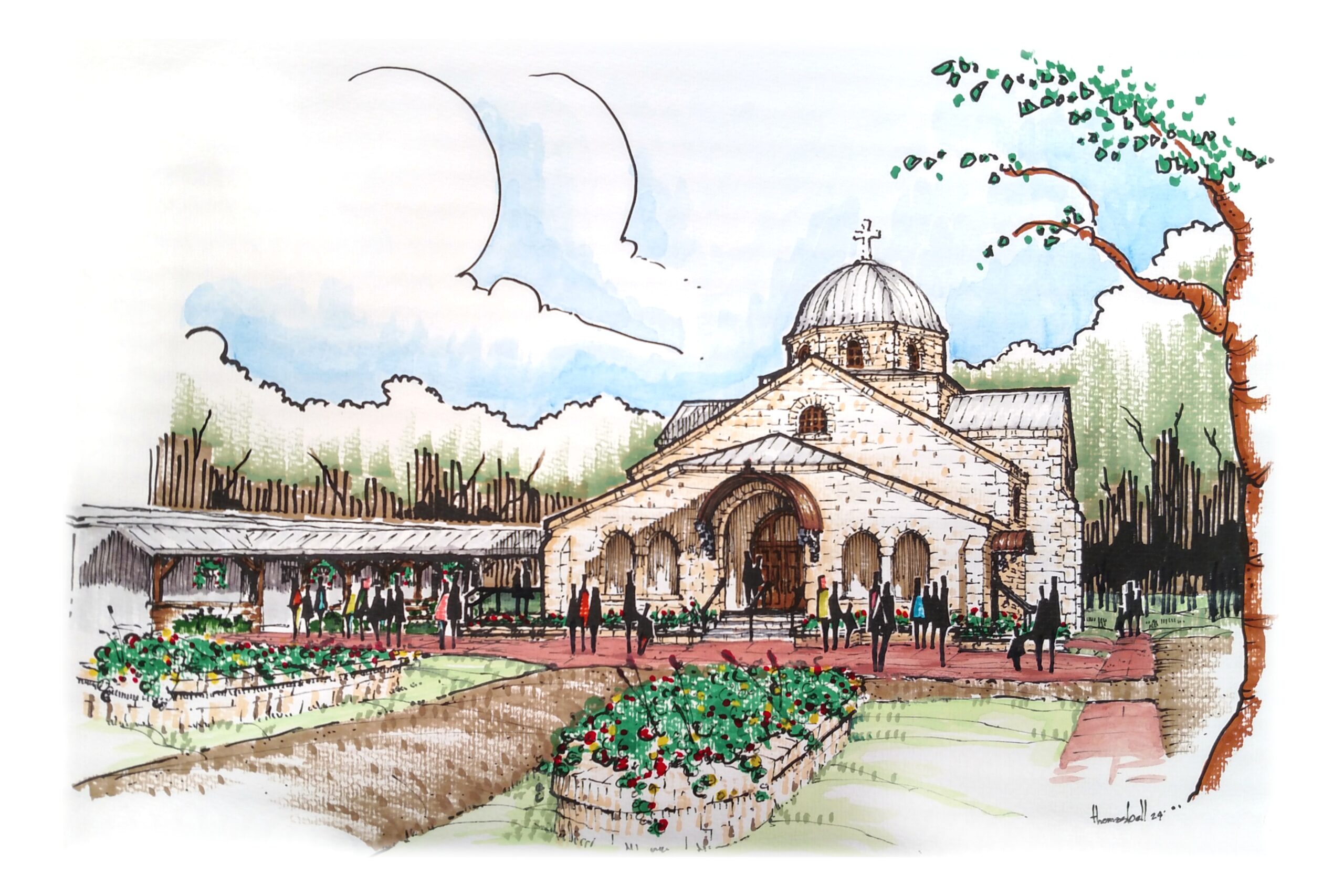
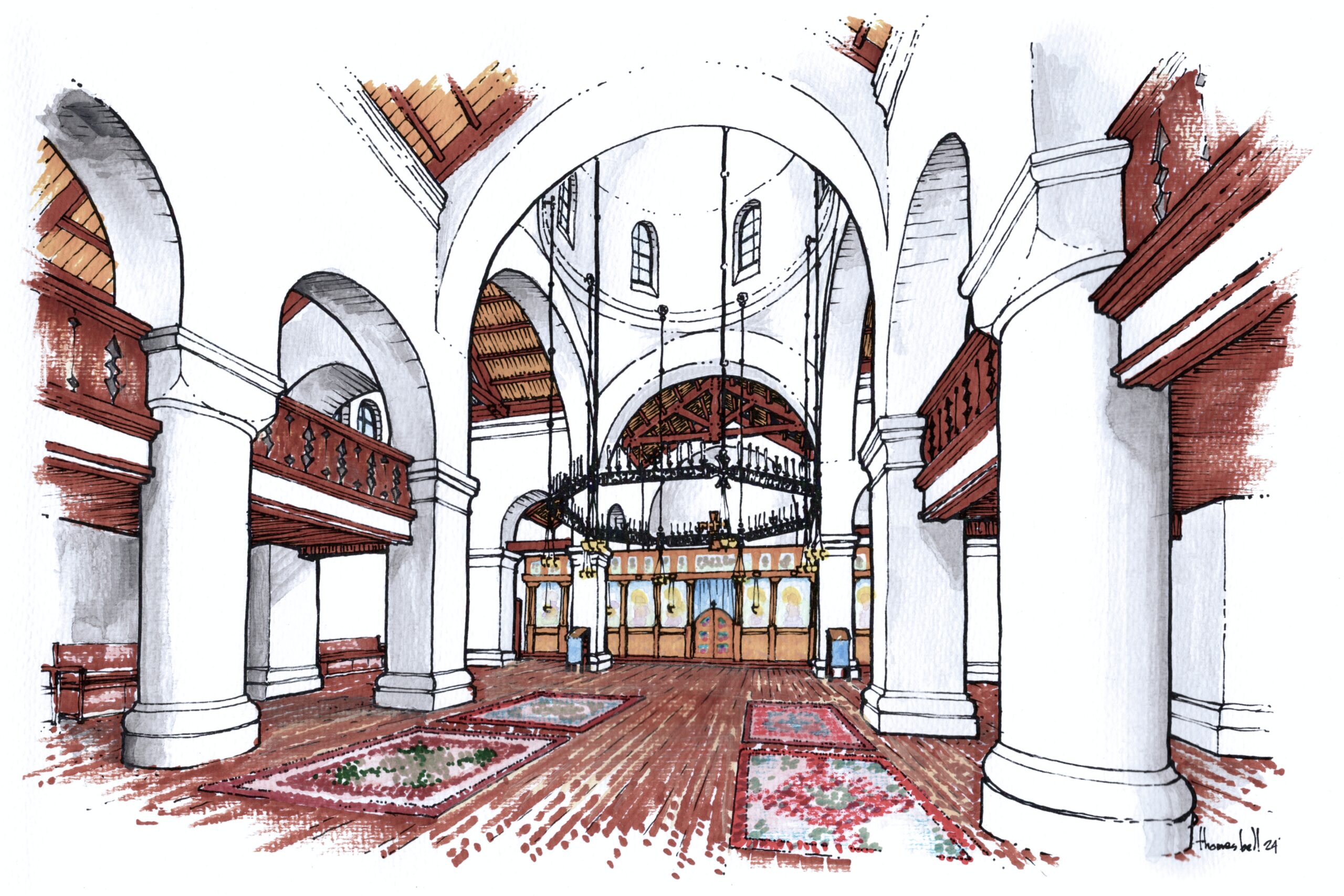
One reply on “Hello world!”
Hi, this is a comment.
To get started with moderating, editing, and deleting comments, please visit the Comments screen in the dashboard.
Commenter avatars come from Gravatar.